
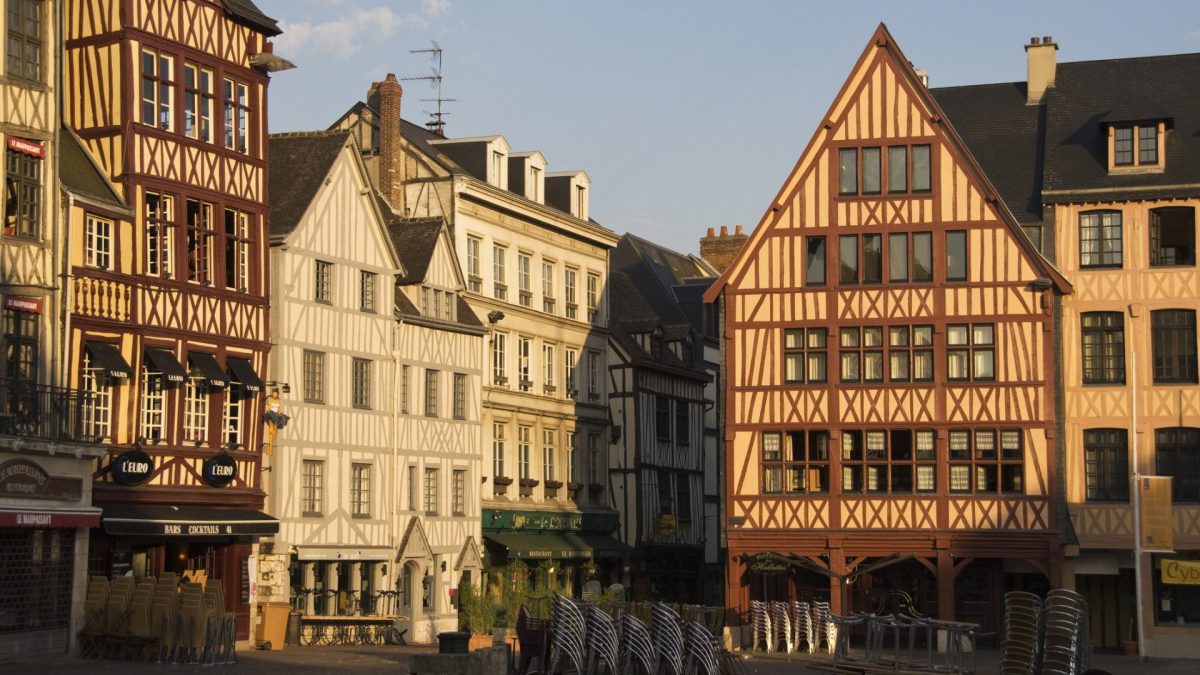
Before I moved to Paris in September 2025, I had romantic notions about Montmartre’s winding cobbled streets, artists’ square and quaint cafés. I’d visited a few times and it seemed classically Parisian, with its own distinct village feel. Perfect, I thought, for a new start. I was moving from London, where I’d spent almost 10 years living in distinctly un-villagey areas – so Montmartre seemed the ideal spot to settle down. After nine months in the area, however, I’m wise to the reality of living in one of the most touristy parts of Paris. The winding streets seem to be swallowed whole by tourists for much of the day – more than 10 million visitors schlep up the hill to see the Sacré-Cœur each year – and after dark, the low hum of cafés is replaced by the noise of all-night bars. Shorts I adore living here, but sometimes I need a break from the crowds. And that’s not easy in a place like Paris. So, earlier this year, when my partner and I were feeling particularly weary of the city, we began plotting a mini-break to escape from it all. The medieval city of Rouen, less than 90 minutes away by train, immediately jumped out at us. Sitting astride the Seine to the northwest of Paris, the Norman capital was familiar to me from A-level history lessons (thanks Joan of Arc). With return train fares costing a reasonable €30 (£26), our minds were made up. Hotel booked, we were soon on our way. Compared to Paris, Rouen felt immediately more tranquil. Crowds were nowhere near as intense. The city receives less than 4.5 million visitors per year, around a quarter of the number recorded in Paris, although it is also around a quarter of the size. While the British are among the most common foreign tourists in Rouen, the vast majority of visitors are French, which gives the city a more local feel. Like Paris, Rouen is split into a right and left bank by the Seine. Founded by the Veliocasses Gaulish tribe, it became one of the most important cities in Gaul under Roman rule, so there’s plenty of history to soak up. A bonus for visitors is that a dozen of its museums are free to visit – something you’ll struggle to find in Paris. The city centre retains a Roman street layout, but the landmark attraction is the cathedral of Notre-Dame de Rouen, which has been successively rebuilt over 800 years. The cathedral of Notre Dame de Rouen (Photo: eyewave/Getty) As I wandered there from our hotel, I felt as if I’d been dropped straight into the Middle Ages – albeit with the odd branch of KFC or Foot Locker slotted between half-timbered houses along the narrow, cobbled streets. I ducked under the fantastically ornate Gros-Horloge, a golden clock dating to 1389, above a passageway in the centre of the city. Arriving at the cathedral, the imposing grandeur, kaleidoscopic stained glass and ornate gothic façade were mesmerising, and its three distinctly styled towers – immortalised on canvas by Claude Monet – are recognisable from miles away. Some of Monet’s cathedral paintings form part of the superb collection of impressionist works at the free-to-visit Musée des Beaux-Arts de Rouen, near the train station. It was a blustery day, so after exiting the cathedral, we sought shelter in a cosy, wood-panelled crêperie called La Régalière, a place I have and will continue to return to every time I’m in the city. Creperie la Regaliere is in the old heart of the city (Photo: Michael Derrer Fuchs/Getty) A welcoming waiter, who appeared more than happy to stick to French despite my British accent (you’d never get that in Montmartre), brought out a fresh jug of local Normandy cider and two ham, cheese and egg galettes, a meal I fear will become almost Proustian in time. Dinner was at Le P’tit Bec, a bistro that specialises in some of the most luxurious, belt-busting gratins I’ve ever come across. Armed with another glass of cider, I ordered “le Normand”, an oozing bowl of potatoes, camembert, chicken, caramelised onions, cream and apples. It was followed by the undisputed champion of desserts, crème brûlée. Weighed down by what felt like five kilos of cheese, potatoes and custard, we made a quick stop in the main square for a nightcap before heading back to our hotel. Like Paris, Rouen is bisected by the river Seine (Photo: Psycho Shadow/500px/Getty) I’ve already been back to Rouen and am currently plotting a third visit, keen to explore the more modern left bank and Saint Catherine’s Hill, which offers views over this historic city. There’s also the oldest inn in France, La Couronne, the immersive Joan of Arc History museum and the Old Market Square where she was burnt at the stake, Art Deco and Art Nouveau buildings, and plenty more. Despite its size, this historic, welcoming city has won me over. How to get there By rail, Rouen is two hours and 45 minutes from Lille and around one hour and 20 minutes from Paris’s Gare Saint-Lazare. By ferry, it’s less than an hour by road or rail from Dieppe and around one hour from Le Havre. Where to stay Grand Hôtel de la Seine is a delightful four-star hotel on the river. Doubles start at around €72 a night, excluding breakfast. More information visitrouen.com
I live in Paris’s most touristy quarter but escape to this medieval city
Full Article
Original Source
Read the full article at Inews →KhanList aggregates and links to publicly available news content. We do not host full articles from third-party sources. Always verify important information with original sources.