
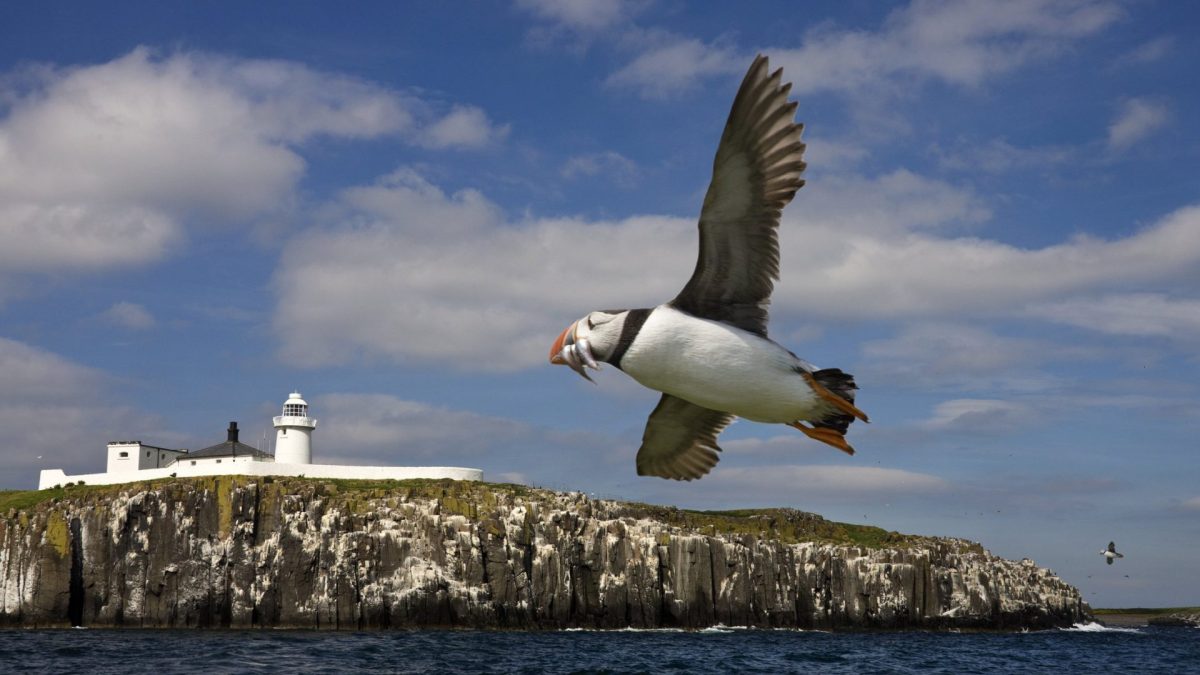
Even after 35 years living in Northumberland, I’m still staggered by its landscape. With both coast and hinterland on my doorstep, I have easy access to long, sandy beaches, preserved fishing communities, amazing local cuisine, spectacular wildlife and more castles than any other county. Northumberland has been “discovered” by others in recent years, and like many locals I try to stay away from some of the more popular sites such as Bamburgh Castle and Holy Island in the summer. However, there are plenty of unforgettable, less crowded experiences to enjoy, too. My tip: grab a seat on the top deck of the X18 bus and watch the beaches and local life unfold around you. Here are some of my favourite Northumberland spots to visit in summer. Shorts The Farne Islands With over a quarter of a million seabirds, it’s no wonder the Farne Islands are known as “Europe’s Galapagos”. Add to that thousands of seals, a resident pod of dolphins and – if you’re lucky enough to catch a glimpse – visiting orcas breaching, and you have a true wildlife spectacular. Take a boat ride from Seahouses to the Longstone Lighthouse, the only offshore lighthouse you can visit in the UK, which was once home to Grace Darling, a lighthouse keeper’s daughter and Victorian heroine who saved nine lives when a shipwreck occurred nearby. Visit by the end of July to see the puffins and other seabirds before they start to leave. Seals lounge on the shoreline in front of Longstone Lighthouse (Photo: Liz Leyden/Getty/iStock) Alnwick Alnwick is one of those former market towns that feels like stepping back in time, with its cobbled market square, ancient market cross and imposing 13th-century gatehouse that once allowed entry through the town’s medieval wall. In the old Victorian railway station (which stopped operating in 1968), Barter Books is one of the world’s largest second-hand bookshops. It’s a great place to unwind – don’t miss the renowned sausage sandwiches, served in a cafeteria in one of the old waiting rooms. Nip into former coaching inn The White Swan Hotel and ask at reception if you can see the Olympic Room. There, among the mirrors, panelling and intricate ceilings salvaged from RMS Olympic, you can imagine what it must have been like aboard its infamous sister ship, Titanic. Alnwick’s medieval market square, with a market cross at its heart (Photo: stockinasia/Getty/iStock) Low Newton-by-the-Sea Whitewashed cottages hug three sides of the grass square at Low Newton, the fourth side opening out onto the beach from which fishing boats were once launched. To the south of the village, behind the dunes, Newton Pool is a nature reserve and a favourite among local birdwatchers, thanks to the oystercatchers, terns and (if you’re lucky) water rails that can be spotted here. The village pub, The Ship Inn brews its own beer and there are benches outside where you can sit and watch the world go by. Afterwards, take a clifftop walk to the remains of a Cold War-era radar station or along the beach to Dunstanburgh Castle, whose striking ruins – dating back to 1313 – are now looked after by English Heritage. The village of Low Newton-by-the-Sea has a windswept beach and a nature reserve (Photo: David Head/Getty/iStock) Amble Amble has gone through a rejuvenation over the past few years and is now renowned for its food scene, encompassing restaurants, ice cream parlours, fish and chip shops and cafes in and around the harbour. I always visit the Fish Shack, built from an old fishing boat that sits right on the harbour’s edge; it offers a great choice of local, fresh seafood, but my order is always the langoustines with garlic butter. And on Sunday mornings a giant market takes over the quayside, with stalls selling fruit and veg, seafood, cheeses and meat. Spend an hour in the Northumberland Haunted Museum – dedicated to preserving the county’s ghostly history and forgotten folklore – or take a boat trip with Puffin Cruises around Coquet Island, home to puffins, seals and the roseate tern, Britain’s rarest seabird. The Fish Shack in Amble serves up Lindisfarne oysters, Scottish mussels and locally smoked fish (Photo: Chris Griffiths/Getty/Moment Unreleased RF) Yeavering and Wooler About 15 miles inland, at Yeavering, you’ll find the archaeological site of Ad Gefrin – the 7th-century summer residence of the Saxon Kings of Northumbria. And in the neighbouring town of Wooler, a building built to resemble the great wooden hall of the Saxon palace houses the modern-day Ad Gefrin, an excellent museum of Anglo-Saxon life. It offers guided tours, a cosy bistro frequented by locals (I like the focaccia with a rich Northumbrian soup), and tastings at the onsite whisky and gin distillery. Look up to appreciate the incredible wooden whisky barrel dome of the entrance hall. Beadnell Beadnell is unique along the east coast of Britain in being the only harbour that has to be entered by sailing in from the west. Enjoy the mile-long sweep of beach (where Soul2Sand can lend you the tools to make your own piece of sand art, and will then photograph it above with a drone), or take a walk along the pier and photograph the giant Lime Kilns still towering over the wharf. At Beadnell’s Comely Carr rock pools, Ranger Jane’s Beach School runs seashore safaris, during which you can discover crabs, starfish, sponges, sea hares and scorpion fish. Or go a step further with a guided snorkel amid the unique ecosystem under the waves.
I live in Northumberland – these are my favourite places to visit in summer
Full Article
Original Source
Read the full article at Inews →KhanList aggregates and links to publicly available news content. We do not host full articles from third-party sources. Always verify important information with original sources.