
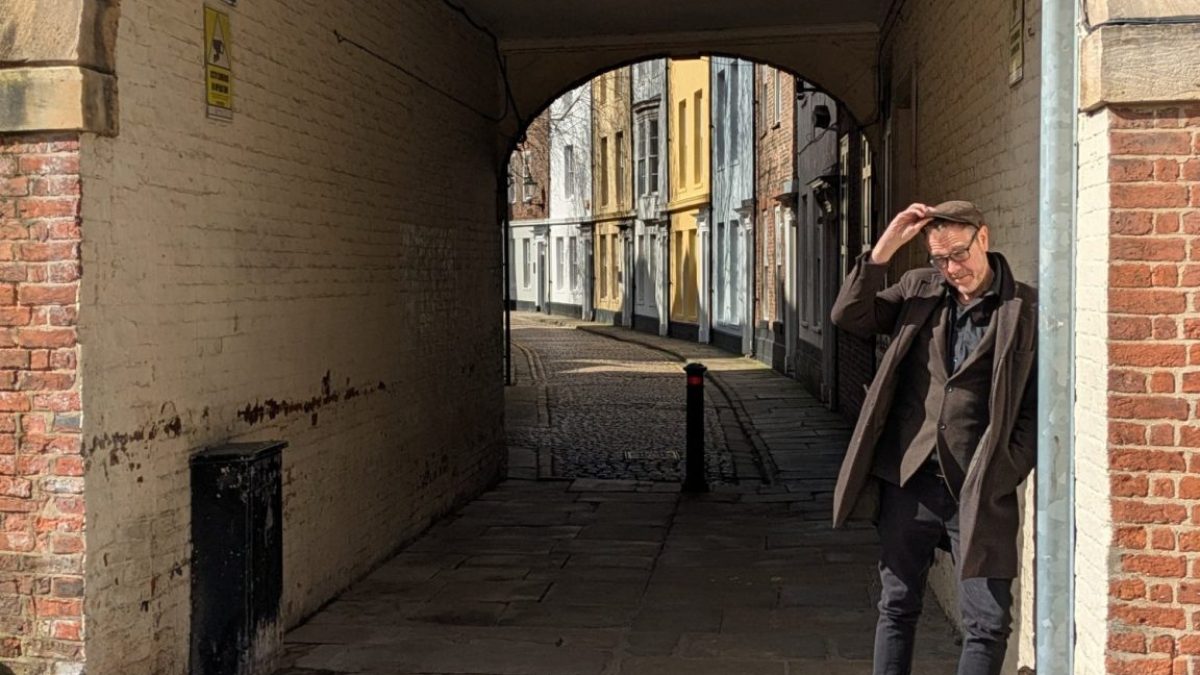
Most people think of Hull as docks, fishing, rugby, deprivation, an accent, and somewhere at the far end of the M62 where nobody goes or escapes from. It’s not quite like that anymore, if it ever was. Since Hull topped the bill in those Crap Towns books, a lot has happened. There’s more to it than even lots of folk from Yorkshire know about. I grew up here. Back in the Nineties, I would have been the first person to put this city down, almost as a badge of honour, but not any more. Nearly ten years ago, we became the UK City of Culture, the town centre got a facelift, cultural events bloomed and thousands flocked to the city. It wasn’t that Hull became culturally significant because of the City of Culture; it was just the event that told the rest of the UK we were here. By English standards, Hull is a fairly new city. Edward I issued an official charter and, in 1299, confirmed the name as Kingston upon Hull after the river upon which it sits. Nobody calls it that these days. Shorts In 1642, we refused Charles I entry to the city. The siege that followed was one of the first major confrontations of the English Civil War. You can stand where Charles might have stood some four hundred years ago and catch the number 54 bus to the village of Cottingham. William Wilberforce was born here. For a time, we were one of Britain’s leading whaling ports. Into the 19th century, the docks helped industrialise a nation, and in both world wars our trawling fleet would play a vital role in keeping shipping lanes and trade moving. We invented Dettol. We invented American Chip Spice too. Hull suffered during the Second World War. According to Historic England, as many as 95 per cent of its buildings were damaged or destroyed in the Blitz. We were bombed 82 times. My grandma, born in 1914, told me Hull was beautiful back in the day. Well, it is again. The Maritime Museum (right) has had a major refurbishment (Photo: Danielrao/Getty) We have a beautiful, free-to-visit Maritime Museum that reopened in the former dock offices this summer after a £22m, six-year refurb. It celebrates Hull’s connection to fishing, whales, ships and the sea, with artefacts that include a 12m-long whale skeleton and Erik the polar bear, captured in the Arctic in the 1860s. The Old Town is an architectural layer cake. There’s the gothic Hull minster, elegant Georgian houses along Prince Street, and merchants’ houses and warehouses on High Street and Scale Lane. You can walk along the Humber from the huge Siemens wind turbine factory to the eerie ruins of the Lord Line trawler office building, which until the Seventies was part of the city’s main fishing dock. The Georgian crescent of Prince Street (Photo: Michael Pasdzior/Getty) Hull is pancake flat. The skies are enormous. The Humber sits along the southern edge of the city and it’s wide enough in places to feel like the sea. When the Humber Bridge opened in 1981, it was the longest single-span suspension bridge in the world. East of the city, the land is empty and windswept. At Spurn Point, you can walk out into the sea along a thin sliver of sand. We have sports pedigree too. There are two top-tier rugby teams, Rovers and FC. They don’t get on, but there’s hardly any trouble on derby day. Last season, Rovers did the treble. You can watch them play at Craven Park or catch Hull FC over at the MKM Stadium. Then there’s football. First game of this season, Hull City beat Manchester United at home 2–0. It was like New Year’s Eve in the bars down Princes Ave. Supporters soak up excesses with a patty, served exclusively at chip shops. These are deep-fried mashed potatoes with sage and onion. You can get them in a butty, but it’s a bit of a dry struggle to get through. People buy pattie, chips and peas, a local favourite (Photo: Paul Ellis/AFP) But that’s not to say our culinary scene is limited to stodge. We have fine dining on Humber Street off the marina (crab Welsh rarebit and confit duck at Butler Whites), world cuisine on Newland Avenue – Portuguese, Sicilian, Caribbean, Greek and Italian – and perfect panoramic city views from the top floor of the K2 tower at the Filipino restaurant, Sebu. The Housemartins cut their teeth in the legendary New Adelphi Club down De Grey Street off Beverley Road. You can see stadium-sized acts at Connexin Live in the city centre, but at the New Adelphi you can practically smell the musicians’ sweat. On cosmopolitan Newland Ave, there are bars squeezed in between the Polish bakery and takeaways where they host sing-arounds on Saturday and Sunday afternoons. Years ago, I started writing novels about Hull because the research was just a quick ride on my push bike. I could write about all the people in the local pub and the streets that I’ve driven down a thousand times. I was shocked at what I didn’t know. I believed what I read in the Crap Towns books in the early noughties, and so I looked to the rest of the world for my inspiration when, in fact, it was right here on my doorstep. Chris Speck is a teacher and writer from Hull. His east Hull police thriller ‘East of East’ is out now
I live in Hull – it’s a wonder more people don’t visit
Full Article
Original Source
Read the full article at Inews →KhanList aggregates and links to publicly available news content. We do not host full articles from third-party sources. Always verify important information with original sources.