
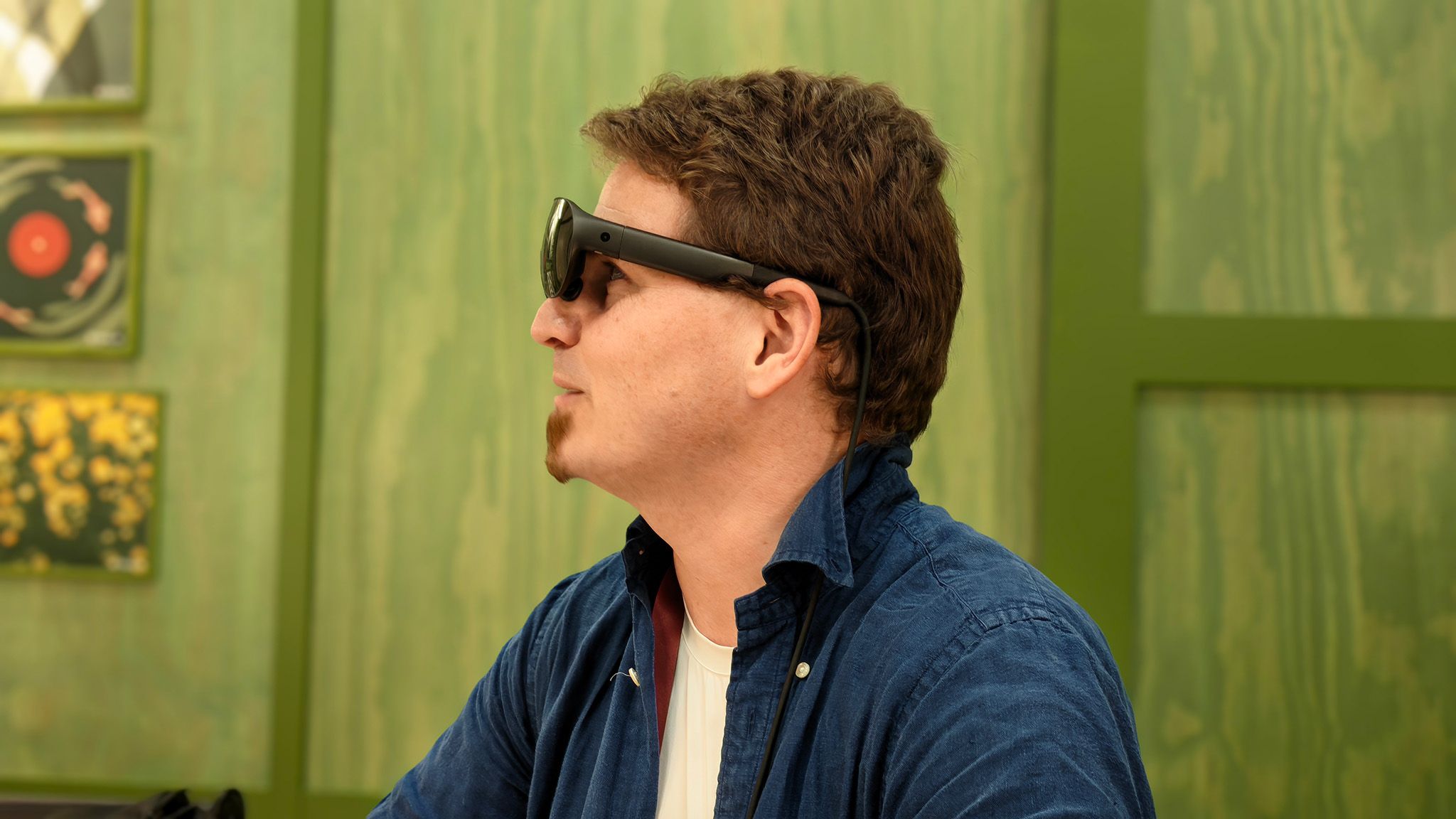
(Image credit: Nicholas Sutrich / Android Central) The era of giant, heavy VR headsets is officially over. The Oculus Quest began the era of standalone VR headsets in 2019, and now Meta VR Glasses will begin the era of tiny, comfortable standalone headsets when they launch in Spring 2027.Despite what the name implies, Meta VR Glasses aren't associated with the company's other wearables offerings from brands like Ray-Ban and Oakley. Operationally, these are essentially a Meta Quest headset without the Quest branding, clearly separating it from that product line and giving it a new identity.While Quest became most popular with kids and teenagers, Meta is aiming its new VR Glasses squarely at adults who want a cutting-edge immersive experience. It has brand-new features, content partnerships with streaming companies and sports leagues, and 75 new hand-tracking games at launch (including new Ace Attorney VR and Two Point Hospital VR, to name two).All that, plus 100% backward compatibility with existing Meta Quest apps and games. It's a monumental moment for VR and the culmination of everything Meta has built up to this point.The lightest standalone VR headset ever (Image credit: Nicholas Sutrich / Android Central)When Apple Vision Pro launched, it blew people away. The experience was revolutionary, but its 600g weight and $3500 price tag severely diminished its appeal. Samsung's Galaxy XR launched last year at half the price, but it still weighed 545g and doesn't have the gaming support of Meta's platform.Meta VR Glasses weigh just 100g. They're also less than half the size of either Apple's or Samsung's headsets. They also come in two sizes to accommodate as many people as possible and don't need an uncomfortable head strap to keep the VR Glasses on your face.Instead, Meta VR Glasses look and feel more like a pair of glasses than a headset. Each temple arm folds in like a pair of glasses, and they even use adjustable nose pads. They're not intended to be worn all day like Meta AI Glasses, though. These are still VR headsets, just without all the bulk and weight the category has become synonymous with.Get the latest news from Android Central, your trusted companion in the world of Android Image 1 of 5 (Image credit: Nicholas Sutrich / Android Central) Prescription lenses magnetically attach to the headset's lenses, making fitting and sharing a breeze. The 5K micro-OLED panels inside each lens are incredibly bright and crisp, sporting a 37 pixels-per-degree (PPD) resolution. By comparison, Quest 3 has just 20 PPD, while Apple Vision Pro has around 34 PPD.The trick here is that Meta reduced the FoV to achieve this level of clarity. At 85 degrees, it's around 11 degrees narrower than Quest 3S and 25 degrees narrower than Quest 3. It felt narrower than Quest, for sure, but not as narrow as even the best smart glasses. You adjust the IPD by manually sliding the lenses. Image 1 of 9 (Image credit: Nicholas Sutrich / Android Central) Meta VR Glasses don't ship with controllers, but you can pair them with any existing Quest 3-era controller or order a separate pair. I got to play a new version of Beat Saber called Beat Saber Flux, which is hand-tracking-only and heavily modifies the gameplay to match hand tracking's vibe. If you're familiar with Synth Riders, this new Beat Saber will feel familiar.I also got to see an upcoming mixed reality title called Dice Throne Digital, a video game version of the popular Dice Throne board game. This roguelike title is like "battle Yatzi," as the developers described it to me: you grab imaginary dice, shake them violently in your hand, and throw them anywhere in your room.Thanks to Meta's continuously improved hand tracking — plus the power of the new Qualcomm Snapdragon Reality Elite chipset inside Meta VR Glasses — the action looks more visceral than I ever thought a hand-tracking game could. Watch your hand transform into a powerful glowing fist when you shake the dice, and watch them bounce off your real-world objects as if they actually existed.The new chipset and battery are housed in a separate, phone-sized compute puck that clips onto a belt or pocket. Ventilation on top of the puck keeps things cool, and a USB-C port on the bottom can power the headset indefinitely with a 45W charger. It even supports USB-C video input, so you can plug in your Steam Deck and get a massive 5K resolution screen anywhere. Image 1 of 7 (Image credit: Nicholas Sutrich / Android Central) Meta intends this headset to be used primarily while seated, so you'll likely want a "proper" headset for fully immersive VR experiences (read: ones you physically walk around, duck, or look under objects). Magnetic light blockers (like on Meta Quest Pro) will make things even more immersive, but I didn't get to see either of these at my hands-on.The UI is the same as on existing Quest headsets, but built-in eye tracking capabilities and new cameras make navigating truly effortless. No need to raise your hand anymore; just look at what you want to select and pinch your thumb and index finger together, or make a fist and use your thumb like a D-pad to scroll. Meta VR Glasses will even create a virtual mouse and keyboard on any surface, both of which worked unbelievably well in my demo. Introducing Meta VR Glasses | Spring 2027 - YouTube Watch On Speaking of cinema-grade experiences, Meta is clearly aiming this headset at a more casual crowd than the folks who normally enjoy the highly active gaming experiences synonymous with VR. Meta VR Glasses are designed primarily as a private screen, delivering IMAX-quality visuals with native 12-bit micro-OLED panels, all of which are James Cameron-certified (seriously!).The displays use a PWM dimming method that matches the refresh rate, which lines up with how its LCD-based headsets have always worked. This should be comfortable for most people, including PWM-sensitive people like me. That's great since the 3-hour battery life and more casual use cases will likely have you in the headset for hours at a time. Image 1 of 3 (Image credit: Nicholas Sutrich / Android Central) A key part of this experience is a bespoke selection of included services, such as courtside seats at NBA games included in the headset's price (no additional subscription required). I don't know how many games this service will cover, but the game I watched in the headset felt like I was right next to the celebrities who can afford front-row tickets.Meta VR Glasses are a total reboot of the VR paradigm Meta has been selling, and the company is putting high hopes in this product being a smash hit. The $1,299 price will limit its appeal a bit, but this is the most cutting-edge VR headset I've used in my 11 years covering VR professionally, and it finally solves the weight and size problem people have been asking for. Nick started with DOS and NES and uses those fond memories of floppy disks and cartridges to fuel his opinions on modern tech. Whether it's VR, smart home gadgets, or something else that beeps and boops, he's been writing about it since 2011. Reach him on X/Bluesky/Threads or Instagram @Gwanatu
I have no idea how Meta made a VR headset that's 83% lighter and 60% smaller than Apple Vision Pro, but I'm all here for it
Full Article
Original Source
Read the full article at Androidcentral →KhanList aggregates and links to publicly available news content. We do not host full articles from third-party sources. Always verify important information with original sources.