
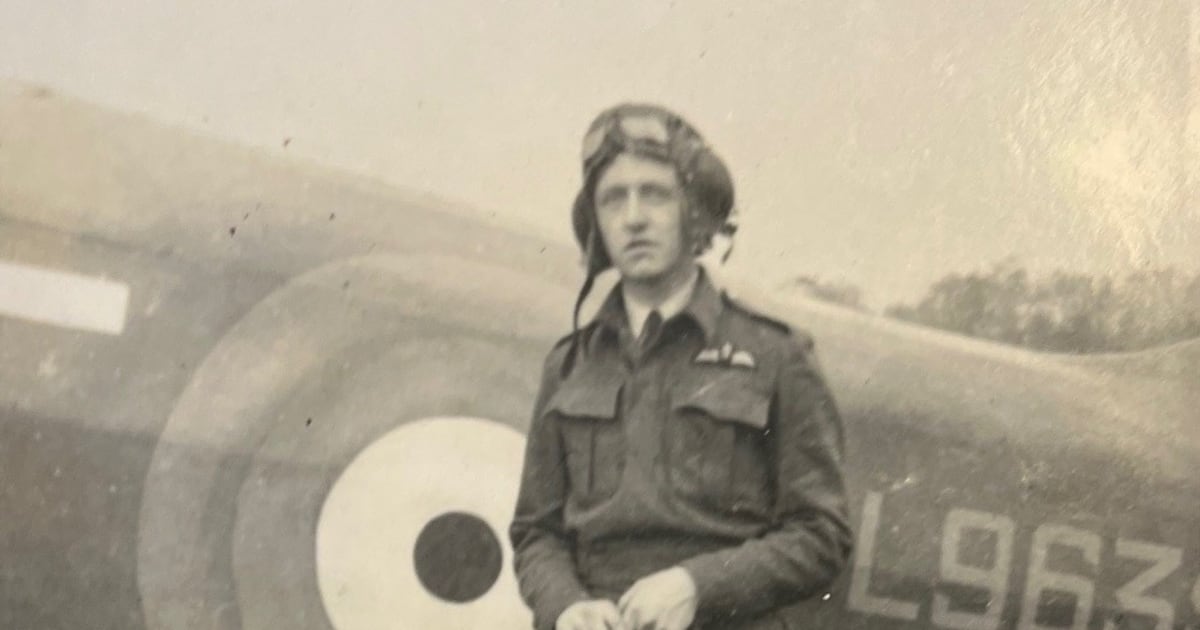
Remembering my uncle Arthur Thompson, whose RAF plane was shot down in Italy during the second World WarArthur Thompson, pictured beside a Royal Air Force plane. An RAF Wellington bomber he was in was shot down in the Gulf of Naples on June 27th, 1943 The drawers in the mahogany sideboard in the diningroom were out of bounds for us children when we were growing up. Full of hundreds of photos from the early 1900s through to the 1960s, we seemed to instinctively know that not all the memories therein were happy ones. So, when it came to sorting the contents of my parents’ house after the death of my mother in 2024, these drawers were the very last area to be excavated.One year after her death, I knew I had to finally tackle them. And there amid the decades-old Christmas cards and wedding photos of aunts and uncles, I first found letters to my paternal grandmother offering deep sympathy about her son, who was missing in action in Italy in 1943.My uncle Arthur – the eldest of five children, one of whom died as a baby – trained as a Royal Air Force pilot, having travelled to Belfast to fight for the British forces during the second World War. There were also other, more deeply felt letters offering condolences following his death in those drawers. READ MOREWhile what is now the Republic of Ireland remained neutral during the second World War, it is estimated that more than 70,000 of its citizens – including Catholics and Protestants – volunteered to fight against Hitler and the Nazis. Historians such as Richard Doherty have written extensively about these men and women from Ireland who fought for the Allied forces in the second World War, but many families such as ours remained silent about the reasons why they joined, particularly when they never returned to tell their stories from the battlefront. When we were growing up, my uncle Arthur’s name was rarely mentioned. My father, Cecil - the youngest male sibling and the only one who stayed in his home town – certainly never encouraged us to inquire into the death of his older brother, aged 21. Even now as I write this, I have a visceral sense of fear of revealing this painful chapter in my family history.[ Róisín Ingle: Lessons not learned as men – it’s always men – go to warOpens in new window ]But here, finally, in clearing out the sideboard, was evidence hidden in plain sight of heart-breaking sadness buried within my family, akin to that faced by many families following the death of young adult sons at war.Arthur Thompson carried out an apprenticeship in Pim’s department store in his home town of Mountmellick, Co Laois (the glowing reference he received when he left there was in that drawer too). He completed his secondary school education in Kilkenny College as a boarder, while his younger brothers “served their time” in shops or on farms. This was before the era of free secondary school education (introduced in September 1967), so most children left school at 12 or 13. What I’d like to know now was what drew this young man from the Irish midlands and his friends to go to Belfast to join the British army? Adventure, employment, money and a sense of fighting a just war are the reasons the historians claim were the enticements. We know too that many of those who returned were often shunned for having become involved. And when in 1995, then-taoiseach John Bruton spoke about the estimated 150,000 Irish people from North and South who volunteered to fight the Nazis – 10,000 of whom died while serving in British forces in the second World War - it was an important acknowledgment for many families across the island.Air Ministry: '...I am directed to inform you, with deep regret, that all efforts to trace your son, Flying Officer J.A. Thompson, have proved unavailing' But, looking through the contents of these drawers – more than 80 years after the RAF Wellington bomber Arthur had been in was shot down in the Gulf of Naples – it’s the personal sadness that remains. The arrival of letters and telegraphs to my grandparents’ home in those early weeks must have been devastating. There were letters too from my grandmother’s friends – hoping and praying that after the plane was shot down, the crew might have survived and been taken as prisoners of war. However, the official military letters – with their printed numbers and “EXAMINED” written in bold type in tiny envelopes with the stamps torn off them (stamp collecting was a popular pursuit then) – brought confirmation that none of the crew had survived. There were also letters in that drawer from soldiers in his squadron expressing their deeply felt shock and loss following the gunning down of the plane by enemy fighters on June 27th, 1943.The sadness must have been so unbearable - the likely reason that the siblings scattered: my father at the tender age of 12 left to work on a nearby farm. My other uncle – again after serving his time in Pim’s department store – set off on an adventure that started in the Palestine police, followed by years in the Kenyan police (both Palestine and Kenya were still British colonies at the time). It ended with a new life in Perth, Australia – a country where many former officials of the British empire went to make new lives in the 1960s and onwards. [ Fintan O’Toole: The first World War is still being foughtOpens in new window ]My father’s only sister, Olwen – at boarding school in Dublin at the time – worked as an accounts clerk before marrying a man from Terenure who by sheer coincidence had been at boarding school with her brother, Arthur.Official letters received by the Thompson family in the aftermath of the loss of Arthur in Italy, 1943 These twists in the lives of his siblings after his death were just the normal meanderings of life in Ireland at that time. The death of a 21-year-old in combat was the family tragedy.With my cousin, Meriel, we go through our family archive – wondering where best to place key items for historians studying the personal circumstances of these young men who sought escape from rural Ireland and adventure through military service, and who died fighting for their neighbouring country. I too feel compelled to understand more about the path Arthur took from recruitment in Belfast to training to become a pilot, and that last fateful mission in Italy. Who were his friends, and what happened to those who survived? Visiting the Imperial War Museum in London and going to see his burial place in the British War Cemetery in Salerno, Italy, will be my next steps. And as I join others on Armistice Day – November 11th – and look back in horror at the death of all these young men, I will think about an uncle that I never got to meet.[ The Face of War – How a Finglas man may be the answer to a 100-year-old mysteryOpens in new window ] I will wonder what he would have been like as an adult, what life he would have led, and how his influence – a photographer and fiction writer in his teenage years – would have spread throughout our extended family, now scattered with their families in England, Germany and Australia, as well as Ireland. Sylvia Thompson: 'Looking through the contents of these drawers... it’s the personal sadness that remains.' Photograph: Alan Betson/The Irish Times IN THIS SECTION
I have a visceral sense of fear of revealing such a painful chapter of my family’s history
Full Article
Original Source
Read the full article at Irishtimes →KhanList aggregates and links to publicly available news content. We do not host full articles from third-party sources. Always verify important information with original sources.