
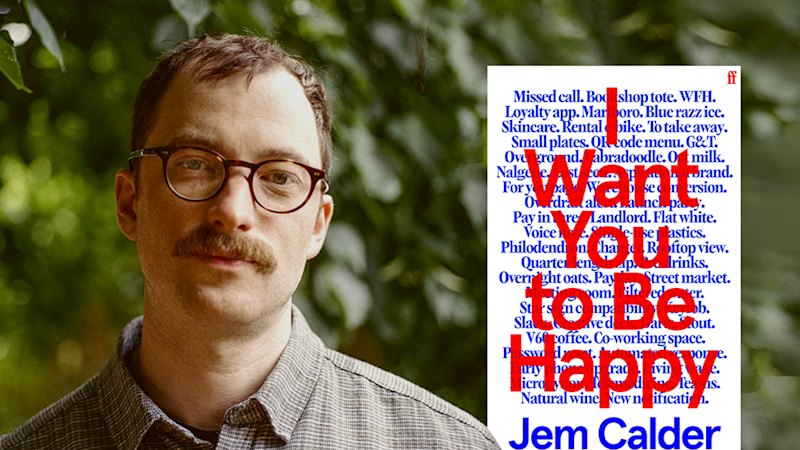
Declan FryNovember 3, 2026 — 3:00pmFor the first 100 pages, I was sure I hated this book. By the last 100, I loved it. Love is a strong word, especially for a book dedicated to making you feel terrible. But I was exhilarated by how agonisingly, excruciatingly cruel Jem Calder’s debut novel is.Set in London, it tells the story of Chuck (copywriter, aspiring writer) and Joey (barista, also an aspiring writer). They fall in lust, the possibilities of love, then what feels like its refusal – then bitterness, misunderstandings, and … well, I won’t spoil it. Needless to say, it’s not pretty. Dating isn’t about flirtation here; it’s a contact sport.I Want You To Be Happy is the polar opposite of escapist literature: it’s entrapment literature. If you’re looking for fiction that firmly and obsessively mirrors your world back to you, welcome. Every tic, reference, nagging thought and bit of overthinking is glowingly recognisable.Jem Calder’s I Want You to Be Happy is about characters afraid to interrogate themselves.For both Joey and Chuck, life is cramped. Cheap bars continually close down, cyclically replaced by more expensive ones. People overpay for groceries and return home to eat child-sized portions on IKEA furniture, furiously dispatching the evidence before their flatmates return from the office. There are friendships, at least in theory: the conditionality of these relationships is so immense that it’s more like having enemies who are just unexpectedly nice to you.When Joey reflects, having received an early date message from Chuck, she felt “more grateful than excited”, it’s a sentiment that could apply to how the characters feel about their entire lives. The motto of Calder’s novel is basically, expect little, accept less.What else would you expect from the story of a woman in her early-20s entering a situationship with an emotionally repressed man in his late 30s? It gets worse: Chuck has an ex-fiancee and their relationship lasted 12 years (“more than half my life”, Joey notes). Feckless man-child that he is, Chuck is more inclined to dream than commit. Ironically, one cancels the other: he wants to be a writer, or thinks he wants to (his ex-fiancee’s enthusiasm gives him more energy than he can muster himself). Photo: SuppliedThe chapters alternate between each character but it feels intentional that, in some sense, what we are truly hearing throughout the novel is perhaps closer to Chuck’s voice – a man unable to reconcile what the end of his longest relationship might truly mean. Meeting Joey – younger, more naive, prone to imagining that if the nice things she experiences with Chuck could be strung together properly, they might become a life – suggests a fresh start, at least for him.Perhaps it’s easier to admire than to love a work so closely attuned to the boredom and violence of life in 2026. When Chuck catches Joey checking herself out on her phone while he’s at the bar grabbing drinks, she reflects that any revealing of oneself that isn’t pre-thought and planned risks giving your date the “advantage”. Both characters are hung up on who might be the first to suggest something, to put themselves (ever so barely) out there. It’s as if Calder were taunting the reader: do they even like each other? Hard to say!Midway through the novel, Calder stages a deliciously cruel workplace performance review during which Chuck – or at least we, the reader – realises just how distant his complacent-yet-confident sense of things is from that of those around him. Joey puts questions to him that are really invitations; Chuck’s easy dismissal of these isn’t just self-absorbed, it’s the go-to habit of a man perpetually unaware of the possibility the person he is talking to is humouring his avoidant tendencies in order to protect his feelings (or hers – or both).I Want You To Be Happy is a novel so bleak, so invested in depression, you’d think sadness was a bull market. Calder has a real knack for dropping hints about his characters’ self-delusions and then, when they are among others, allowing the consequences to play out.This is a novel about characters afraid to interrogate themselves – or afraid to be with others enough to even begin needing to interrogate themselves. The voids they create can as easily be read as filled with IKEA furniture and self-improvement homilies as they can a lifetime’s worth of doomed resignation. Calder’s lesson is that pain can be useful. Not for rising or grinding or hypercapitalist self-optimisation but out of necessity. Because when you’re going through hell, the best advice is this: keep going.I Want You to Be Happy by Jem Calder is published by Faber ($33).More:ReviewFor subscribersSpectrumLiteratureSpectrumFrom our partners
I hated this book. Then I realised just how brilliant it was
Full Article
Original Source
Read the full article at Smh →KhanList aggregates and links to publicly available news content. We do not host full articles from third-party sources. Always verify important information with original sources.