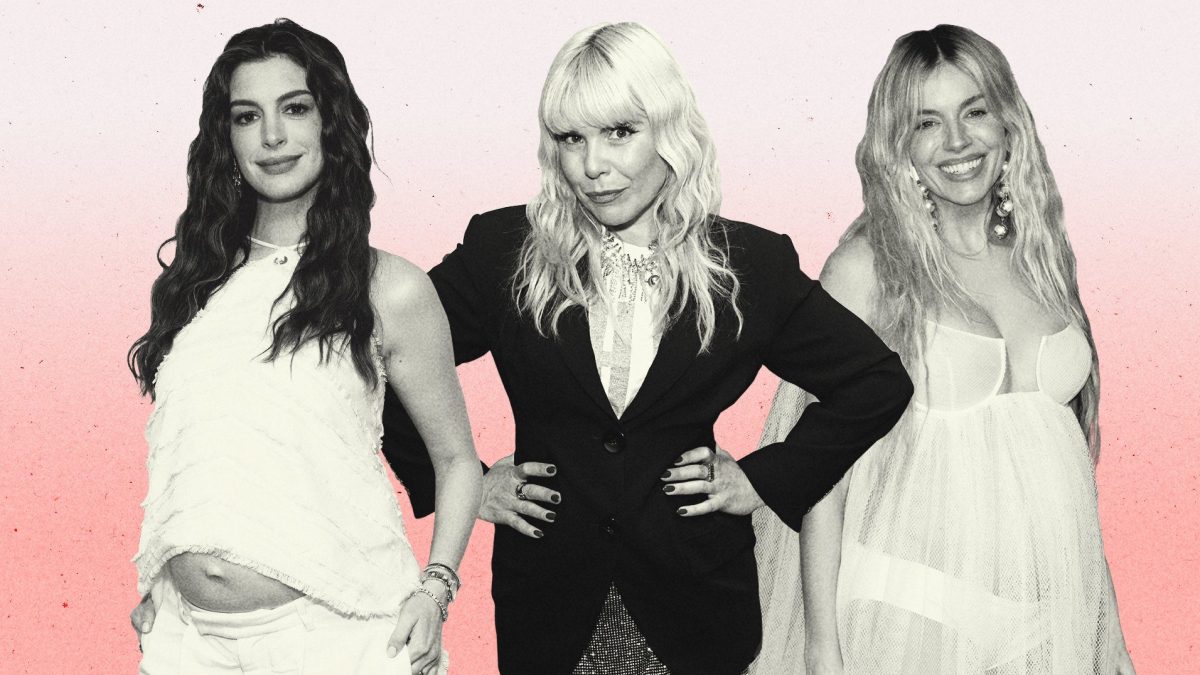
The year of 2026 looks set to become the year that the description “geriatric pregnancy” disappears from our lexicon. We’re witnessing an A-lister over-40s baby boom that is softening even the most judgmental of “too-old-to-be-having-children” critics. Oscar-winning actor Anne Hathaway, 43, is expecting her third child, while 44-year-old fellow Oscar-winner Natalie Portman is also pregnant with her third. Meanwhile, 44-year-old Sienna Miller had her third child in May, two months after singer Paloma Faith – also 44 – welcomed her third. These celebrities aren’t just adding to their families, they’re challenging outdated attitudes about their ages. Faith described herself as an “OAPmilf” on Instagram while Miller said maternal age is “unbelievably misogynistic and anti-feminist”, adding that “no one has anything to say about… Al Pacino and Robert De Niro having kids in their eighties”. She told Elle Magazine: “If your body is capable of it, have the baby. And by the way, I’m a better mother now, and it’s a much more grounded experience. Forget about your age! It’s absolutely irrelevant.” But while age is just a number, there are some differences – both good and bad – about having children in your mid-forties. I should know: I had my third child, Juno, age 44. I found the early weeks when she was a newborn much harder than with my older two children. I still don’t know whether it was hormonal – I was deep in perimenopause – or whether I simply found the juggle of trying to meet three young people’s needs really hard. But I was far more emotional and overwhelmed than I’d previously experienced. Shorts I was a solo mum when I had my eldest two children, using donor sperm, and Juno was my first baby conceived with a partner. Well-meaning friends would speculate that it must be much easier with two adults around. I felt confused that it wasn’t. “I don’t know whether I’ve got post-natal depression, whether I’m perimenopausal or whether I’m just exhausted,” I told a neighbour. I remember her replying: “It could be all three.” By the time Juno was one and I had started taking HRT and getting more sleep, I loved the joyful chaos of being outnumbered. I now rarely think about my age, except to sometimes reflect on how having babies later makes me feel younger than friends whose children are leaving home: they’re at a different life stage. I’m sometimes genuinely surprised when I remember I’m not as young as my children make me feel. I’m sure that I’m a better mother than I would have been in my twenties: I know myself better. Sienna Miller has said she is a better mother now she is in her forties (Photo: Neil Mockford) Occasionally, though, the unspoken fear creeps up on me, the one that I believe crosses the mind of most older mums, especially those whose parents have died: what if my children lose their mum too young? My children need me and will continue to for many years to come. It’s not possible to control the roulette of life, but I love them so fiercely that I will myself to be here, fit and healthy, until very old age. I got to enjoy having my mum around until I was 47; for my children to experience the same, I’ll need to see 91. I hold onto research from the New England Centenarian Study that women who give birth over 40 are four times more likely to live for a century. Please let me be one. Lisa Oxenham, journalist and beauty editor, had her second baby, Wolfgang, as a solo mum aged 49 and didn’t experience the exhaustion I felt during those first newborn months. Her son is now 11-months-old. “I have the same energy that I’ve always had – if anything, I feel younger,” she tells me. “I know what I need to do to keep my family running, both financially and emotionally, as well as managing my own energy. I also feel more confident and settled in myself. I’m more emotionally aware, I know my limits and I have a much clearer perspective on what really matters. “What has surprised me most isn’t how I feel about becoming a mother in my forties, but how surprised everyone else seems to be. There is still so much fear and negativity, as though women should be worried or somehow apologetic for wanting it. But I feel strong, my body adapted quickly, and, in many ways, I’ve coped better than I did when I had my first baby.” Lisa Oxenham, 49, has an 11-month-old baby and says: ‘I have the same energy that I’ve always had – if anything, I feel younger.’ There’s no doubt that conception is harder as we grow older. Lisa went through four years of IVF treatment and three ectopic pregnancies to have Wolfgang. For women under 35, an IVF embryo transfer has almost a 50 per cent chance of resulting in a lasting pregnancy. For those over 40, that reduces to 10 to 15 per cent. Even for women who use donor eggs, fertility treatment becomes less successful from the age of 49. New research shows egg donor IVF results in a healthy baby 45 per cent of the time for those in their thirties, compared to 32 per cent for women aged 49 and over. As for natural conception, it does happen – my daughter Juno is testament to that – but the monthly chances of conceiving at 44 are 1 per cent, while the chance of miscarriage is between 40 and 50 per cent. It also means the chances of secondary infertility are higher. Gilly Seagrave, 50, founder of craft knitwear brand Ekawear and a former competitive snowboarder, has a 10-year-old daughter called Tilda. She started trying to conceive in her mid-thirties and it took almost four years to become pregnant, “way longer” than she’d expected. Having been warned that her age was affecting her fertility, she started trying for another baby six months after having Tilda. But they struggled again. “We went for IVF checks and the clinician opened by saying that my partner had given a sperm sample that was one of the best she’s ever seen. So it was all me. It was a kick in the teeth. I peeled myself off the floor and took that as a sign to give up on the chance of another baby,” she says. She is part of parent group Mother Wild and has found support from other women to come to terms with having one child and the loss of an expected future. “I had an image of recreating the childhood I had and that was with a sibling,” she says. “Obviously, I know how lucky I am to have one healthy and wonderful child. The internal work I’ve done with Mother Wild has also really opened me up to the idea of accepting what the universe has given me.” Gilly Seagrave had her daughter when she was 40. She was unable to conceive again naturally and did some ‘internal work’ to accept it Gilly, like every one of the dozens of people I spoke to for this article, appreciates the freedom of being an older parent. “I feel less bound by what society thinks mothers should be. I think that would have been harder for me in my twenties or early thirties. I took my daughter down to the snowboard park last winter and it felt incredible: I can show her how she doesn’t need to put limits on herself.” But people’s experiences of whether they “fit in” as an older mum is more mixed. Lucy Baker, a confidence coach, who is 50 with three children aged 16, 13 and seven, tells me: “I’ve just been to a meet-the-teacher session at school for my son’s next academic year and I didn’t feel any older than the other mums, but I bet I am 15 years older than the majority of them. “I had my first baby at 34, so not young by any stretch – but I did feel young and immature and so the difference between 34 and 43 was big for me – I grew up in that time.” She was taken aback by the judgemental comments when she was pregnant with her third. “I remember being told, ‘But you are going to be 47 when the baby starts school.’ I was five-months pregnant and feeling vulnerable.” One friend, 54, whose son is now 10, says she’s noticed how she subconsciously tends to gravitate to older mums. She’s sometimes taken aback by how young teachers are. “My son was taught for one year by a new teacher who was less than half my age,” she remembers. “When I heard he was getting a rough ride, I felt a bit sorry for him and perhaps a bit protective, or maternal, which was a slightly unwelcome emotion.” For nutritionist Monica Kranner, who was 52 when her son Lewis, now almost three, was born, the judgement has shocked her. “I’ve been told, both directly and indirectly, that it’s selfish to become a mum at my age, that I’m somehow making Lewis’s life less fun by not being a ‘young’ mum. Others have said I should be enjoying menopause instead of ‘interfering with nature’s choice.’ “There’s an assumption that my choice was reckless or self-indulgent, rather than years of loss and trying,” she says. She had seven miscarriages before giving birth to her son and felt a “fear that never switched off” during pregnancy. She says other women are the most judgemental – more so than men. “What’s easier, though, is that I don’t absorb it the way I would have in my twenties – I’ve got enough life experience to let comments go and trust my own judgement.” Despite the difficulties of conceiving as we get older, the over-40s are the only age group seeing a consistent rise in women having babies in the UK, while overall we have a declining birth rate. Of course, a lot of this is being driven by factors beyond our control. It is estimated to cost £250,000 to raise a child to the age of 18 and this is unfathomable to many people who are juggling the cost of living. The average age of first-time buyers in the UK has risen to 34, a rise of five years since the mid-1990s according to Skipton Group’s annual home affordability index. And as men feel no pressure to meet a long-term partner or have children until they are financially stable – even though age affects male fertility too – a growing number of women aren’t meeting partners with whom they want to have children with until later. Soon, it will be almost average to have babies in our forties: while the median age of having a baby was 26 in 1978, by 2061 it is projected to be aged 36, the Office of National Statistics predicts. Oxenham believes it makes sense. “For many women, our forties are when we have life experience, confidence, established careers and, often, greater financial stability. We know ourselves and what we want. So, if having a baby is something you truly want, why should anyone be surprised that you go after it? Later motherhood is only going to become more accepted, and more and more women will choose this path.”
I had a baby at 44 – this is what it’s really like
Full Article
Original Source
Read the full article at Inews →KhanList aggregates and links to publicly available news content. We do not host full articles from third-party sources. Always verify important information with original sources.