
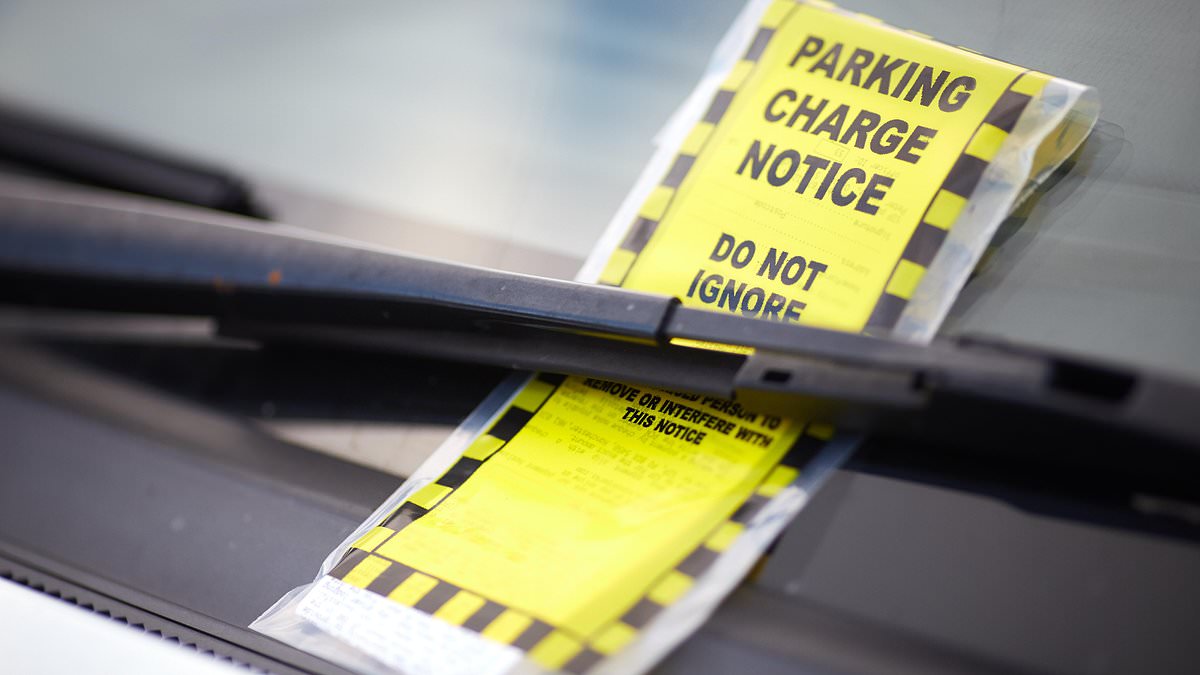
We used to live in a block of flats and had a permit for the car park, which is managed by a private parking firm. In March 2025, my partner emailed the parking firm to tell them we were getting a new car and asking for the permit to be transferred over, supplying all the required documents.However, we got a parking charge notice 13 days later because the registration update had not yet been processed. We didn't pay as we felt this wasn't our fault. We later moved house, after which time the parking firm decided to seek a County Court Judgement against us for the unpaid charge. However, the court papers went to the old address. I never had an opportunity to put forward my defence, and a CCJ was entered on my record. This is now making it difficult for me to remortgage. What should I do? J.W., Kent Concerned: This reader was issued with a CCJ after a private parking company sent court papers to an old address (stock image) Sophie Warburton of This is Money replies: A County Court Judgment or CCJ is a court order that can be obtained when someone fails to repay money they owe.The person or company who is owed the money files a court claim, and then the debtor - in this case you - has 14 days to respond. You can either pay the money, offer to pay a different amount to what the claim says is owed, or say you will defend the claim. In the latter two cases, you might have to attend a court hearing. CCJs appear on the Register of Judgments, Orders and Fines for six years. Lenders search this when deciding whether to give you a credit card or mortgage, and don't look favourably on those who have a CCJ. It also affects your credit score. If you pay in full within 30 days, you can have the CCJ removed from the register.But since you moved addresses, you didn't have the chance to either pay up or defend yourself against the CCJ, as all the papers were sent to your old flat. I spoke asked a solicitors and a complaints resolver what they would do in your situation. Emma Bowditch, a solicitor in the dispute resolution team at Ellis Jones says: When a CCJ has been entered because the claim form went to an old address, the immediate priority should be to establish the legal grounds for the CCJ to be set aside and then make an application to the court. Setting aside a CCJ is a legal process that allows you to cancel the CCJ (and its registration on your credit profile) and return the claim to an earlier stage. Success depends on prompt action and clear evidence being provided.There are two legal grounds that can be relied upon; mandatory and discretionary. If you can prove that the CCJ was entered incorrectly you can rely on the mandatory ground and the court must set the CCJ aside. This is the strongest position. An example of an incorrectly registered CCJ would be a claim form being sent to an old address when the claimant had been notified of a new address for the defendant before they filed the claim with the court. Here, the procedural requirements for valid service were not met, and the court must set the CCJ aside. If you can prove that you informed the parking firm of your new address, but it sent the correspondence to your old one anyway, you could potentially use this as grounds for cancellation. If you didn't update the firm with your new address, you would need to rely on the discretionary grounds for setting aside the CCJ. Bowditch believes the immediate priority should be to establish the legal grounds for the CCJ to be set asideThis means proving to the court that you have either (a) a real prospect of defending the claim, or (b) there is some other good reason why the judgment should be set aside.Generally speaking, a claim form being sent to an old address, and the defendant therefore not having an opportunity to respond to the claim, would be ‘some other good reason why’. Acting promptly is critical when relying upon the discretionary grounds. Set aside can also be achieved if the claimant, in this case the parking firm, consents to the CCJ being set aside. I strongly recommend seeking legal advice to determine the relevant grounds for set aside and for assistance with an application to the court. Set aside applications are decided largely on the strength of the application and the evidence. Given the devastating impact a CCJ can have, it is important to present the best case possible to the court.Can a private parking firm override what it says in a flat owner's lease? Scott Dixon, consumer complaints expert at The Complaints Resolver, says: In residential parking cases, the lease is the key document when determining a resident's rights. If the lease grants a right to park, a third-party private parking company cannot simply override those existing rights by imposing conflicting restrictions through its signage or permit arrangements.A lease is a binding long-term contract. Once it grants a right (known as an easement), those rights cannot be taken away or restricted without the leaseholder's consent or a formal variation of the lease.Parking companies are usually contracted by a managing agent or the freeholder to manage the land. However, the freeholder cannot give the parking company rights that conflict with those they already gave you in your lease.The case of Jopson v Homeguard Services Ltd (2016) is a key persuasive precedent in UK property and residential parking disputes like this.It recognised the importance of existing residential leases when considering parking disputes and established that a parking operator's signs cannot automatically take precedence over rights granted under a lease.Challenging the CCJ A private parking company can pursue an alleged debt owed from an unpaid parking charge notice through the civil courts. If a defendant fails to respond to a claim, a default judgment is usually entered in favour of the parking operator.When you move property, you are legally required to update your change of address with the DVLA. You can be fined up to £1,000 if you don't. The address on a driving licence and a vehicle's V5C logbook are separate records, so both should be updated when you move.If you failed to update your V5C logbook, the parking operator would have sent court papers and all correspondence to your previous address. However, that doesn't automatically determine whether the claim was properly served.In England and Wales, where a claimant has reason to believe a defendant no longer lives at their last known address, they must take reasonable steps to establish the defendant's current address.They usually do this through what's known as a 'soft search' with a credit reference agency.The fact that he may not have updated the DVLA is relevant, but it does not automatically determine whether the claim was properly served or whether the judgment can be set aside.I recommend you submit a data subject access request to the parking operator as soon as possible to retrieve copies of all the personal data they hold including the original parking charge notice, all third-party debt recovery letters, the letter before claim and relevant correspondence to establish the paper trail.You should also obtain the claim details and judgment from the court and obtain relevant correspondence from the parking company's solicitors.Getting a CCJ set aside In England and Wales, you need to submit an application using a N244 form and pay the standard court fee (£321) to apply for a hearing, unless you are eligible for an exemption.Under CPR 13.2, the court must set aside a default judgment if it was wrongly entered.Under CPR 13.3, the court may set aside or vary a judgment if the defendant has a real prospect of successfully defending the claim or there is some other good reason.You will have to go to a private hearing at the court to explain why you do not owe the money.If you simply didn't update the DVLA about a change of address, it makes your case more difficult, but not impossible. If you did update the DVLA but the parking operator sent all correspondence to the old address, that is a service failure which would reinforce your position.The CCJ guidance applies to England and Wales. In Scotland, people in this situation will need to seek specialist legal advice.Given the impact on his mortgage arrangements, you need to act promptly and decide your options. This is Money podcast
I got a CCJ after a parking firm sent court papers to my old address: Can I get it cancelled?
Full Article
Original Source
Read the full article at Dailymail →KhanList aggregates and links to publicly available news content. We do not host full articles from third-party sources. Always verify important information with original sources.