
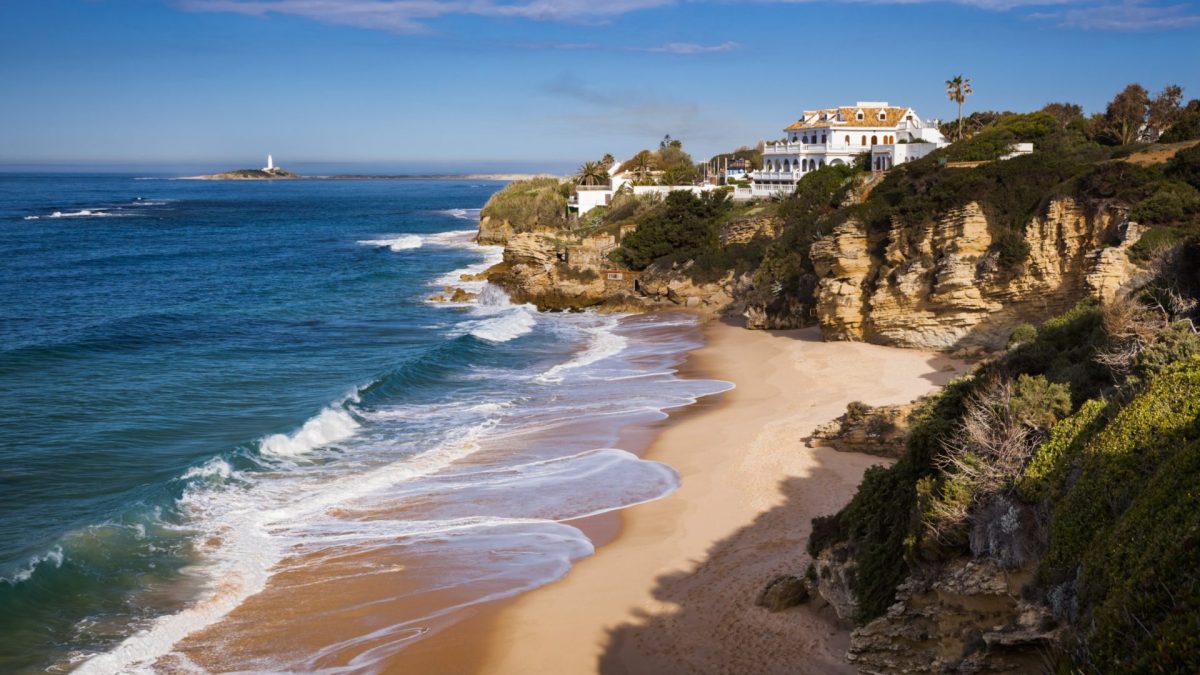
Look west along the breezy beach of Caños de Meca and you can’t miss Cape Trafalgar. Snaking out from Spain’s Atlantic coast south of Cádiz, it’s crowned by a lighthouse – a monument of sorts, built 55 years after the Battle of Trafalgar. There’s no explicit mention of the naval clash that took place just off the cape on 21 October 1805, spelling the end of Vice-Admiral Horatio Nelson despite the trouncing of the Franco-Spanish fleet. This doesn’t matter to me, though, as the access through the sand dunes of Playa del Faro, the limpid light, tranquility and rolling waves are mesmerising. Today, the cape is a magnet for impassioned kite and foil-surfers. Scattered along the beach and road with its backdrop of forested hills, laid-back chiringuitos (beach bars), restaurants and small hotels entice hordes of Spanish holidaymakers in high summer. Shorts Come the autumn, it’s British and other European visitors who are drawn to the laidback atmosphere and wild beaches of this unassuming, uncommercialised bubble on the Costa de la Luz. Here, you can swim or surf, hike along trails through La Breña – a vast nature reserve of statuesque umbrella pines edging the cliffs – and even climb up to watchtowers erected centuries ago to spot the arrival of Barbary pirates. On Playa del Faro I discover the remains of a Roman salt-fishing factory that once produced umami-rich garum and was buried in the sand until a few years ago. I wish I could taste this fabled fish sauce, but I am 2,000 years late. This site isn’t the only evidence of the area’s ancient appeal. I drive an hour south to admire the exceptional seaside Roman ruins of Baelo Claudia and just 15-minutes into my journey, beyond the dense pine forest, I stop for lunch at Barbate, the thriving capital of bluefin tuna fishing, where Phoenician techniques are still used, involving a maze of nets to corral the migrating creatures before lifting them to the surface. This practice, known as almadraba, is restricted to April and May when it’s used to catch tender, fatty tuna on its way to the Mediterranean. The Roman Ruins of Baelo Claudia (Photo: Oks_Mit/Getty/iStockphoto) Two of the port’s best restaurants for this speciality are Jarana, right on the promenade, and El Campero, a sophisticated temple of tuna. I choose the more affordable Jarana, where I swiftly devour a plate of succulent tataki tuna slices with a pool of creamy salmorejo soup for €21 (£18) – Japan meets Andalusia. Afterwards I stroll past local families still bathing on Barbate’s endless golden sands. Back in Caños, a name derived from the Islamic reverence for the local mineral-rich springs (caños – the latter part is a reference to Mecca) the cuisine is eclectic. Again, almadraba tuna features prominently but so does the flavoursome local retinta beef. Moroccan cuisine has entered the fray, too; hardly surprising considering the history of Caños and with North Africa visible on the horizon. Increasingly famed for this is the Jardin de Madreselva, inside the red ochre walls of a cosy boutique hotel where I’m staying. This is part of the Califa Group’s flourishing mini-empire, started in Vejer by a migrant Scot who, when not there, is swimming the oceans of the world. Fishing boats moored at a harbour in Cadiz (Photo: Syldavia/Getty/iStockphoto) Here I dine on a luscious beef tagine with prunes and quail eggs and, another day, dissect a whole fish pan-fried with lemon, peppers, spices and potatoes – all the while overlooking a courtyard bursting with tropical vegetation. Local organic wine boosts my appetite, rivalled by the spotlit nocturnal setting, which is pure magic. Outside, as I meander past clusters of tanned surfers, I sense a hedonistic edge, tempered by older couples trailing happy dogs on leads or heightened by the infamous Levante wind, which creates havoc with sand, sea and my hair – luckily only sporadically. On its fiercest day, I head down to the casual La Quilla, where a sheltered terrace frames views over the Playa del Pirata, where I’ll later plunge into the cool ocean. On the menu are classic tapas and inventive riffs on the atùn de almadraba theme, and it’s a favourite for sunset-gazing. Vejer de la Frontera square (Photo: Tunatura/Getty/iStockphoto) There are appealing alternatives at the eastern end of Caños above the cliff that shelters the nudist beach of La Pequeña Lulú. High-end La Breña offers exquisite seasonal dishes of local produce but I indulge at more relaxed La Pequeña Lulú bistro, where Japanese-Spanish fusion like scallop sashimi or tuna maki maki are equalled by their retinta beef lasagne. On my way there, I join a bohemian crowd for a cocktail at Jaima Meccarola, a soaring Moroccan-style tent high above the beach, to toast superlative views of the sinking sun over distant Cape Trafalgar. Once the crowds have gone, this popular venue will close for the winter. Much more beckons beyond Caños, whether the smaller surfers’ haunt of El Palmar to the north, a tour of a rare vineyard (Vinos Sancha Perez) or, just inland, the dazzling medieval pueblo blanco of Vejer de la Frontera, its steep, labyrinthine streets now crammed with boutiques, bars and designer restaurants enjoyed by the many foreign residents and visitors. Come winter, as in Caños, the footsteps dwindle and peace returns. Surfers at El Palmar surf spot (Photo: Ben Welsh/Getty/The Image Bank RF) And it’s possible to switch off, as I found at the slick new Hammam Vejer, which is modelled on the baths that once peppered Al-Andalus. Here, moody Moroccan lighting glows over immersions in a tepidarium, a caldarium, the steam room and an icy frigidarium – a fitting end to the blazing sunsets, pristine beaches and invigorating surf of Caños (not forgetting the tuna, of course). How to get there easyJet and British Airways fly from the UK to Gibraltar, a 1.5-hour drive from Caños. Jet2 operates to Jerez in summer. Where to stay The writer was a guest of Hotel Madreselva, which has B&B doubles from €65 in autumn.
I found an unspoilt Spanish escape with golden sands, Roman ruins and seafood
Full Article
Original Source
Read the full article at Inews →KhanList aggregates and links to publicly available news content. We do not host full articles from third-party sources. Always verify important information with original sources.