
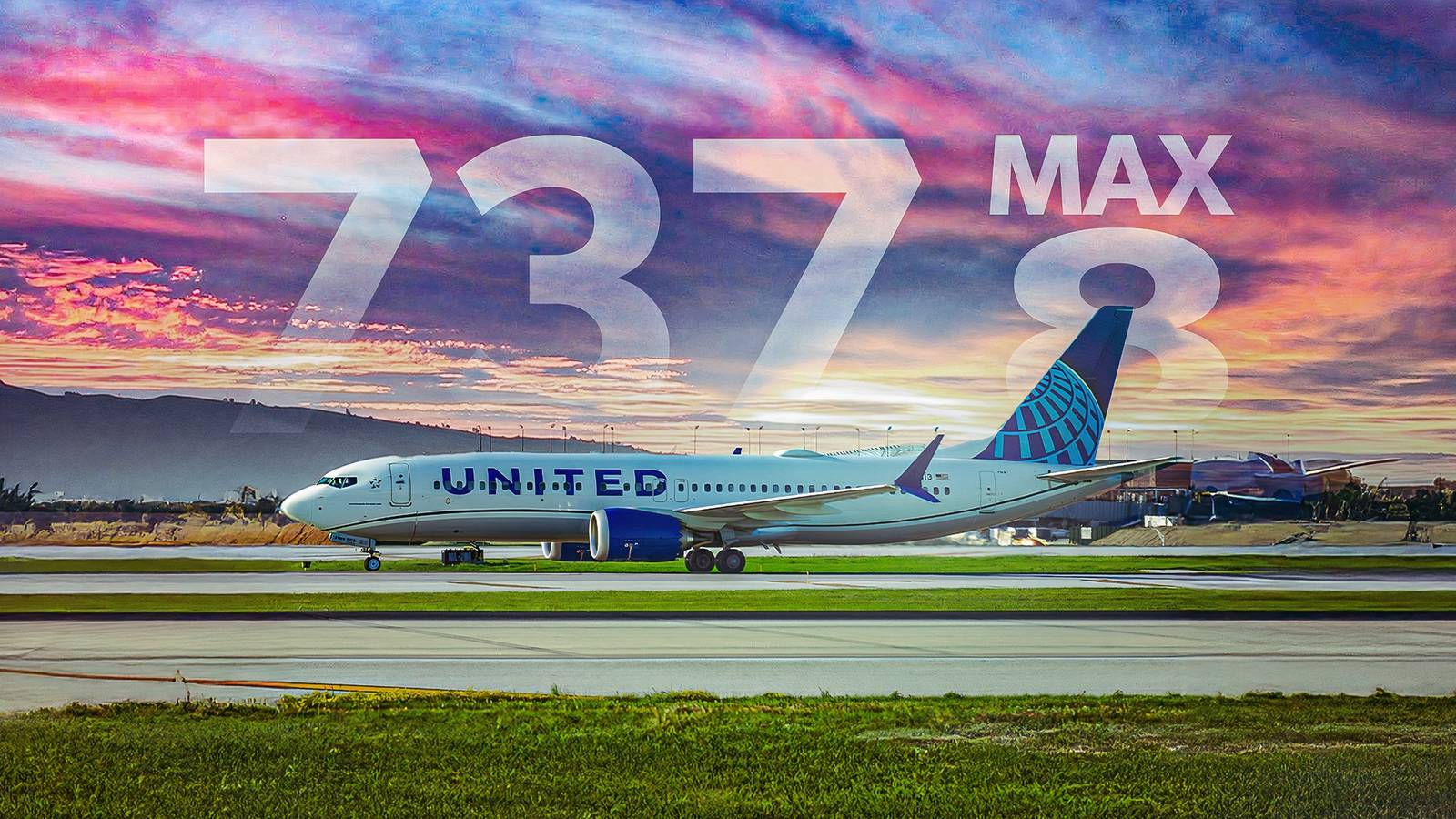
Published Nov 25, 2026, 10:01 AM EST Aaron is an aviation enthusiast and world traveler with a deep interest in aerospace history and technology. He has traveled around the world numerous times, often incorporating visits to aviation museums and historic aircraft collections into his journeys. A native of New Zealand, he is an expert in aviation and maintains a broad interest in a variety of other subjects. From its regional hub in Guam, United Airlines is the only airline that provides regular air connections to some of the small Micronesian islands in the Pacific. Flying on some of these routes is a memorable experience, with local airports operating a TSA- and FAA-compliant system on sleepy little islands. Some island airports only wake up for a flight every second day. In November 2026, I flew from the island of Yap (a state in the Federated States of Micronesia or FSM) to Guam on board a United flight. One of the most notable regional flight connections United offers is the famous Island Hopper, which flies from Guam to Chuuk, Pohnpei, Kosrae, Kwajalein, Majuro, and Honolulu, and back again. I wanted to take this flight to Majuro, but it was beyond my budget. Some United Micronesia flights operate only twice a week, meaning the flight schedule dictates the tour schedule. On the upside, many of these Micronesian flights routinely operate half-full, meaning booking out is unusual for certain routes. FSM's Yap International Airport Credit: Aaron Spray Describing island hopping in Micronesia with United is often much more about the experience at the airport than with United itself. Yap International Airport is served only by United flights (with 737s) twice a week from Guam and by Pacific Missionary Aviation's (PMA) Beechcraft Super King Air 200 flights (with seven to nine passengers) once a week from Palau. PMA is set to introduce a second weekly flight next year. As these are Yap's only regularly scheduled passenger flights, the airport is generally otherwise closed. I flew from Palau to Yap with PMA and then to Guam with United Airlines. As explained below, PMA offers the only scheduled passenger access to Yap for those who cannot pass through US immigration. There are no direct flights connecting the State of Yap with the three other far-flung states of Chuuk, Pohnpei, and Kosrae. To access those other islands and avoid United (and US immigration), the main alternative is Nauru Airlines. United's flight from Yap to Guam departs at 2:30 am, arriving in Guam at around 4:00 am, making it difficult to decide whether to book a hotel for the night before, the night of, or not at all. I opted not to book. Checking Into A Remote Island United Flight Credit: Aaron Spray The experience of checking into United's various island flights differs significantly by island and airport. Some airports (especially on Saipan) are much larger and more sophisticated than Yap, but Yap was the one I flew through, and so I will describe that one here. Yap's check-in and baggage drop-off facilities are located in a covered area outside the building. During the check-in process, there is no air conditioning. At the baggage drop-off (positioned before check-in), the staff informed me that their equipment was broken, so my bag would be manually searched. Many of the bags being checked in for the flight were wares in basic boxes and containers by locals to sell on other islands. Check-in was straightforward, with me presenting my current passport and my expired passport with the US visa. One of the notable features of Yap is that the country does not collect the exit fee in the airfare. There is a window where passengers must pay the $20 exit fee before going to the adjacent immigration window. These two windows are located on the outside of the airport. After stamping the passport out of the country, there is nothing in principle to stop passengers from walking away into the night, away from the airport. Passengers wait outside the airport until the security check opens. Security And The Waiting Room Credit: Aaron Spray Even though the United flight was at most half full, perhaps a third, the entire check-in and security process was rather slow. This was particularly true of the security check. It appeared that the TSA had a representative at the station to oversee the security check, although I didn't ask, and I'm unsure. Security was one of the slowest I've seen in the world, perhaps the slowest. Only after the security check do passengers move into the airport's only waiting room with the sole boarding gate. Located outside the airport terminal is a very basic shop selling some snacks; inside the airport terminal, there is none. The turnaround time for United flights is slow compared with main airports. The Boeing 737 MAX 8 touches down at 1:10 AM and departs at 2:35 AM. Yap Airport lacks a Passenger Boarding Bridge (PBB) and a shuttle bus. Passengers walk from the terminal to the aircraft parked on the apron. The flight was perhaps around a third booked. I asked the local passenger next to me, and he said the flight is typically half empty. That United flight is the primary connection for Yapese, whose population is made up of around 7,000 people on the main island and 4,000 on the outer islands. Guam: A Micronesian Hub Credit: Aaron Spray Being a modern international US airport, Guam International Airport is dramatically different from Yap. One of the most notable features of the airport is its lack of a transit area, requiring all connecting passengers to pass through US immigration. I was visiting Guam for two days, so I planned to go through immigration anyway. Due to my travel record (which includes Iran, Somalia, Pakistan, among other countries), I was questioned by CBP for three hours. While Guam is not a particularly large airport, it is large enough to feel like a large international airport, especially after visiting remote Pacific airports. Renting cars is straightforward and easy, with my rental only requiring a $100 security deposit and not requiring a credit card. From Guam, passengers can island hop with United to Palau, the Northern Mariana Islands, the FSM, the Marshall Islands, Hawaii, and various other mainstream destinations (e.g., Japan, Taiwan). United Airlines' Island Hopper Destinations (per United) Outbound frequency from Guam Chuuk (FSM) 4 weekly Pohnpei (FSM) 5 weekly Kosrae (FSM) 2 weekly Kwajalein (Marshall Islands) 4 weekly Majuro (Marshall Islands) 4 weekly Honolulu (US) 3 weekly via Island Hopper Non-Island Hopper Micronesian routes Outbound frequency from Guam Saipan (Northern Mariana Islands) Daily Yap (FSM) 2 weekly Koror (Palau) Up to daily United is the only mainline US airline operating at Guam with a near-monopoly (99%) on local, regional, and US routes. According to the airport's report, United operated 87 weekly flights to 14 destinations over the greater region in 2024. The airport is also served by a number of Asian international carriers, including Japan Airlines, Korean Air, Jin Air, Philippine Airlines, and Air Busan. I flew out on Philippine Airlines. The United Flight Itself Credit: Aaron Spray I flew on a new United Boeing MAX 8 (registered N37319) that was delivered in 2023. The airliner is currently tasked with island-hopping routes in the region, including the Island Hopper itself. Other recent destinations include Osaka, Tokyo, and Manila. No food or refreshments are served on the Yap to Guam flight, whose flight time is around one hour and ten minutes. The lack of refreshments is perhaps welcome, as that hour was the only time I got all night to close my eyes. While the flight is technically an international flight, in terms of aircraft allocation and configuration, United treats it as a domestic flight. The MAX 8 is configured in a two-class layout. It is fitted with 16 United First (domestic business class) seats and 150 economy class seats (including Economy Plus) for a total of 166 seats. The seats are comfortable for economy. Overall, United's economy class seems to be roughly equivalent to some higher-end, low-cost Asian carriers like AirAsia. There is in-seat entertainment as well as in-seat charging (USB and power outlets). Perhaps due to the low capacity and the lack of competition, United's fares to Micronesian islands are typically expensive, with hops between islands often costing more than flights to destinations in Asia. As United has a monopoly in some cases, there is little choice but to accept the fares. Backstory Of United's Dominance Credit: Aaron Spray United Airlines dominates the international and main route connections of the island nations of Palau, the Federated States of Micronesia, and the Marshall Islands, along with the US territories of Guam and the Northern Mariana Islands. This is largely a legacy of the American administration of the former Trust Territory of the Pacific Islands (TTPI) that it inherited after WWII, having conquered the islands from Japan. Eventually, the TTPI broke up and became three independent nation-states and the US Northern Mariana Commonwealth. United is effectively the commercial successor to Air Micronesia. Air Micronesia was set up in 1968 by Continental Airlines, Aloha Airlines, and the United Micronesian Development Association. It connected the various main islands with Guam and other regional destinations. For the region, this was a major development as the islands previously lacked a viable alternative. Later on, the airline was rebranded as Continental Micronesia with Guam as its main operating hub. In time, the Trust Territory broke up, but none of the succeeding countries was large enough to sustain its own national airline providing higher-end air services. The volume of passenger traffic is also small, leading to United flights often flying partially empty, meaning there is little scope to accommodate two competing airlines. In 2010, United Airlines merged with Continental Airlines, with the two integrating their operations. In 2017, the legacy Continental Micronesia separate operating certificate was retired, leaving the core United brand alone.
I Flew A United Airlines Boeing 737 MAX From A Remote Island Airport With Just 2 Weekly Flights: Here's What It Was Like
Full Article
Original Source
Read the full article at Simpleflying →KhanList aggregates and links to publicly available news content. We do not host full articles from third-party sources. Always verify important information with original sources.