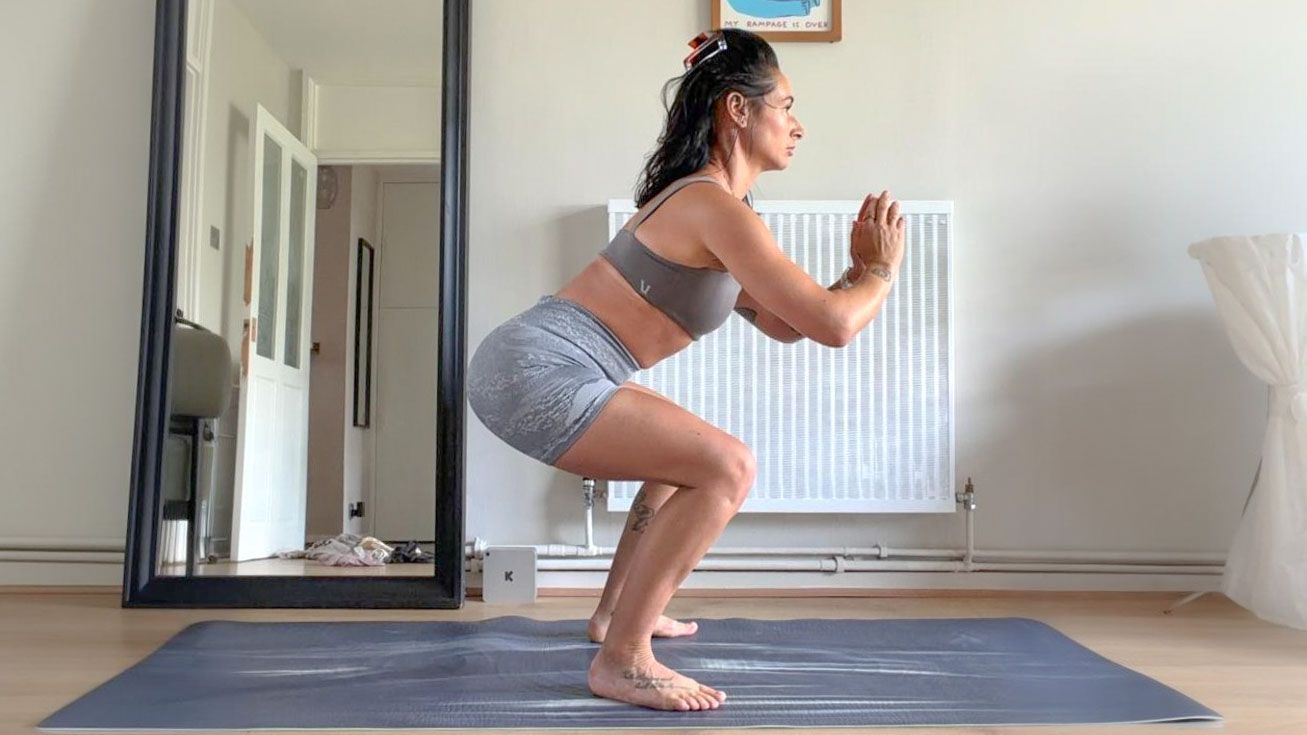
(Image credit: Tom's Guide) Squats look simple enough, and they're one of the most popular compound exercises to feature in leg day routines and gym workouts, but they're also very easy to do wrong.If you're learning how to squat properly, there are specific cues you'll learn to improve your form. Common ones you've probably heard include keeping your back straight, chest proud, core engaged and gaze ahead. But factors such as mobility, injuries, age, muscle imbalances, or even health concerns can impact your ability to squat properly.A problem I've always had is tight ankles, and I struggle to reach parallel when I squat. For a long time, I blamed it on my hips, but not too long ago, I performed a mobility health test using the Pliability app. It was here that I learned my ankles are the likely issue.Keen to make improvements to my squat, I committed to a 30-day ankle mobility program called "Fix Your Ankles," which can be found in the app logged as a five-week path. Here are my results.What is the "Fix Your Ankles" mobility path on Pliability? Image 1 of 6 Lower body mobility (Image credit: Future/ Sam/ Pliability) First, let me set the scene. Pliability is an app I've been familiar with for a few years now. It's a mobility app that allows you to take a mobility health MOT, then tailor your sessions, build your own programs and even follow paths or collections that interest you. It became a huge hit with the CrossFit community, but has since become popular with anyone interested in boosting recovery.You can toggle to exercise-specific recovery like Hyrox or golf, filter for pregnancy or post-partum, or even body parts and areas like your hips and ankles or upper and lower body. The options are endless.Each session you take will allow you to work through alongside a trainer or follow the routine alone with step-by-step instructions for each move. You can tell the app how much time you have and how often you'd like to move to help build a program specific to your needs.Get instant access to breaking news, the hottest reviews, great deals and helpful tips.I decided to re-test my mobility using "Take a Mobility Test," which involved performing an overhead squat from three different angles. You can find my results below. As you can see, my ankles were identified as the key area to improve, with my left ankle the most likely to be holding me back.With that in mind, I chose the "Fix Your Ankles" pathway, which involves three sessions a week for five weeks, ranging from seven to 13 minutes a session.Sneak peek of three ankle mobility exercises:Limited mobility or imbalances can cause instability during squats; this could involve a common pelvic tilt called butt winking, low back pain, poor depth, knees caving in, heels lifting, or generally a feeling of limitation or tightness.The hips, knees and ankles are often the main culprits, although thoracic mobility can also account for problems. A mix of strength work and mobility is often the solution; given I do a lot of both already, I was really interested to know it's my ankles causing the most issues.Hip and ankle mobility improve motor control, which is key during squats, and also keep joints healthy and injury-free. Ankle instability and tightness increase the chances of your heels lifting during squats, poor knee positioning, or reduced squat depth. It was time for me to start fixing things.Follow Tom's Guide fitness on Instagram. You can download the Pliability app here with a 7-day free trial.Despite my love of mobility training, I am guilty of neglecting areas I know need work in favor of ones I enjoy more, like hips. My ankles have been a problem area lurking in the background, and now's the time to turn things around.I've shot some before-and-after photos for you to see the difference, and I'm pretty shocked by the results. I'm 30 days into the program, so I have a little bit more work to do, but so far, the difference in my ankles and overall range of motion feels totally transformed.I feel like I have more space to move into, and my ankles feel more open and free without the tightness I could feel before, down the backs of the ankles and along the Achilles tendons. Image 1 of 2 (Image credit: Future/ Pliability) I plan to continue the routine, and I find the bite-sized chunks of work accessible for me, as I'm often found rushing around and never taking the time out to focus on the more "boring" types of fitness that are very important. This taps into something called exercise snacking, which refers to accumulating exercise during the day to build consistency.All I had to do was roll out one of the best yoga mats and commit to no more than 10 or so minutes three times a week. The exercises are performed slowly, with control, and are completely guided. Again, though, if you find the commentary annoying, you can just follow the exercises at your own speed in your own time and space.I also feel like I can get better foot splay as I ground down and press the weight into my feet and heels, which is building stability in the squat, allowing me to lift slightly more weight without feeling like I'm pushing my chest forward or wobbling around. I'd say from a 2/10, I feel I'm at a 5-6/10 with room for improvement still.I also feel like I can get better foot splay as I ground down and press the weight into my feet and heels, which is building stability in the squat, allowing me to lift slightly more weight without feeling like I'm pushing my chest forward or wobbling around. I'd say from a 2/10, I feel I'm at a 5-6/10 with room for improvement still.Why does this matter? Dorsiflexion of the ankles means your shins can push forward during a squat, which improves balance and helps you stay upright. If you don't have any mobility or flexibility around your ankles, your form will naturally compromise. I notice this because my heels try to lift, which is a clear sign, plus my chest drops forward when I run out of space. Sometimes I also notice my left knee turns in, or I can't reach depth.I can't wait to see how I feel and look after two months, so watch this space! But as a starting point? I'm impressed with my results so far. Follow Tom's Guide on Google News and add us as a preferred source to get our up-to-date news, analysis, and reviews in your feeds. More from Tom's GuideThree assisted stretches develop flexibility and strength without equipmentThe best stretches for tight hip flexorsOver 60? Try these 5 at-home strength moves to add years to your life Sam Hopes is a level 3 qualified trainer, a level 2 Reiki practitioner and fitness editor at Tom's Guide. She is also currently undertaking her Yoga For Athletes training course. Sam has written for various fitness brands and websites over the years and has experience across brands at Future, such as Live Science, Fit&Well, Coach, and T3. Having coached at fitness studios like F45 and Virgin Active and taken on both 1:1 and group, Sam now primarily teaches outdoor bootcamps, bodyweight, and kettlebells. She also coaches mobility and flexibility classes several times a week. Sam has completed two mixed doubles Hyrox competitions in London and the Netherlands and finished her first doubles attempt in 1:11.
I fixed a hidden problem holding back my squats with this 30-day 'Fix Your Ankles' mobility routine, and I can't believe the results so far
Full Article
Original Source
Read the full article at Tomsguide →KhanList aggregates and links to publicly available news content. We do not host full articles from third-party sources. Always verify important information with original sources.