
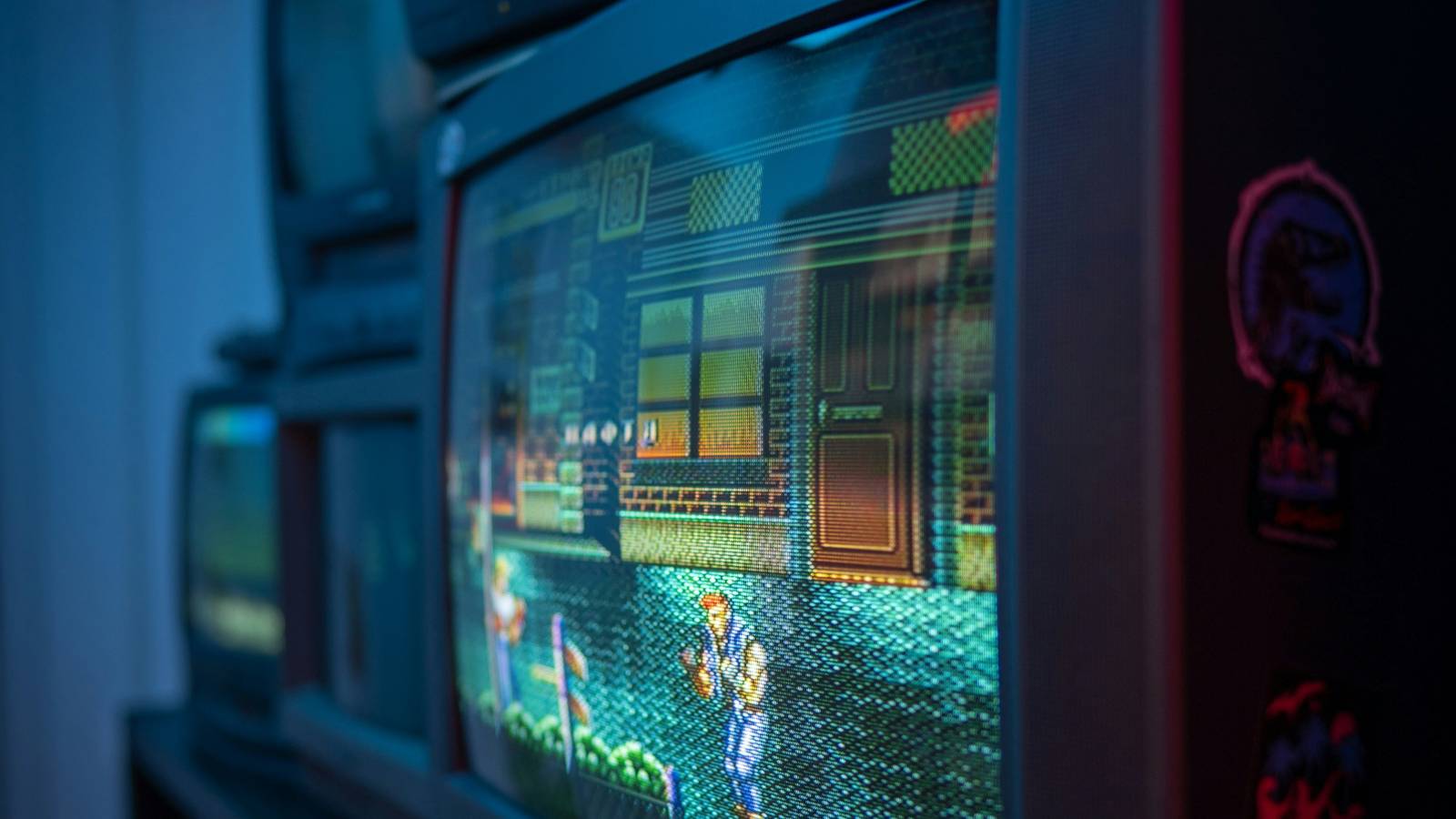
Published Aug 30, 2026, 5:00 PM EDT After a 7-year corporate stint, Tanveer found his love for writing and tech too much to resist. An MBA in Marketing and the owner of a PC building business, he writes on PC hardware, technology, and Windows. When not scouring the web for ideas, he can be found building PCs, watching anime, or playing Smash Karts on his RTX 3080 (sigh). CRT (Cathode Ray Tube) TVs were ubiquitous in the 90s, weighing a ton and requiring way too much space on your entertainment hub. While LCD panels made CRT displays a relic of the past, CRTs are seeing a bit of a revival right now. Retro gaming fans are hunting for working CRT displays for their superior color and performance and that old-school look. I used to think that nostalgia was doing the heavy lifting here, but CRT TVs had a lot more going on. The display technology gave rise to unique artifacts and that "soft" look, plus the scanlines gave the scene a transparency and sharpness. No wonder it's nearly impossible to achieve the CRT look on modern displays. Scanlines and phosphor glow soften the image Modern displays operate very differently Credit: Unsplash Once you know how CRT TVs actually create the image on screen, you start to appreciate them a lot more. The electron gun at the rear of the tube releases a focused electron beam at the phosphor-coated screen. This excites the coating, causing it to glow and emit light. The TV controls brightness by adjusting the beam's intensity. Color CRT TVs use three separate electron beams for red, green, and blue, which are focused onto the corresponding phosphor-coated sections of the screen. Phosphor excitation creates vibrant color without a backlight, so you get to experience smooth gradients, rich blacks, and smooth blending. This is one of the reasons people prefer the old CRTs over modern LCDs for their retro gaming setup. The other reason is the way CRTs render the image on screen. The electron gun scans the image left to right, starting at the top-left and ending at the bottom-right. The dark gaps between the glowing lines make you perceive a soft image — smooth pixel edges and color bleeding. In contrast, modern TVs show every pixel as a rigid square, failing to reproduce the CRT look. This scanline method also doesn't "hold" the image in a buffer, unlike modern displays, giving CRTs excellent response time. There's also way less motion blur and ghosting, making the gaming experience more responsive. Retro games were designed around CRT's visual artifacts Developers made the display tech part of game design Credit: BentimusPrime The limitations of older CRT displays naturally contributed to some unique artifacts, such as color bleeding, shimmering, and blooming. While modern displays treat these as anomalies to be corrected, developers in the 90s made them fundamental to the visual design of games. They factored in the signature CRT behavior to create a realistic, natural, and vibrant image. Artists used checkerboard patterns to emulate gradients, knowing that CRT scanlines would blend the patterns into smooth shades. The natural blur of a CRT screen creates visual depth that is sometimes lacking in modern displays. Even the color bleeding of separate electron beams into each other was used to result in smooth color transitions. The shimmering effect on sharp borders was accounted for when developers needed high-contrast text or edges in a scene. And high-brightness areas that resulted in blooming were used to create warm, organic explosions. This is why recreating that CRT look on your IPS or OLED display is impossible. Retro games from the CRT era won't look the same on drastically different display technologies. Retro gaming works best on an actual CRT display If the retro gaming bug has bitten you, I'd highly recommend looking for a functional CRT TV or monitor. It's hard to compete with the real thing, no matter how many RetroArch filters you apply on your modern TV. The phosphor glow, scanlines, and visual artifacts all came together in intelligent ways, thanks to savvy developers, to create a magical gaming experience.
I finally understand why retro games look so much better on CRT TVs, and it's not just nostalgia
Full Article
Original Source
Read the full article at Xda-developers →KhanList aggregates and links to publicly available news content. We do not host full articles from third-party sources. Always verify important information with original sources.