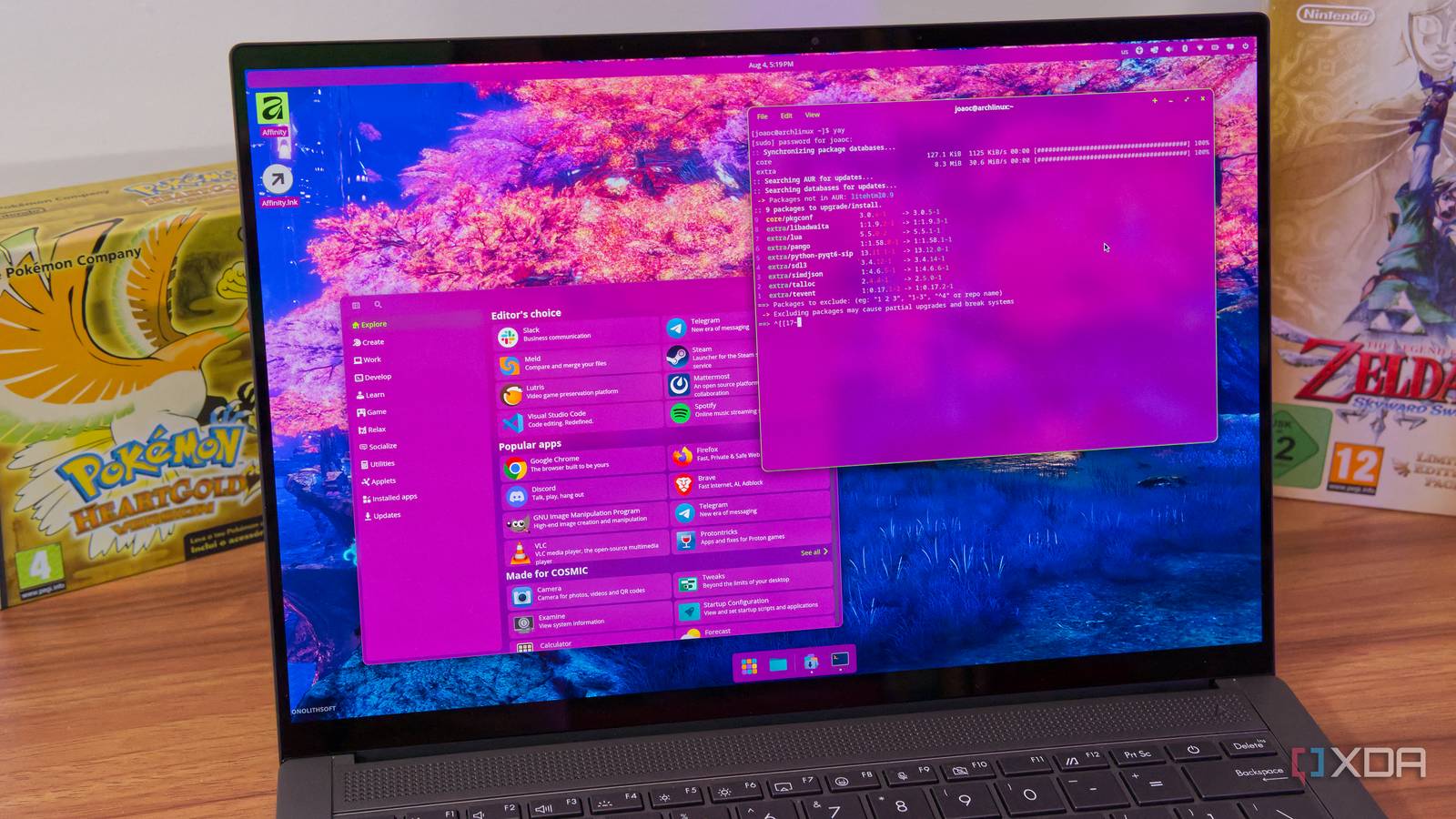
Published Aug 10, 2026, 8:00 PM EDT João has been covering the tech world for over 7 years, with a heavy focus on laptops and the Windows ecosystem. I also love all things tech and videogames, especially Nintendo, which he's always happy to talk about. Prior to joining XDA in 2021, he worked at Neowin: https://www.neowin.net/news/poster/jo%C3%A3o-carrasqueira/ Ever since my first experience with Arch Linux last year, my preference when it comes to Linux desktops has been KDE. It has enough familiarity with Windows, but a ton of useful features built on top it that make it all the more useful. But COSMIC has been threatening KDE's position as my desktop of choice, and recently, it finally pushed me over the edge. I've now switched my personal laptop to the COSMIC desktop, and it might just be my new home for the foreseeable future. COSMIC is versatile, yet easy to use Nailing a hard balance I may not have switched to COSMIC right when I first tried it, but I always loved what it was doing. It's clearly based on GNOME, but the developers have made a lot of changes to make the platform more unique while giving it more functionality and making it appear more lightweight. Like GNOME, COSMIC defaults to having a dock at the bottom and a menu bar at the top of the screen, but the menu bar actually has multiple applets for all the system features. Instead of condensing power, display, audio, and so on into the same menu, COSMIC makes it all visible, which gives you more control in a more direct way. I also like that the app launcher isn't a full-screen experience that obscures everything else. That goes for both the app liust and the keyboard-based search, which is even less intrusive compared to GNOME. Perhaps more importantly, though, COSMIC has some genuinely useful features you don't get on a lot of other distros by default. The biggest one is window management, and the flexibility to switch between tiling and floating windows at a moment's notice. Not only can you toggle it on or off in an instant, you can change the behavior for each workspace, and set a default for new workspaces. Plus, you can float individual windows when using tiling mode. Another notable feature of COSMIC is the ability to stack multiple windows into one. As someone who was very interested in Windows development for a decade or so, I remember the Sets feature for Windows 10 being tested and cancelled, but COSMIC actually brought it life and made it work as well as I could have hoped it would. Customization is also exemplary Personality, but accessible One of my absolute favorite things about KDE is the fact that it's so heavily customizable and made to look absolutely stunning. At the same time, I hate how finicky it can be. Whenever I try to apply a theme, there's a good chance I'll see an error message despite some changes being applied, and there are multiple pages of appearance settings and theme elements I need to go through to get the right look. It's a bit of a nightmare, which means once I've found a theme I like, I'm never going to willingly change it. COSMIC offers a much more simplistic approach, but it still delivers customizations that have a clear and significant impact. I can choose the colors that will affect every app using the COSMIC app style, which include the primary background, buttons, text, and in-app containers like sidebars. While these settings are designed for apps that adopt COSMIC styling, the desktop also tries its best to mimic the colors for GTK- and Qt-based apps, so I still get a fairly consistent look across the board. Customization is very simple, but if you lack the creative vision to make something you like, it's also easy to export and import themes, so you can apply something you find online. COSMIC themes are much simpler, though, so there's no worries about installing custom elements or anything that might cause problems like what happens with KDE. Plus, you can swap between themes at a moment's notice without much in the way of downsides (though sometimes Qt apps don't respond to changes right away). What really did it for me was the recent addition of the frosted glass effect to surfaces on COSMIC. All the color customization was great, but when they were all solid colors, it got a little overwhelming. Adding a degree of transparency to surfaces makes the system fele more beautiful, modern, and lively, and it gave me the extra push I needed to make the switch. I will miss some KDE features COSMIC doesn't do everything (yet) While I am happily switching to COSMIC, I would be lying if I didn't say that KDE has been doing a ton of things I'm going to miss. COSMIC is still relatively recent, so a lot of more specific tools haven't made it to the platform yet, and they might not even be planned. For example, I love how KDE can create a virtual screen for screen sharing, so I don't have to put my actual screen on display, and just use the virtual screen to showcase what I want. Plus, I can exclude certain windows from screen recordings, which is equally useful. I also like a recent addition that makes it easier to enter special characters, as well as the ability to snap apps side-by-side in a more freeform way that reminds me of Microsoft's PowerToys tool. These are things COSMIC can't do yet, though I hope to see them at some point. COSMIC can only get better It's still new, but it's growing fast The crazy thing about COSMIC is that it got its first stable release right at the tail end of 2025, so it's still a very recent project, and it's been evolving very quickly. That addition of the frosted glass effect happened in the last couple of months, and a lot of small parts of the UI have been tweaked and improved since that first release. Some buttons that used to look a little off now look more polished and intentional. And COSMIC is developed and backed by a relatively big company, System76, which also makes a a Linux distro that ships on its devices and uses COSMIC as the desktop. There's a lot of incentive to keep making the experience better across the board, and the financial backing to do it. There's good reason to be confident that it will keep getting better and evolving at a fairly quick pace. It's also worth mentioning that COSMIC already has a stronger foundation than many other desktops, since it's written entirely in Rust, giving it additional stability and security while still being lightweight. I'm excited for the future Now that I've officially converted to COSMIC as my main Linux desktop, I'm especially excited for the future of the platform. COSMIC has come a long way in a relatively short time, and it's even being adopted by multiple distros by default, such as the relative newcomer AstrOS. I see a bright future ahead. COSMIC Desktop
I finally switched Linux desktops, and COSMIC is the one to blame
Full Article
Original Source
Read the full article at Xda-developers →KhanList aggregates and links to publicly available news content. We do not host full articles from third-party sources. Always verify important information with original sources.