
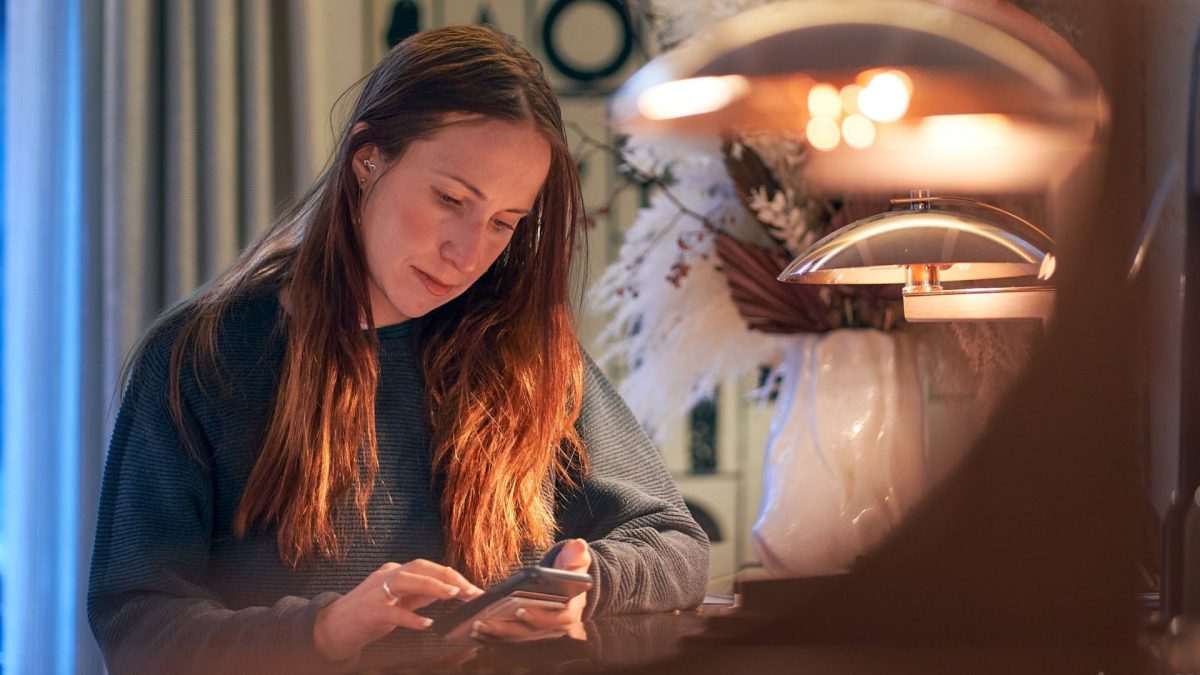
Coming home from work to the flat she shared with strangers, Francesca Baker-Brooker remembers heading straight upstairs to hide away in her room as she desperately did not want to be there. “I decided I would just eat and sleep and spend as little time as possible there as I really didn’t want to be there as it was a very unsettling environment and I felt uncomfortable and unsafe,” she recalled. Wanting to live in London in her twenties, but realising that renting was unaffordable on her own, Francesca lived in a number of flatshares. But it was the one that she moved into at the age of 29 in Vauxhall, London, that stands out in her mind as being deeply disturbing. Shorts Francesca, now 39, says she moved into a house in multiple occupation (HMO) after seeing an advert for a spare room in a flat and she joined a man in his forties and a woman in her thirties. She says the landlady provided her with no information about the other tenants prior to her moving in. Francesca describes how within just a few weeks of her living there, the man in his forties started to behave very strangely and scare her – to the point where she ended up moving out after just six months. Francesca, who works freelance in PR and now lives in Shoreditch, London, with her husband, said: “This man used to bring in rubbish from the streets from old beer cans to crisp packets to build art in the living room. “However, the final straw was when I went home for the weekend to visit my parents and when I came back, I found out he had been in my room and he admitted to tidying my underwear drawer. “This invasion of privacy made me feel unsafe and uneasy.” Francesca shares her story as new research shared exclusively with The i Paper reveals that one in five HMO tenants admit to feeling unsafe as growing numbers of people turn to shared living to tackle rising housing costs. Francesca feels there needs to be greater transparency and information about who people will be living with in flatshares (Photo: Joseph Gatt) The research, carried out by shared living platform Coho, found that more than two in five renters (42 per cent) move into shared accommodation with little or no information about the people they will be living with. As a result, one in five tenants have felt unsafe at some point because of a housemate with concerns. This is particularly pronounced among older renters as 27 per cent of those aged 45 and over said they have felt unsafe. Based on responses from 5,145 UK HMO tenants, Coho’s findings in its State of Shared Living Report raises questions around compatibility, transparency and maintaining safety across the UK’s shared living sector. Across England and Wales, there are currently 482,788 HMOs housing more than two million people, according to the National HMO Register. The findings show a clear disconnect between the way shared accommodation is currently offered and what tenants actually want from their living environment. Six in 10 tenants (60 per cent) wish they had known more about their prospective housemates before moving in, while 53 per cent want greater input over who joins their household. Stressing the importance of compatibility, 40 per cent of people say they would be willing to pay more in rent to live with housemates they knew would be a good fit. The research comes as rising housing costs push more people towards shared accommodation. Average rent prices are up 3.7 per cent year on year at £1,393 per month, while average house prices have also increased by 2 per cent over the past 12 months to £272,000 – putting home ownership further out of reach for many. For many renters, sharing is no longer just a short-term solution associated with students or those at the beginning of their careers. Over 40 per cent of renters are aged 30 or over, of which 89 per cent are in paid work. Sam Taylor, 32, a business analyst from Kent, moved into an HMO to save money, but says it left her feeling lonely and uneasy. After moving to Liverpool in May, Sam turned to shared living to settle into a new city and make friends, without the high costs or commitment of living alone. She moved in with five other people and she paid £535 a month for rent including bills. She says this was significantly cheaper than if she had rented on her own as she would have faced paying around £1,000 a month in rent. Despite saving around £500 a month in rent, unfortunately for Sam, the household turned out to be significantly different to what was advertised.“The advert said the house would be a mix of men and women, with tenants aged between 21 and 35,” she said. “But when I moved in, there was only one man and four other women, all in their early twenties, which wasn’t what I expected. “I’d hoped there would be a social side to the house, especially as I was moving to a new city, but everyone mostly kept themselves to themselves and had little interest in socialising or even chatting –which was very frustrating. “There was also a general lack of consideration for each other. It meant you could never properly relax in the communal areas because you were always aware of making too much noise while others were on the phone or going about their day. Sam has since handed in her notice with plans to move back south to a property she owns. She said: “I’m paying a mortgage, so for me to live in Liverpool and have some funds to explore and experience it, I needed to limit my rental budget. Perhaps if daily living was a bit cheaper I could have found a studio flat but I think unlikely.“Landlords, agents and online platforms need to be much more transparent about the properties they advertise, including the condition of the home and who already lives there. In my case it felt like they were more interested in just filling rooms. Tenants deserve to know who they’ll be living with, likewise existing housemates should have more say over who moves in.” Vann Vogstad, CEO and founder of Coho, says the findings show that the shared living industry needs to rethink how tenants are matched into homes. “Our research exposes a major gap in the way shared living works today,” he said. “We ask people to share their homes with complete strangers, yet in many cases, they are given little or no information about who they are going to live with. “Tenants feeling unsafe in their own home, even once, is not something the sector can ignore.” Francesca says she does not regret shared living, as at that time she wanted to live in London and it was the only way she could afford to do so. However, during her negative experience, she did not want to be in the flat and kept herself to herself.
I felt unsafe in a shared flat. My older male flatmate tidied my knicker drawer
Full Article
Original Source
Read the full article at Inews →KhanList aggregates and links to publicly available news content. We do not host full articles from third-party sources. Always verify important information with original sources.