
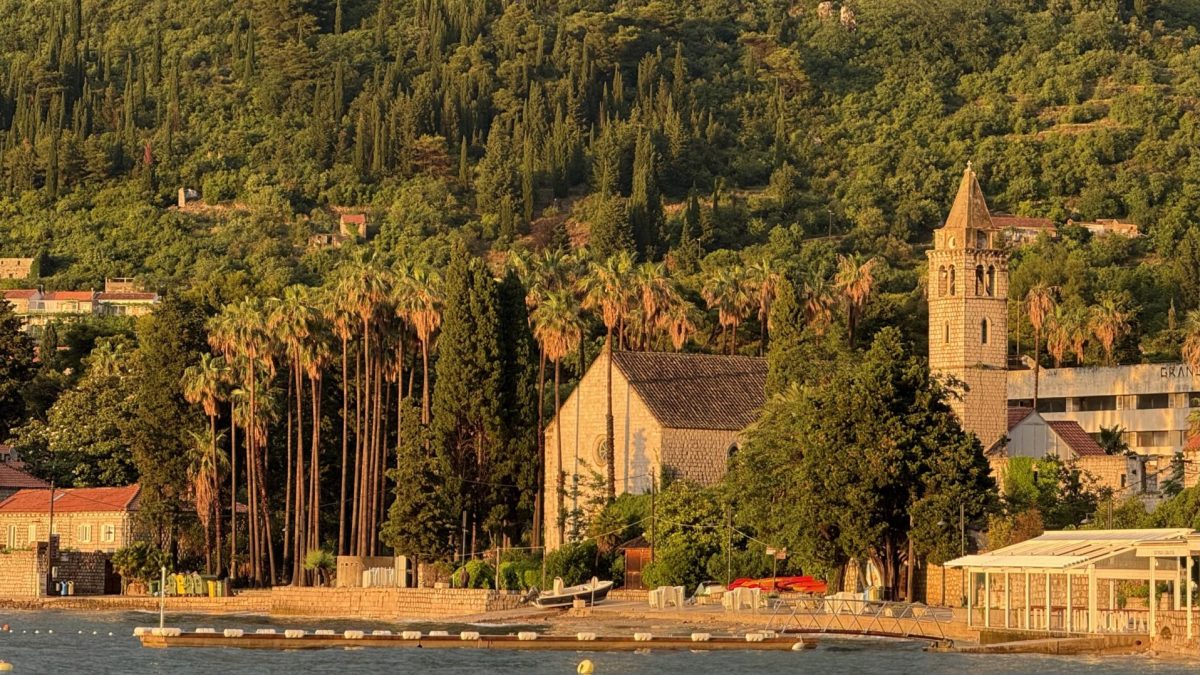
Scents of wild rosemary, fennel and sun-warmed pine waft by, instantly relaxing me as I walk past olive groves and vineyards. It’s obvious why the tiny island of Šipan became such a magnet for Dubrovnik aristocrats, who came here in the 15th and 16th centuries in search of a quiet place to build their summer palaces. About eight nautical miles north of Dubrovnik, Šipan is the furthest of the three inhabited Elaphiti Islands, with another 10 islands and islets making up the archipelago. There’s little to do here but walk, swim, eat and unwind – all the ingredients for an island escape. Day-trippers get a brief taste of Šipan on busy boat trips that also take in Lopud and Kolocep, the other two inhabited islands. I’ve done it myself. This time, I’m slowing things down and island-hopping using cheap ferries that don’t require the income of a Dubrovnik duke – each costing €3-€5 (£2.50-£4.30). Shorts The ferry to Kolocep costs just a few euros (Photo: Alphotographic/Getty Images) My escape from the crowds of Croatia’s most-visited city – which recorded more than 20 million tourist arrivals in 2025 – begins even before I board the ship. Opposite Gruž ferry port, in the spruced-up Lapad district, is Hotel Kazbek, a 16th-century summer residence for Dubrovnik nobility that’s been transformed into an elegant boutique hotel. A laze by the pool and relaxed dinner in the garden restaurant set the tone for my mini odyssey. An hour after leaving Gruž, the ferry drops me at the smaller of Šipan’s two ports, Sudurad, a pine-fringed toytown harbour of terracotta-roofed stone houses and dinky motorboats. There’s only one hotel, Hotel Božica, and I soon see why its mainly British guests return year after year. It’s friendly, warm and laid-back, with the bonus of a large pool terrace, bathing platforms, and a really good restaurant. Seafood and meat dishes are given equal billing, including an irresistible plate of grilled plump and sweet Adriatic langoustines. Hotel Kazbek in Dubrovnik (Photo: Adam Batterbee) In Sudurad I nab a waterside table for lunch at Balun restaurant and watch the tourist boats come and go. While day-trippers try to neck some beers, order food and have a quick swim before their boat leaves, I’m in no rush, and take my time over a feta salad and Ožujsko beer in the sunshine. I have two nights here before I move on, so the next day I head north to Šipan’s other village, Šipanska Luka – a 70-minute walk along the main road, past countless olive trees and remnants of those old Renaissance palaces. Šipanska Luka is a larger port, allowing for bigger sailboats and small cruise ships of up to 38 passengers. Maybe because it’s still early season June, but it’s quiet; Priježba Beach, where I swim before a lunch of black risotto on Konoba Tauris’s shaded terrace, is nearly deserted. Afterwards, I bless the island bus that takes me back to Sudurad in just 10 minutes. All the while, a major storm is brewing, causing the national ferry service, Jadrolinija, to cancel the sailing to my next island, Lopud. It’s a fact of Adriatic life. But Hotel Božica comes to the rescue with its speedboat, delivering me to Lopud a few hours before the thunder and lightning arrive. Clear water around Sudurad (Photo: gianliguori/Getty Images) On the island’s southern coast is the sheltered horseshoe-shaped Šunj bay, whose sands feature on lists of Croatia’s best beaches and are usually heaving with day-trippers. But this morning, with the air made heavy by the impending storm, only about three people are here. I come back the next day when the air has cleared, the sea is calm and the sun beats down. Hours slip by on deckchairs under fig trees at Bindo restaurant, an uphill walk from the busier beach bars. I leave in the late afternoon just as dozens of partygoers arrive on a series of careering golf buggies – the main form of transport on this car-free island. My timing, for once, is good. I chat to Tilda Bogdanovi, who owns the excellent Mandrac restaurant and Villa Birimiša, where I’m staying. She’s keen to promote Lopud’s cultural side away from the beach crowds, and organises three festivals: film in June, jazz in August and literature in September. They take place either in the grounds of the Rector’s Palace near the harbour or in the atmospheric palm-shaded gardens of the long-ruined Grand Hotel, built in 1936 and left to rot over the past few decades. Ruins of the Grand Hotel (Photo: Adam Batterbee) Next year, the island’s sprawling beachfront Lafodia resort will reopen after being taken over by Hilton, and things will no doubt change somewhat. The restaurateurs will certainly be happy to see the return of several hundred guests a night. Reluctant to leave Lopud, whose shingle beach near my hotel becomes a favourite, I head to Kolocep, the sleepiest of these islands. One end of the beach is dominated by the Tui Blue Kalamota Island resort, whose architecture blends into the hillside. I’m not an all-inclusive-hotel type of holidaymaker but it’s easy to fall into a lazy rhythm of beach, pool, walks along the waterfront and some very good buffet food. The deep blue bay on Kolocep (Photo: Vasylisa Dvoichenkova/Getty Images) Time constraints mean I can stay only one night, and it’s not enough. Ironically, I don’t have a chance to do what many day-trippers do: take a boat ride to Kolocep’s blue and green caves. But the chance to linger, to have more than a fleeting taste of island life, is delicious enough. Those Renaissance nobles had the right idea. How to get there The writer was a guest of Jet2, which offers flights to Dubrovnik from nine UK airports, the Croatian National Tourist Board and the Dubrovnik Tourist Board. Ferry tickets can be booked online from Jadrolinija. Where to stay B&B doubles at Hotel Kazbek start from €249 and at Hotel Božica from €220; Villa Birimiša has studio apartments from £145; Tui Blue Kalamota Island has half-board doubles from £142 (all-inclusive from £177).
I escaped the crowds of Dubrovnik to go island hopping using cheap ferries
Full Article
Original Source
Read the full article at Inews →KhanList aggregates and links to publicly available news content. We do not host full articles from third-party sources. Always verify important information with original sources.