
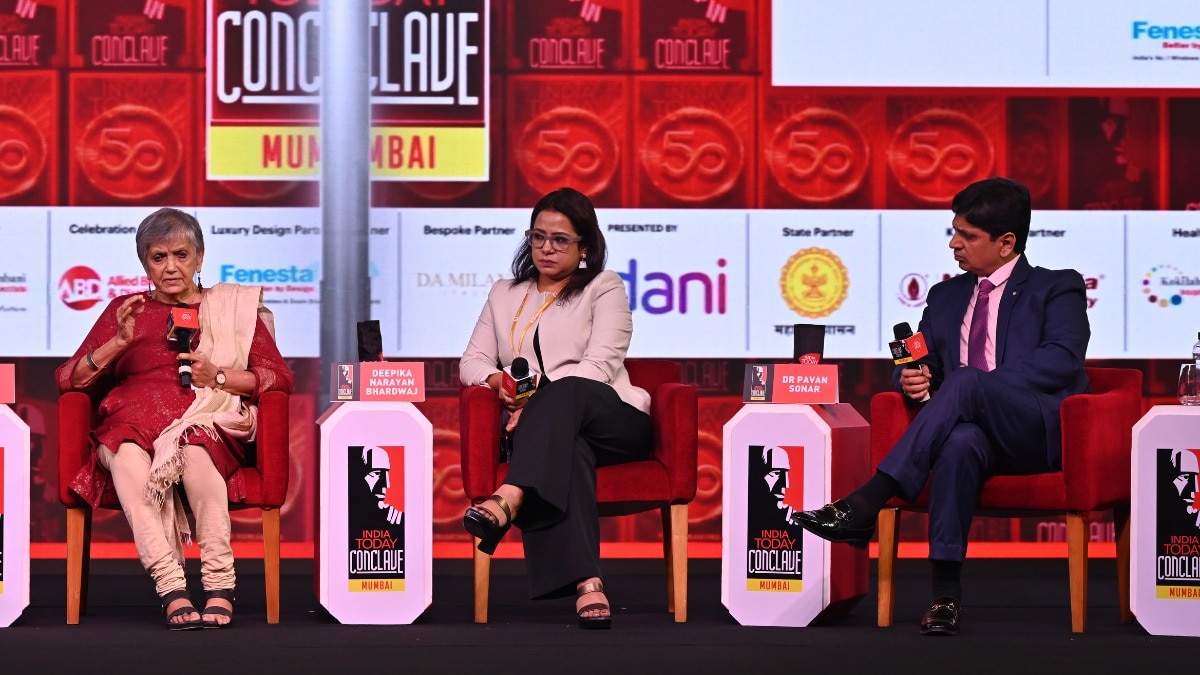
A session at the India Today Conclave Mumbai recently examined dowry deaths, domestic violence and allegations of false cases in marriage in the backdrop of shifting social realities and the ‘I do’ vow turning fatal for scores of men and women in marriage.The panel comprised lawyer and activist Flavia Agnes, men’s rights documentary-maker Deepika Narayan Bhardwaj, and Dr Pavan Sonar, psychiatrist, sexologist and couples’ therapist.Agnes argued that the term “dowry death” is a misnomer as women die of violence—either by suicide or are murdered. She said many women who die had never approached the police, and that these incidents are seen as dowry-related concerns only after cases are registered under sections of murder and dowry death following their demise. The belief that women misuse the law persists, she said, because individual cases draw attention while the cases of 16 women estimated to die on an average each day go largely unreported.Agnes traced laws such as on dowry death or a married woman being subjected to cruelty to the women’s movement of the 1980s, which responded to young brides dying in marital homes, mostly in north Indian states, where there are seldom witnesses. Women often avoid filing cases during a marriage because of stigma and the wish to preserve it, she said, and describe the violence in divorce petitions. She added that men file for divorce more often on grounds of adultery than cruelty. Bhardwaj said human life should not be viewed through the lens of gender. She said about 150,000 men die by suicide each year and that her foundation addresses around 200 people every month. She cited the death by suicide case of Atul Subhash, whose wife she said spent 19 days in jail, and a Delhi judicial officer’s death by suicide in which she said no arrests had been made. Bhardwaj thus argued that the law is applied differently depending on who is wronged.She referred to Supreme Court guidelines, issued about two weeks earlier, on false allegations of sexual abuse in matrimonial disputes. “Laws protecting women are needed, but some women now misuse legal privileges, as men have misused social ones,” said Bhardwaj.Dr Sonar said couples usually reach therapy at a point of no return. He pointed to the absence of early sex education, teaching on consent and preparation for marriage. He also cited the decline of joint families, urbanisation and women’s financial independence as changes the institution is still adapting to. Gen Z, he said, is open about its expectations and needs patience.SESSION HIGHLIGHTSFlavia Agnes* “Nobody dies of dowry. They die of violence.”* “Women suffer... mostly suffer in silence.”* “Women do not want to file a case when the marriage is on. You always want to preserve your marriage... Divorce is a stigma.”Deepika Narayan Bhardwaj* “When somebody is wronged, it should not be looked at from the spectrum of gender.”* “There are a lot of expectations from men as well to run the household. No matter what he wants to do in life, he has responsibility the moment he becomes an adult that you have to take care of the family.”* “Men face problems that the society doesn’t want to acknowledge and this is why suicides are rising. Around 150,000 men die by suicide every year in India.”Dr Pavan Sonar* “Mostly couples come [for therapy] when at the point of no return, and that is the big problem. It stems from basic education.”* “Sex education is lacking in early childhood. We psychiatrists, psychologists and counsellors try to do sex education, but it is still a taboo.”* “The system is now breaking down because of social and urban developments as well as financial independence of women.”Subscribe to India Today Magazine- Ends
'I do' turns fatal: Why dowry deaths, violence, false cases are scarring Indian marriages
Full Article
Original Source
Read the full article at Indiatoday →KhanList aggregates and links to publicly available news content. We do not host full articles from third-party sources. Always verify important information with original sources.