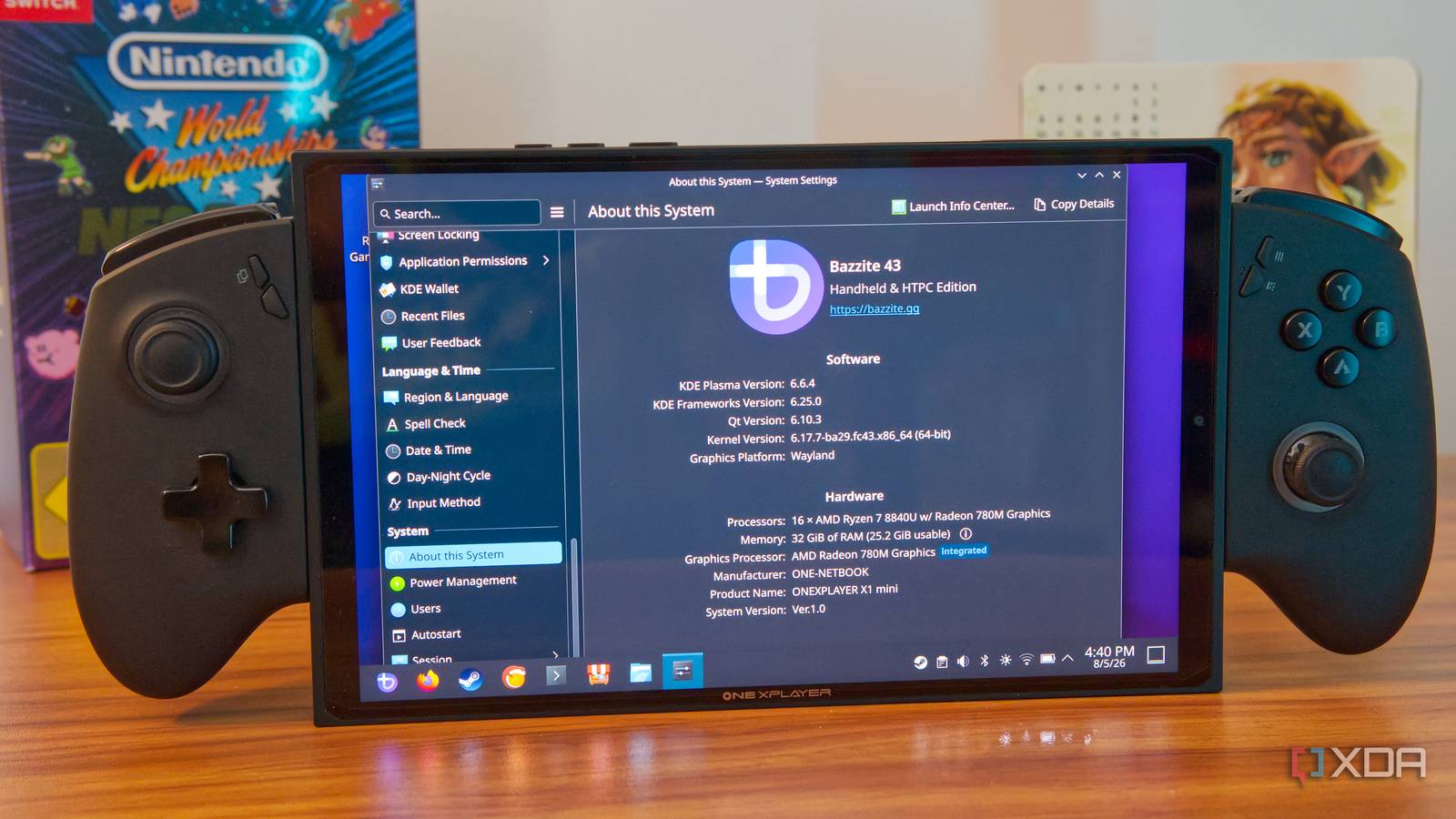
Published Aug 11, 2026, 12:30 PM EDT João has been covering the tech world for over 7 years, with a heavy focus on laptops and the Windows ecosystem. I also love all things tech and videogames, especially Nintendo, which he's always happy to talk about. Prior to joining XDA in 2021, he worked at Neowin: https://www.neowin.net/news/poster/jo%C3%A3o-carrasqueira/ Immutable Linux distros are options you'll often see recommended, particularly for newcomers to the platform who may not want to deal with potential problems to solve. While they have benefits, it's also easy to see why a Linux user may not like it. The restrictions on typical package installations and locked-down system files kind of take away one of the best parts of a Linux desktop. However, if you have a gaming handheld, it's a different story. I installed Bazzite on mine, and suddenly the idea of an immutable distro made a lot more sense. Why immutability is a problem Linux users love their freedom Immutable distros have some clear benefits, especially for people who are less technically inclined. If you don't want to deal with the maintenance work of a typical distro, immutable options offer complete system images that are more thoroughly tested with all the included packages, and it's harder to modify system packages and files, reducing the chances of breaking things. Therein lies the problem, however. Those restrictions on system files and apps that protect the less experienced users also make the system too restrictive for someone who wants to tinker a bit more. Just recently, I was trying out a distro called Nitrux for another article, and I found myself unable to edit the Hyprland configuration files because they were protected. To be fair, there was a file I could edit, but it was frustrating that the first ones I found were locked. The point is a lot of experienced Linux users expect to be able to do anything they want with a Linux distro, and immutable systems just place a lot of hurdles in the way. That's why a typical desktop user might not want them and go with more liberating alternatives like Ubuntu, Fedora, or Arch. Gaming handhelds are different I don't need a desktop That being said, things are a bit different on a gaming handheld. Linux gaming handhelds such as the Steam Deck are pretty popular, but part of the reason for that is the fact you don't need to deal with a lot of the typical usage paradigms of Linux. On a gaming handheld, most people don't want to be touching the terminal or messing with system files. You want to install your games and have them work. In this context, an immutable distro like Bazzite makes perfect sense compared to something like CachyOS. Bazzite falls more in line with the "it just works" mentality you want with a device like this. You just play your games, you install system updates when you need to, and things just keep working. If you ever run into problems after an update, you don't need to spend hours in the terminal troubleshooting the issue, just roll back to the previous system image, and you're good to go. Plus, on a gaming handheld, you're not likely to be doing a lot of tweaking and messing with system files. Most of the time I'm using my gaming handheld, I don't want to leave Steam's gaming mode, so I don't even look at the desktop at all, and the immutability never gets in the way of what I want to do. It really makes the most sense on this kind of device. Apps like Steam, Lutris, and Heroic Games Launcher are all available as containerized Flatpak apps, which means they can be installed just fine on immutable systems. You don't need access to system files or to install system-level apps just to play your games, even if they're not on Steam, so there isn't much of a downside. Of course, if you buy a gaming handheld with the intention of using it as a desktop on occasion, that may make things a bit different, but I want my gaming handheld to be just for gaming. This setup makes perfect sense. Containers can bridge the gap If I really need it If you do end up needing access to system files or you want to install apps using a traditional package manager, there are always ways you can work around this. Some people use the Steam Deck as a development machine, and the way this can be done is by using containers, or LXCs. Using an app like Distrobox, you can create containers that are essentially full-blown Linux installations with their own file system and apps. You can deploy almost any Linux distro you want this way, from Ubuntu to Arch, and run all the commands you'd generally expect to be able to use on those platforms. Containers are actually great for many use cases because you can test and use multiple distros at any given time, or set up a container that contains a specific set of packages, and even specify the version of a package you want to use. If you have a project that depends on a specific version of Node.js, for example, you can have a container for that, and then have another container with a different version of Node.js that you may need for a separate project. None of this ever touches your primary system — aside from using hardware resources while the containers are running — so you can do all this without worrying that your gaming machine is going to break. It's great, and this all applies to desktops, too, so I can see why it's compltely valid to use an immutable distro on a typical PC. It's just not for me. I wouldn't put anything else on my handheld While I'm happily running Arch Linux on my laptops, I'm sticking with Bazzite for my gaming handheld, and the immutability is a huge part of it. All I need from this device is to boot it up and play the games I have installed, and Bazzite does this perfectly while giving me the confidence that the entire system won't break and force me to spend hours troubleshooting. If you have a gaming handheld and you want to install Linux on it, Bazzite remains my top recommendation. Bazzite
I ditched traditional Linux for an immutable distro, but only on my gaming handheld
Full Article
Original Source
Read the full article at Xda-developers →KhanList aggregates and links to publicly available news content. We do not host full articles from third-party sources. Always verify important information with original sources.