
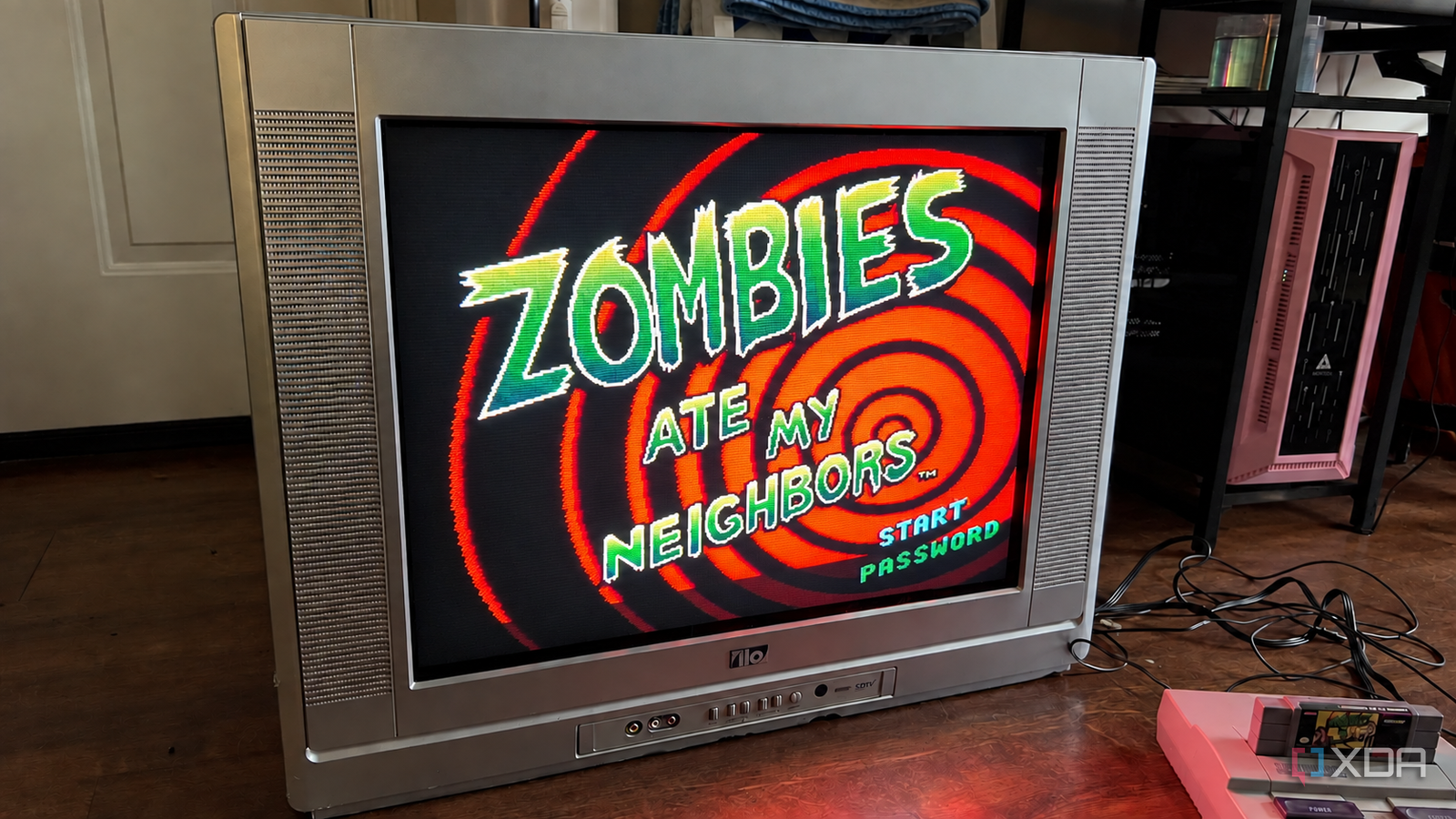
Published Sep 23, 2026, 8:31 AM EDT Patrick is a seasoned writer with more than a decade of experience, specializing in any and all things tech. His work has been featured on platforms like CNET, Yahoo, Xfinity, and many other outlets. When not typing away, he can be found with his nose in a book. I spent my formative years playing my favorite games on an old CRT, and I've gone to great lengths to recapture that feeling in modern playthroughs. There was always something missing, though. No matter what I did, it never felt right — at least until I ditched emulators and upscalers and opted for a CRT instead. And then, like magic, that same experience was right there in front of me. For all of the advances in display technology, nothing has nailed the feel of scanlines quite like a CRT. A CRT made my retro games look the way I remembered them No artificial crispness here Go plug an old console into a modern TV, and the problem becomes readily apparent. While we want crisp, clear displays for 4K and 8K content, it doesn't work so well for a Super Nintendo outputting a 256x224 resolution. The lines are too sharp; the pixels were never meant to be that clear, and the scaling doesn't work as it should. And that's moot if you can't even play the game without severe ghosting. A CRT naturally solves those problems. It's a softer image, and the output of a SNES (or a PlayStation, Genesis, etc.) was designed with scanlines in mind. The image has a purity that a shader or filter can't match. When it comes to retro games, "better" image quality is something you can debate all day. I prefer playing on a CRT because it matches the games to the environments they were designed for. Old consoles are just easier to use with a CRT It's plug-and-play The nostalgic look of a CRT is a big part of the appeal, but there's another, more practical reason to use one: it's just easier. Playing a game on a modern TV takes a lot of work, like composite-to-HDMI adapters, upscalers like a RetroTINK, and working around latency. Upscaling might make it look good, but modern TVs usually have post-processing that adds a lot of lag. In Street Fighter II, for example, this means M. Bison is going to wipe the floor with you. A CRT is a much more plug-and-play solution. The consoles just work, as long as you have the right cables. CRTs are also closer to the intended aspect ratios; rather than dealing with pillarboxing, like you would on a modern TV, connecting a SNES to a CRT fills the screen properly. If you're going for authenticity in your retro gaming experience, it's hard to beat a CRT. The experience is much closer to what the developers intended. But buying a CRT isn't as simple as snagging a new TV off the shelf You have to consider age, weight, size, and inputs more than specs If you're planning to buy a CRT, keep a few things in mind. First, consider the size. Modern TVs are flat and sit flush with a wall, whereas a CRT carries a much larger footprint. Even a smaller 20- to 27-inch CRT can be surprisingly heavy and take up a lot of space. Make sure you have the room for it before investing in one. Next, consider what inputs the TV supports. Composite inputs (the red, white, and yellow cables) are typically the most common, with component cables (red, green, and blue) coming in a close second. S-Video connectors are another common option. Older CRTs might also support RF/coaxial inputs. These were particularly common for NES and SNES consoles, and while they do work, the signal is messier than its counterparts. Then there's SCART. This type of connector is most common on European sets, but was extremely rare on North American sets. When carrying an RGB signal, it keeps the red, green, and blue video signals separate and can produce an exceptionally clean picture while preserving the original analog look. I recommend searching Facebook Marketplace or another local reseller site rather than shipping. A CRT's weight makes shipping costs astronomical, so arrange local pickup to save money. One final tip: many retro gaming enthusiasts point to the Sony Trinitron as the peak of all CRTs, but that has driven the value of these units through the roof. In my experience, any consumer model from a trustworthy brand can give you the experience you're looking for without becoming an investment item. Use the CRT alongside your modern TV, not in place of It's not going to look better than a 4K unit for everyday use If you're a retro gamer, think of the CRT as part of your setup. You shouldn't replace your existing TV with one. It might give Netflix a classic look, but I'll cite the same concerns from earlier: CRTs are heavy, usually much larger than modern TVs, and they consume a ridiculous amount of power. They're great for revisiting your childhood consoles, but not for general entertainment or a modern platform. My CRT isn't the best TV overall, but it's the best at one specific job I love my CRT. At 32-inches and 75lbs, it's a beast that doesn't move around much, but Super Mario Kart looks better on it than on the 55-inch 4K Sony I have in my bedroom. But when it comes to watching something, I'd much rather binge Psych on my bedroom TV than on my CRT. That's just for older consoles.
I ditched my modern display for a used CRT, and my retro gaming setup finally felt right
Full Article
Original Source
Read the full article at Xda-developers →KhanList aggregates and links to publicly available news content. We do not host full articles from third-party sources. Always verify important information with original sources.