
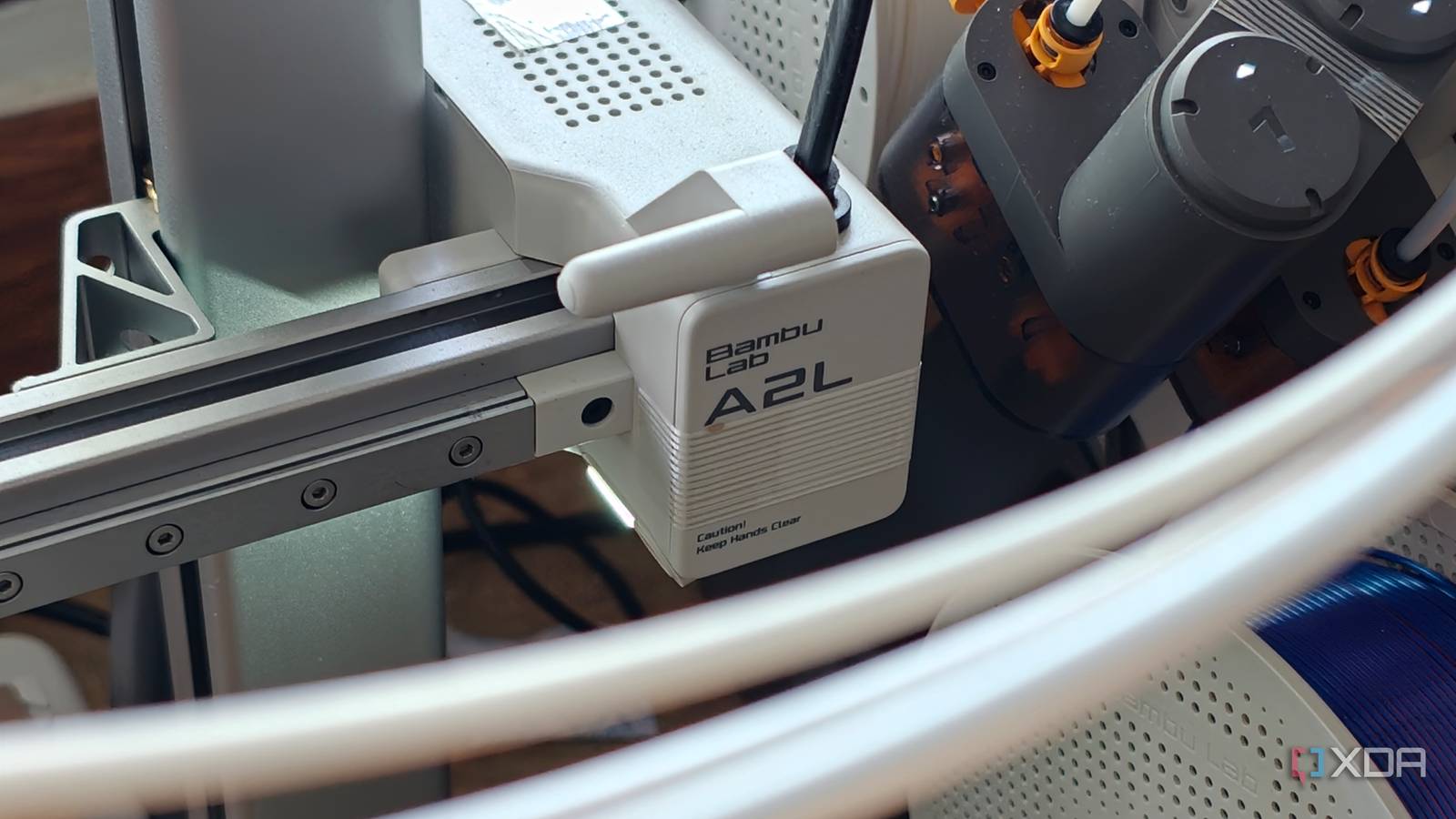
Published Sep 1, 2026, 11:00 AM EDT Dhruv Bhutani has been writing about consumer technology since 2008, offering deep insights into the personal technology landscape through features and opinion pieces. He writes for XDA-Developers, where he focuses on topics like productivity, networking, self-hosting, and more. Over the years, his work has also appeared in leading publications such as Android Police, Android Authority, CNET, PCMag, and more. Outside of his professional work, Dhruv is an avid fan of horror media spanning films and literature, enjoys fitness activities, collects vinyl records, and plays the guitar. I've been in and out of the 3D printing hobby for a decade, and the market has changed dramatically in the years since. Recently, when I was looking up options for a new 3D printer, my biggest dilemma was picking between a standard bedslinger and a fully enclosed CoreXY machine. My pick? The all-new Bambu Lab A2L. I picked the device for a fairly straightforward reason. I wanted the ability to print big objects without spending significantly more money or opting for a much more complicated machine. The fact is, a CoreXY machine is considered the natural upgrade path. The fixed bed, faster movement and better handling of tall prints are legitimate reasons. But unless I blow the bank, it doesn't solve my biggest complaint -- a small build plate. The bigger build volume is a real advantage A bed slinger is good enough for my use case A CoreXY printer comes with obvious mechanical advantages. The bed only moves vertically while the toolhead handles the X and Y movement. That's useful with tall or heavy prints because they aren't constantly being tossed around backwards and forwards. But that doesn't mean that everything is rosy. A bedslinger is mechanically simpler, and it can often accommodate a larger build volume at a lower price. The Bambu Lab A2L immediately stood out to me for its massive build volume. Clocking in at 330 x 320 x 325mm, that's effectively twice the volume of the A1 that I had previously rejected. It's also a significantly bigger build volume than any CoreXY printer you can get at a similar price point. For me, that build volume is the feature that made the decision for me. If I'm buying a 3D printer to solve practical problems, it needs to be large enough to print practical solutions. My desk is full of little problems that are just easier to solve with a 3D printer. I've been making brackets, mounts, trays, organizers and Gridfinity components. A large build volume means that I can one-shot these prints without factoring in joints, alignment issues and assembly. A 330-mm wide build plate means that I can make things that simply wouldn't fit on a smaller machine. Just today I printed an oversized dinosaur prop for my nephew that would have to be split in 3 parts on a smaller machine. Elsewhere, I already need 4 build plates for each drawer in my Gridfinity setup, a smaller machine would mean as many as 8. That's more time spent printing, and more alignment and joints to figure out. And, yes, technically a moving bed is not as elegant as just moving the print head. However, technology has come a long way. I wasn't expecting much, but whatever magic Bambu Lab has done with its adaptive vibration compensation to control the effects of the moving platform does the trick. All that to say that the printer is plenty fast, not that I'm trying to win benchmarks here. It goes without saying that there are some limitations to an open-bed printer that can't be worked around. You're not going to be printing ABS, ASA or other engineering material on this printer. But for a hobbyist like me, that's a non-issue. I suspect it'll not be an issue for a lot of people. With standard PLA, PETG and TPU, the printer performs swimmingly. The A2L's biggest advantage is value More build volume for the money There's another reason why the A2L's design in particular, and opting for a bedslinger in general, makes a lot of sense. That's cost. The A2L starts at around $469. Even when you factor in the cost of an AMS Lite, which is an optional, but in my opinion a non-negotiable extra, you clearly come out on top. The value proposition is very different here compared to standard models like the A1, and premium fully-enclosed CoreXY machines. For many (including yours truly), the money going towards a larger build volume makes sense. An enclosed printer with a rigid frame sounds great until it simply can't fit the objects that I want to print. The A2L makes the right compromises. Bambu Lab has put engineering resources into the one thing that matters every single day — the ability to print an enormous print, think helmets and cosplay parts, on a single build plate. In my workflow, between the time savings and the literal cost savings, the A2L is cheaper to run than a smaller printer no matter how I look at it. Compatibility with the AMS Lite system further shifts the equation in the A2L's favor. A large build volume and the ability to print in multiple colors at this price point is, honestly, a game changer. The right balance of specifications CoreXY is, on paper, obviously a superior system. But that's not the point of this article. Unless you're printing professionally, a machine that strikes the right balance and feature set makes most sense. Features like automatic bed levelling, flow calibration, vibration compensation, and a built-in camera for keeping tabs on an ongoing print have effectively turned the printer into an appliance. And that's amazing as, for all practical purposes, you can send a print job from your phone and pick it up once you get the notification telling you that it is ready. There's value in turning the 3D printing hobby into something so accessible that anyone can pick it up, while also building a product that is actually useful for building practical parts. All that, at an accessible price point. The Bambu Lab A2L doesn't necessarily prove that bedslingers are better than CoreXY printers. Technically, they are not. But this balance of technology, volume and price might make it an incredible choice for most hobbyists. It certainly has been for me. Bambu Lab A2L Build Volume 330mm x 320mm x 325mm Printing Speed 500mm/sec Materials Used PLA, PETG, and other non-engineering filaments Brand Bambu Lab Max Hot End Temp 300C Max Bed Temp 80C The Bambu Lab A2L is a bedslinger 3D printer compatible with the AMS Lite for multicolor printing and featuring an oversized print bed for large volume prints.
I ditched my CoreXY 3D printer plans for a bedslinger, and my build volume doubled for half the price
Full Article
Original Source
Read the full article at Xda-developers →KhanList aggregates and links to publicly available news content. We do not host full articles from third-party sources. Always verify important information with original sources.