
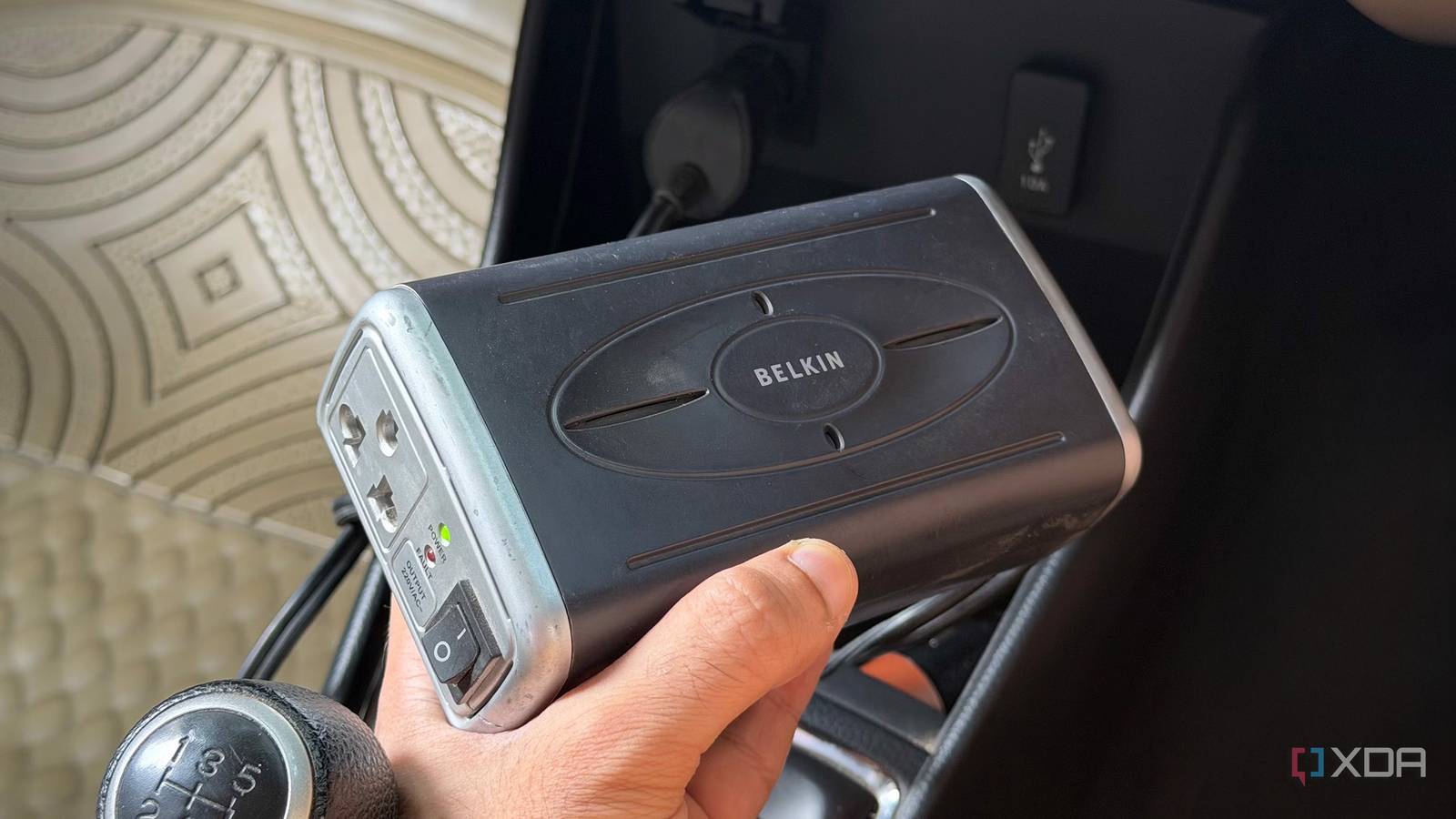
Published Aug 13, 2026, 3:00 PM EDT Dhruv Bhutani has been writing about consumer technology since 2008, offering deep insights into the personal technology landscape through features and opinion pieces. He writes for XDA-Developers, where he focuses on topics like productivity, networking, self-hosting, and more. Over the years, his work has also appeared in leading publications such as Android Police, Android Authority, CNET, PCMag, and more. Outside of his professional work, Dhruv is an avid fan of horror media spanning films and literature, enjoys fitness activities, collects vinyl records, and plays the guitar. Practically every car ships with a plethora of USB ports today, but they're not entirely adequate for the sheer variety of devices I charge off them. While a car's USB port is great for quickly charging a phone, I usually carry cameras, GoPros, and a laptop or two on long road trips. Even the fastest in-car USB port is not enough to charge these devices at a decent clip. A while back, I picked up a 12V inverter that plugs right into the cigarette lighter socket to solve this exact problem. This car inverter gives me a standard AC outlet in the car, along with an additional USB port, so I can plug in my laptop's charger to top it off at full speed. In fact, it has completely changed how I charge anything in my car. By using the same chargers I use at home, I no longer have to figure out if I have the fastest in-car charging solution on hand. It's amazing. A car inverter makes long road trips easier Camera and drone batteries are simpler to manage with a car inverter There's no dearth of car inverter options on the market. It's a category that hasn't really changed much over several years. But since we are dealing with expensive electronics here, I wanted something reliable and opted for this Belkin car inverter. That said, you can choose whatever fits your budget. The most useful use case for me is charging my laptop on the go. If I'm going somewhere and I expect to work from a cafe for a while, I usually carry the laptop's charger in my day bag. Now I can charge it up on the way to my destination and leave the charger in the car. On the one hand, it might sound as if I'm just juggling chargers from one spot to another, but it's very convenient not to have to lug them around and leave them in my vehicle. Of course, working from a cafe is just one example. Having a car inverter comes in particularly handy on long drives or road trips. Between my multiple cameras and drone batteries, a USB port or two in the car was never going to be enough to keep things topped off, nor is it the fastest solution. The car inverter plugged into the 12V cigarette lighter port in my car lets me charge at full speed by exposing that AC socket. I can connect the drone's charger straight into that socket. You'll want to be a little careful about the overall load you're placing on the socket, but if you're looking to charge a few low-power devices simultaneously, you can even connect a cheeky power strip to the car inverter. This is probably not something that the manufacturer recommends, but for the sake of experimentation, I've tried it a few times, and it works just fine. In fact, more than the speed, it is this flexibility which draws me to this car inverter-based solution. The flexibility of using a car inverter can't be beat One outlet to charge them all Credit: Talking about flexibility, the obvious benefit is that I no longer have to carry two separate chargers or kinds of chargers with me. I have an older car, and the USB ports charge at exceptionally slow speeds. I had previously used a high-speed 30W charger plugged into the 12V socket. Now, with this car inverter, I use the standard power adapter that came with my phone or laptop. Moreover, there is also a degree of expansion here. Most car inverters on the market include an extra USB port or two, in addition to the USB port already in your car. This gives you a range of options for changing devices or using multiple devices. For example, when I'm using Android Auto, I'll probably keep my phone connected to the car's USB port. It only really needs a trickle charge to stay topped up, but the car inverter's AC port is dedicated to a laptop or a drone battery, which needs a beefier power supply. The extra USB port on the car inverter might be used to top off a Kindle or a pair of headphones. As mentioned earlier, there is flexibility here, but within reason. For example, the car inverter itself is rated at 200 Watts, so you'd better not plug a Nespresso into it. I've been tempted on more than one occasion, but that's a recipe for disaster. Similarly, you'll want to check your car's 12V socket rating. You probably don't want to blow a fuse in the middle of a long drive. That said, within reason, plugging in a range of accessories to charge up works perfectly fine. An essential for when you need more power than you think you do Understandably, adding a 12V car inverter to your vehicle only makes sense if you need something like this for day-to-day driving. My car's USB port is more than enough to keep my phone charged, but when I need more, I turn to the car inverter. It's been a fantastic companion when I'm out and about and need to top up essentials. For as little as it costs, I would highly recommend adding one to your car accessories list, even if you don't need one immediately. Just chuck it in the boot because you never know when it might come in handy. Dewalt Car Inverter Related I stopped charging my phone through my car's USB port after making one simple upgrade I switched to a 12V USB-C charger in my car, and my phone never drains again
I ditched my car’s USB port for this one upgrade that charges everything faster
Full Article
Original Source
Read the full article at Xda-developers →KhanList aggregates and links to publicly available news content. We do not host full articles from third-party sources. Always verify important information with original sources.