
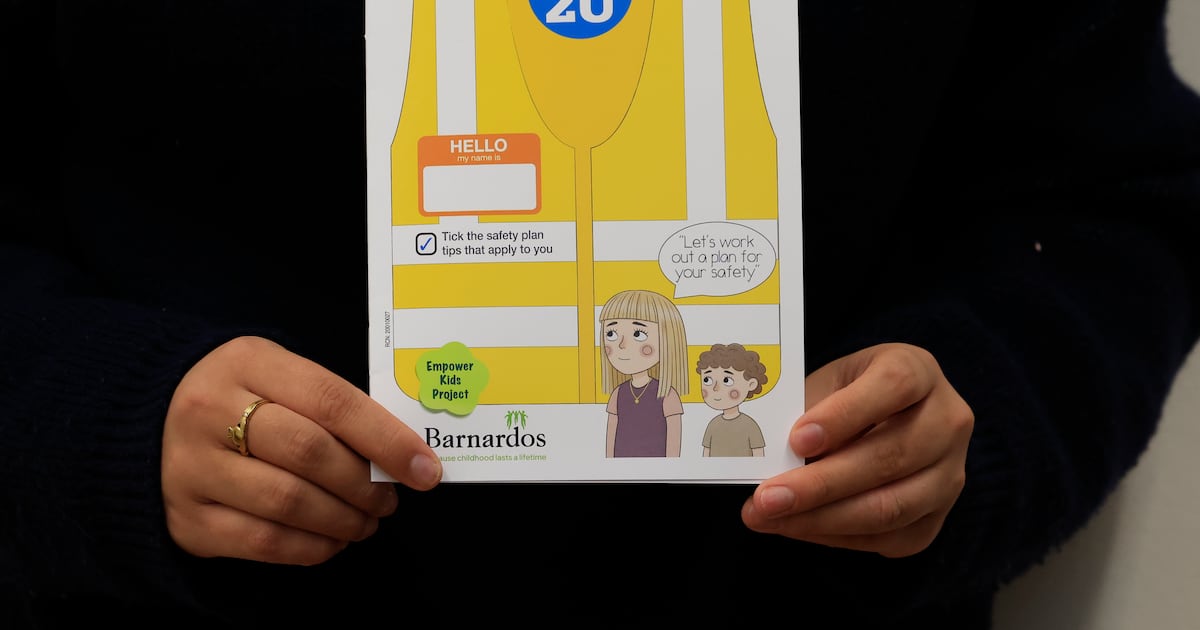
Young people worked with Barnardos to design a guide to staying safe when there is violence or abuse in the homeA leaflet titled How to Keep Safe: Me2U, part of the Empower Kids safety planning toolkit. Photograph: Nick Bradshaw/The Irish Times Abby’s earliest memories of violence at home are from when she was about four or five. It continued until she was 12.“It was very frightening,” the 15-year-old says. “My older brother would keep me in his room because my father would threaten us a lot. Sometimes it would go to physical.”When her parents separated, she and her younger sister, under court-ordered access, had to stay at their father’s home at weekends.“My brother didn’t have to because he was old enough to make his decision, and I wasn’t. So, I took on the role of protecting my little sister.”READ MOREAsked if she was scared going to her dad’s house, she says: “Terrified. My mum and dad would fight outside and I’d pull my sister up the stairs and we’d hide behind the TV.“I had a lot of anxiety. I didn’t know how to protect my sister. So, I thought if I just take the blame for whatever happened she wouldn’t get hurt. I wouldn’t care if it was me getting hurt because at least it’s not her. I was six or seven and she was about five. I’d try my best.”Clodagh, aged 16, remembers “a lot of drug and alcohol use” at home.“There was a lot of times my father would get violent and I wouldn’t know what to do. I would try and protect my mother and my younger siblings and then he’d lash out at me,” says the 16 year-old. “But I thought it was better that it was me than them.“I’d say I was about five or six. It went on until I was about nine.”The toolkit advises ways for children to stay safe from violence at home and to think of trusted adults they can call. Photograph: Nick Bradshaw/The Irish Times Fiona, also 16, was “never hit” but has vivid memories of the abuse. She remembers being in the same room as her parents were “shouting and screaming” as she played a computer game.“I was really unsure about what to do. In my head I was asking, ‘Do I go? Do I stay? Do I try to help?’ I was around four or five. I ended up staying, sitting there and obviously it wasn’t pleasant listening to all the shouting.”[ Sharp increase in domestic abuse disclosures the ‘tip of the iceberg’, says Women’s AidOpens in new window ]The young people are speaking to The Irish Times about the fear and helplessness they experienced living with domestic violence, as the charity Barnardos on Wednesday publishes a safety toolkit for children going through similar situations.The young people, participants in the Barnardos youth advisory panel, helped design an animation, illustrating what children can do if they hear violence at home. There is also a brightly-coloured leaflet titled How to Keep Safe: Me2U.“The toolkit aims to help children and young people learn ways to stay safe when there is violence or abuse in their home,” says Áine Costello, co-ordinator of Barnardos childhood domestic abuse project.It is not known how many children in Ireland live with domestic violence, though it is likely to number in the tens of thousands “at least”, says Barnardos. Áine Costello, national co-ordinator of the childhood domestic abuse project at Barnardos. Photograph: Nick Bradshaw/The Irish Times The first step in the leaflet is: “Don’t get involved. You could get hurt.”It continues: “Find somewhere safe to go and stay safe until it’s over”, and suggests “safe places” with simple drawings of “my bedroom” and “a wardrobe” along with blank spaces for the child to draw other possible safe places.The child can distract themselves, the toolkit suggests, by colouring, watching TV, reading a book or taking a “BIG breath in and slow breath out”.And they should think of trusted adults they can call, it suggests, with spaces to write their names. Finally, a page provides space for the child to note their address and Eircode if they need to call emergency services on 999 or 112.The idea for the toolkit came from children and young people involved in the Barnardos Empower Kids programme, which advocates for children who have lived or are living through domestic violence and abuse. Children who hear, see and fear domestic abuse are victims, even if they are not physically harmed. Photograph: Nick Bradshaw/The Irish Times A forthcoming report from the charity says: “Living in an abusive environment hinders a child’s developmental progress and can lead to a range of social, emotional, physical and behavioural problems.”Even when not being physically harmed, children in such homes who hear, see and fear abuse, are victims.Stephanie Holt, head of the school of social studies at Trinity College Dublin, says children experience domestic violence “in their spinning heads and their knotted tummies”.The safety toolkit is “one of the best things we have done”, says Derek (17), who has been involved with Empower Kids for more than a year. “If I had it when I was younger I would have known to maybe call someone ... It’s a fire escape plan but for domestic violence.”[ Male victims of domestic abuse say children being used as ‘central mechanism’ of controlOpens in new window ]Abby wishes her older brother had it 10 years ago. “I think it would have helped him keep us safe. It would have helped us all a lot.“I love this project,” she says of the Empower Kids programme. “It helps me feel less alone.”The safety toolkit is available online at the Barnardos website. It is designed for settings such as family support services, youth services, schools and community organisations where attending children and young people may have experienced domestic violence and abuse.Names of the young people have been changedIN THIS SECTION
‘I didn’t know how to protect my sister’: New toolkit for children facing domestic violence
Full Article
Original Source
Read the full article at Irishtimes →KhanList aggregates and links to publicly available news content. We do not host full articles from third-party sources. Always verify important information with original sources.