
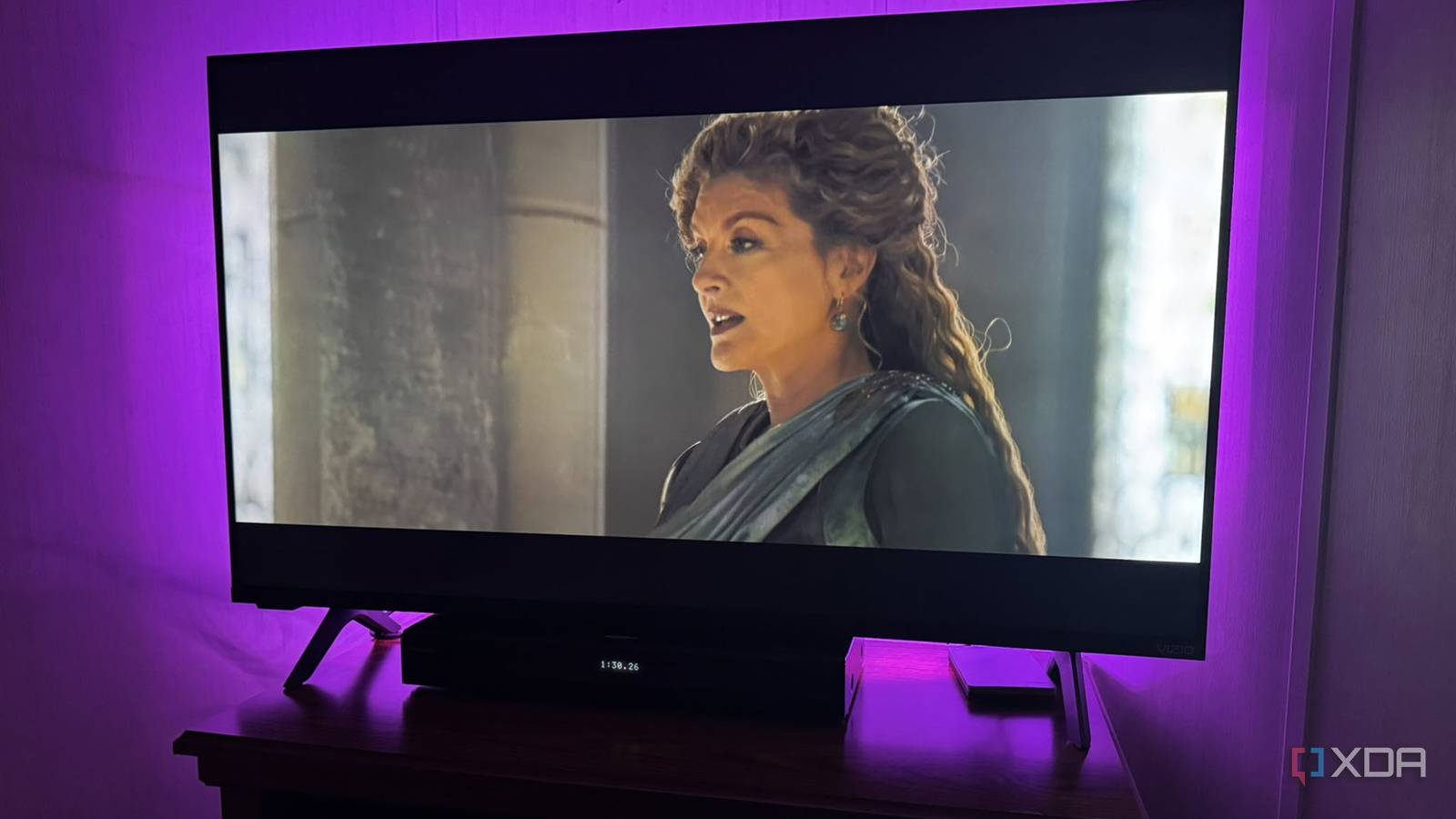
Published Sep 20, 2026, 8:30 AM EDT Based in rural Minnesota, Brian Burgess worked in IT for 10 years before finding his passion for writing about consumer technology. Brian earned his degree in computer and network technology in 2000. He held various IT positions, including help desk support, router installations for IBM, database administration, and other associate network administration roles. He's been a personal technology journalist for 18 years and has written thousands of articles about Microsoft products and services, Android, iOS, streaming, and more. He has written for notable tech sites including XDA, InformationWeek, How-To Geek, Byte, groovyPost, and others. When he is away from the keyboard, you will hear him playing guitar, working outdoors, and watching Star Trek. When the first generation of 1080p Blu-ray discs arrived, they were a remarkable improvement over DVDs, both acoustically and visually. Then, once UHD 4K discs showed up, the contrast didn't seem as big unless you viewed them through the right player and display. However, streaming came along, promising 4K quality, and convenience won. While I know that a streaming movie isn't the quality you get from physical media, I wanted to compare a movie by watching it on UHD 4K Blu-ray and on streaming. I wasn't prepared for the result, and not in the way you might be thinking. UHD 4K Blu-ray vs. streaming The difference in quality is like night and day I ran a test to see whether watching a UHD 4K movie on Blu-ray really meant streaming was lower quality. After all, I was paying for Disney+, which promises "up to" 4K UHD on the right devices. I used an Apple TV 4K connected to a 4K screen with Dolby Vision. I figured an MCU movie was a good place to compare. I picked Avengers: Endgame since it has a vast array of scenes with different colors and tones. I was surprised at what I discovered. Sure, I've seen it a few times before, but this time I focused on picture details. I started by streaming the entire movie on Disney+ and watched it in full, and it looked fine. But then I popped in my UHD 4K Blu-ray, put it in my Blu-ray player, and immediately noticed the difference. The colors were brighter, the scenes were tighter and crisper, and it felt like a comic book come to life, as Marvel intended. Surprising stream quality It is shockingly dull and lifeless When comparing a UHD 4K Blu-ray with its streaming counterpart, the differences are especially pronounced. Even if you pay for a UHD 4K streaming package, the service compresses the signal. So, the stream looks nothing like the original uncompressed bits coming from the disc. I actually went back and re-compared specific scenes from the movie on streaming and Blu-ray to double-check, and the colors are noticeably brighter, and the darks are deep but not overly saturated or too black on Blu-ray. I started to notice areas where streaming falls short. Because of the aggressively compressed bitrate, the same scenes look duller on streaming, and they don't "pop" like on disc. I'm not an audio or videophile, but I try to make sure I have good equipment. I watched the streaming through my Apple TV 4K, connected via Ethernet, and for the disc player, I have a Panasonic DPDP-UB820 Ultra HD player. It's not top-of-the-line quality, but it is better than a cheap one you'd find at Walmart for a hundred bucks. Everything connects to my Pioneer AV Elite receiver with Zeskit Certified 2.1 8K HDMI cables (48Gbps), which is more than enough for the bitrate coming from the disc. Why there's a difference Uncompressed bitrates with Blu-ray discs Streaming services must compress data streams to support many simultaneous viewers and keep bandwidth manageable across large content libraries. They also have to accommodate users with varying degrees of internet speeds coming into their home. So, when scenes include smoke, explosions, or dark imagery, the streaming service's compression struggles to retain enough detail to display them accurately. Streaming also shows blotches in dark scenes or obvious stripes in scenes that should be smooth color gradients. You may also see jagged edges around text and hair in certain scenes, or film grain on skin, because the streaming service isn't receiving the full signal — even if it's called an Ultra HD service. In fact, paying the extra cost for a streaming service doesn't pay off when it comes to picture quality. For instance, try a movie from The Dark Knight trilogy on streaming and compare it to Blu-ray, and the compression loss is glaring. UHD 4K discs typically deliver 50–90 Mbps and can peak at up to 144Mbps, while streaming is far below that. It delivers the movie's full bitrate, which is why playing directly from the disc outshines streaming every time. It also produces better audio with Dolby TrueHD/Atmos or DTS-HD Master Audio/DTS:X, whereas streaming services use a lossy Dolby Digital Plus signal with occasional Atmos metadata. So, beyond picture quality, Blu-ray also delivers a better sound experience. A true surround sound experience a cheap soundbar can't match. For now, Blu-ray wins every time Until technology improves, streaming services will deliver a subpar picture with poor onboard audio. Try the comparison yourself if you still have a Blu-ray player; even an old one will likely provide a better picture and better sound than the same movie on streaming. When I ran this test, I was shocked, not because I didn't know that a direct Blu-ray disc is superior to streaming, but because I was amazed at how noticeable the difference is.
I compared the same movie on Blu-ray and streaming, and I wasn’t prepared for the difference
Full Article
Original Source
Read the full article at Xda-developers →KhanList aggregates and links to publicly available news content. We do not host full articles from third-party sources. Always verify important information with original sources.