
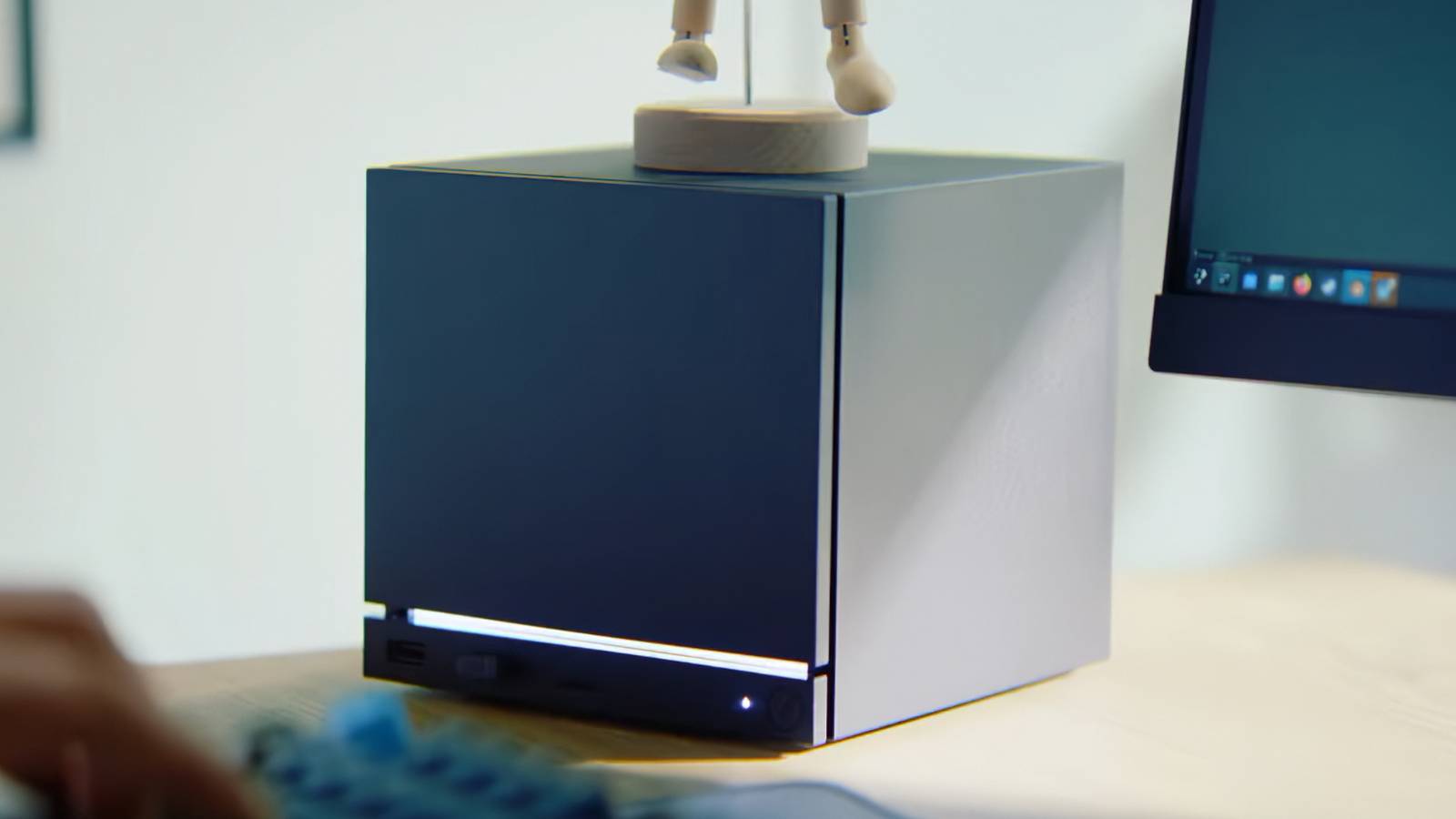
Published Sep 24, 2026, 1:31 PM EDT Abhinav pivoted from a career in banking to pursue his first love in writing. Even while working full-time, he continued contributing as an editor-at-large, a role he has held for more than 7 years. A lifelong tech enthusiast who has built three gaming and productivity powerhouse PCs since 2018, his passion for technology keeps him closely following the semiconductor industry, from NVIDIA and AMD to ARM. His MSc dissertation explored how artificial intelligence will reshape the future of work, reflecting his curiosity about the wider social impact of emerging technologies. Nearly eighty days ago, the Steam Machine entered the market with a price of $1,049 and to most hardware reviewers and consumers at large, it seemed like the biggest joke of the decade. Most of Valve's marketing suggested that it was an absurd hybrid between a PC that had limited modularity, and a console that had no exclusive titles. Needless to say, no serious buyer was looking at it. Eighty days later, the market has moved. The DRAM crisis has continued to take its toll, making a jump to the latest memory standard nearly impossible for millions of gamers. NAND flash prices have more or less continued to make storage upgrades difficult, and this year, nothing new has landed at the bottom of the GPU stack to reset expectations. What has remained stagnant during this time, is the price of the Steam Machine, and that alone has warranted a second look at the GabeCube. Steam Machine's price hasn't moved since its release Meanwhile, everything around it got more expensive Credit: Steam Store | Valve Valve has been selling the Steam Machine for $1,049 since orders opened at the end of June, and that is a number that hasn't moved despite the components inside the box becoming considerably more expensive over the course of the last three months. In the meantime, DDR5 and NAND prices have both been steadily climbing. TrendForce's third-quarter forecast has conventional DRAM contract prices up by 13–18% quarter-on-quarter and NAND flash up by 10-15%. On the other hand, things haven't gotten any better in the retail market either. According to the latest price trend report from Tom's Hardware, DDR5 memory prices have risen sharply over the last trimester, with retailers raising prices to align with the current market conditions as consumers pay thrice or four times as much for the same standard and capacity. Oddly enough, this has made the Steam Machine an interesting proposition as a prebuilt. It's worth a second look now for the same reason as you'd want a second look at any other mini PC, which is a locked price in a moving market. Since Valve locked the price before the memory and storage market decided to make everyone's lives difficult, consumers in the market for the Steam Machine right now are exempt from the subsequent rises in component prices since June. So why not just simply look at a mini PC instead of a Steam Machine? Well, the answer to that is something that has changed for the GabeCube, and that's something that most mini PCs won't offer. FSR 4.1 changed the GabeCube's value equation Most reviews tested it before the upscaler even arrived The GPU is undoubtedly a primary consideration for any user who's looking to buy a dedicated gaming device, and that's another aspect where the Steam Machine seems to have evolved in terms of pure value proposition. When the device first came out, most reviewers tested it before the FSR 4.1 upscaler reached it. AMD has since enabled its INT8 FSR 4.1 path on RDNA 3 in late June, and support for the Steam Machine has been confirmed through Proton Experimental. For those with a 4K TV, that's one aspect that can genuinely elevate the gameplay experience. Perhaps the most crucial aspect of it all is paying attention to what FSR 4.1 costs to reach anywhere else. The upscaler currently runs on only two families of cards, including the Radeon RX 9000 series, which has had it since March, and the Radeon RX 7000 series, which received it in June. At today's retail prices, you're expecting to pay anywhere between $329 (for an entry-level RX 7000 series card) up to $779 for the RX 9000 series flagship. Storage expansion is an escape hatch from NAND inflation A microSD card might be the cheapest way to add storage right now On the storage side of things, Valve's desktop seems to be aging in the most consumer-friendly manner as well, in that, it doesn't force you to buy all your storage on day one. The 512GB model works as a decent starting point, with one user-accessible NVMe slot left empty until NAND pricing returns to the affordable territory. Until then, the Machine offers a way to add storage capacity via microSDXC cards, and as of the time of writing, a $175 card can bump up your capacity by 1TB. This means that, by owning a GabeCube, you defer the expensive upgrade, can comfortably expand your on-device game library, and fit a proper NVMe SSD whenever the market allows for it. Meanwhile, if you were to purchase an Xbox Series X or a PlayStation 5, you would be stuck with a fixed-storage console, with your only expansion options being limited to proprietary expansion cards or SSDs at vastly inflated prices. The cheapest gaming PC that you don't have to build If you sat down to build a comparable system today, you'd need to sit with a spreadsheet, a browser full of price trackers, and enter the rabbit hold of waiting for a RAM kit or an NVMe drive to dip before the next contract hike changes the already uncertain PC hardware economy one more time. This process itself has a cost, but right now, it seems that Valve is offering a subsidy on it. The Steam Machine at its current price delivers a current-gen upscaler, a cheap path to storage expansion, and a price that's 3 months old in a highly volatile component economy where prices change every other week. That's certainly a deal that I'd be sold on.
I called the Steam Machine overpriced in July, and now it's the cheapest PC I'd actually buy
Full Article
Original Source
Read the full article at Xda-developers →KhanList aggregates and links to publicly available news content. We do not host full articles from third-party sources. Always verify important information with original sources.