
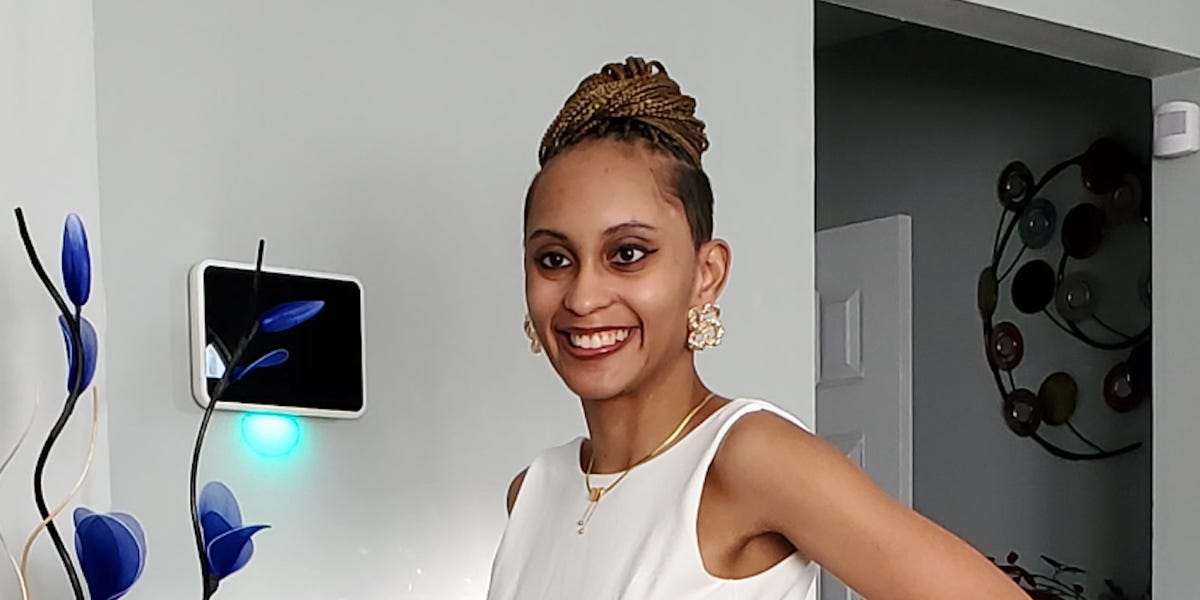
I built my career by pushing through a painful chronic health issue. At 29, I'm adjusting my expectations. The author had to redefine success after her second endometriosis surgery. Courtesy of Erica Williams In October 2025, Blackboard, the online platform through which I attend my doctoral program for business administration, displayed a grade I had never seen next to my name: an F.I had been working to run my new public relations business, maintain my 3.87 GPA, and manage ongoing health challenges. So, I couldn't hide my shock as I sat up in bed, looking at the unfamiliar score. I slid the laptop cursor over the grade repeatedly, as if it would magically change. I knew that it wouldn't.A daily 9-10 pain level and being bedridden due to stage 4 endometriosis made it nearly impossible to finish my dissertation course. While my instructors were kind and accommodating, I still felt the pressure of needing to turn in my outstanding assignments or risk failing the course.I was recovering from surgery and tried to push throughIt was bad timing to be worrying about school; I had other, more urgent issues. I'd been battling with stage 4 endometriosis and already had one surgery before I learned I'd need another. Managing my pain while managing clients also proved to be an obstacle. I needed to develop media campaign strategies, but struggled to be there for myself.At an appointment in August, we'd scheduled my surgery for December. However, my symptoms had only worsened in the meantime, and the brain fog, inability to do most daily tasks, and high pain levels became so unbearable that waiting until December no longer felt like an option.We moved my surgery up. However, moving it up before the end of school also meant tapping my fingers across a keyboard from my bed the very next day, still groggy from the anesthesia, to salvage my grade. In the end, I passed, but at 28, I hadn't learned that pushing through wasn't a badge of honor. It was a habit I'd built because endurance made me feel in control.I realized pushing through wasn't a badge of honor, and changed my habitsPushing through was a lifelong pattern — one that endometriosis and uncertainty had amplified. I had accommodations at school, but they only provided more time to complete assignments; they did not give me the capacity to complete them. Whenever I considered taking medical leave or leaving school altogether due to illness, it always came back to two thoughts: "Nelnet is still going to want their money, whether you get your degree or not," and "Medical leave assumes you'll be better in the timeframe you're given. 180 days of leave isn't enough; you might as well keep going." Add to that the continual emotional loop that I was too close to the finish line to stop.After surgery, I realized that my habits had to change. I began tracking my symptoms more closely, testing pain-relief methods such as cupping, and using a TENS machine. I also prioritized rest and communicated my physical limits more clearly to doctors and loved ones.Moreover, I learned that I did not have to pause my goals; I just had to find a balance that fit my daily life. The October surgery removed my lesions, but did little for the pain. Now, I'm almost a year post-op, and I've been in therapy, stopped comparing myself to an old version who didn't need to negotiate with her body, and built my client work and availability around my real capacity, not the idealized one. At 29, I'm learning that I can manage ongoing health battles and still build the life I envisioned. Endometriosis and the experience after surgery have taught me lessons that I carry as a leader and person.First, I learned that pushing through at all costs isn't the same as thriving; I can accomplish my goals while respecting my capacity. Next, flexibility requires structure; while I am transparent with clients about my capacity, when due dates are immovable, I make room elsewhere in my life, including forgoing social gatherings and delegating tasks. I also learned that empathy doesn't equal equity; empathy acknowledges needs, but equity adjusts systems to remove barriers. This directly shapes how I lead. Lastly, I learned that success isn't defined by how much I endure, but by the boundaries I set to protect my capacity.For me, sustainability looks like accepting a small number of clients at a time, prioritizing flexibility, clearly communicating capacity and expectations to those I work with, and accepting that pushing through is not the price of success. Trying to ignore my own needs only left me feeling overwhelmed and uncertain about the future. Shifting how I look at things has changed my work and personal relationships, as well as my relationship with myself. Read next Health Success
I built my career by pushing through a painful chronic health issue. At 29, I'm adjusting my expectations.
Full Article
Original Source
Read the full article at Businessinsider →KhanList aggregates and links to publicly available news content. We do not host full articles from third-party sources. Always verify important information with original sources.