
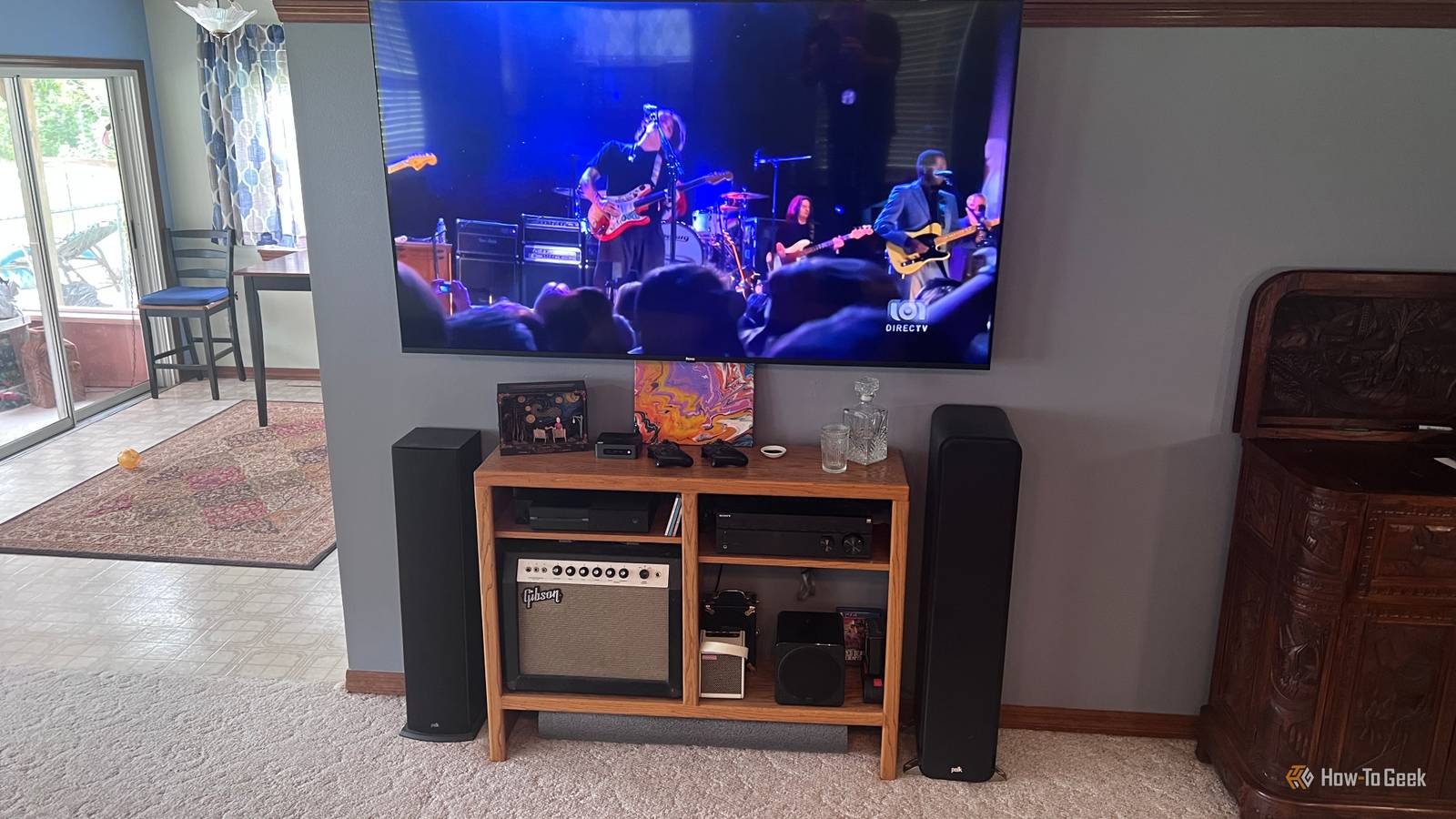
Published Sep 18, 2026, 8:30 AM EDT Rich Hein is a veteran technology journalist with more than two decades covering developer, consumer and enterprise topics. Rich's career has been dedicated to service journalism, connecting readers to content that informs and delights. Previously, Rich was vice president and editor-in-chief for Simpler Media Group, director of audience development for IDG and editor/writer for sites like CIO.com, ComputerWorld, CodeGuru and other tech-centric publications. He's received numerous accolades, including the IDG Summit and Azbee awards and has been covered by Medium for his work in audience development. When not at his desk, Rich lives in Daytona Beach with his wife and three dogs. He enjoys playing guitar, surfing and staying abreast of the latest in tech. When it came time to replace my soundbar, I was ready for something better. The soundbar-and-subwoofer systems I was looking at were running between $300 and $600, and I wasn't excited about spending that much on another soundbar. I've never been completely happy with the soundbar experience, especially when I knew the same money could buy a traditional stereo setup with better speakers that would fill the room. I started looking around Facebook Marketplace instead. Before long, I'd spent $150 total on a Sony receiver, two Polk tower speakers, and a small Episode subwoofer. It wasn't a perfectly matched home theater package, but that wasn't what I was after. I wanted bigger sound, more control over where everything went in the room, and a system I could change or add to later without starting over. I started with a receiver $50 gave me the brains of the system I started by looking for a receiver because that was going to determine what I could connect and how much room I had to expand later. There were plenty of inexpensive options around me from Onkyo, JBL, Sony, and Kenwood, so I wasn't locked into one brand or one type of setup. I went with a Sony because I've had good luck with Sony stereos in the past, and I found one for $50. The receiver became the center of everything, so Bluetooth was a must, along with enough inputs for the other gear I wanted to use. I could connect the TV, my Xbox, and still have room for things like a cassette deck or CD player. That gave me a lot more flexibility than I was getting from my old soundbar setup, and it also meant I could keep adding to the system instead of replacing the whole thing later. The receiver also came with a free extra that ended up being useful, but I'll get to that in a bit. I put most of my budget into the speakers The towers made the largest impact Credit: Rich Hein/HowToGeek The speakers were where I expected to hear a noticeable improvement, so that's where I wanted most of the value to be. The Polk Signature S55 and the more budget-friendly T50 towers I bought sold for more than $500 combined when new, but I found both for $100. They aren't a matched pair, which isn't ideal from an audiophile perspective, but for speakers of this size versus what I paid, I was willing to make that compromise. The difference was obvious as soon as I hooked them up. The larger cabinets and drivers move more air than the speakers packed into my old Vizio soundbar, so everything sounds fuller in the room. I also prefer having the left and right speakers physically separated. The wider spacing gives movies, TV shows, and music a broader soundstage than I was getting from a soundbar sitting directly under the TV. A small subwoofer filled in what the towers were missing The freebie turned out to be more useful than I expected Credit: Rich Hein/HowToGeek The free extra that came with the receiver was a small subwoofer. At first glance, it looked a little underpowered for what I had in mind, but it’s easy to replace if it doesn’t do the job. For now, though, it has been more than enough to fill in the low end that the tower speakers were missing. I can feel the bass in music, and movie explosions have enough impact to make the room come alive without the subwoofer calling too much attention to itself. That's really all I wanted from it. It doesn't need to shake the walls. It just needs to add the weight and depth that the rest of the system can't quite produce on its own. I didn't need to build the whole system at once I can upgrade one piece without starting over Credit: Rich Hein/HowToGeek One of the things I like most about going with separate components is that I don't have to finish the system all at once. The receiver, two tower speakers, and small subwoofer gave me everything I needed to get started, and I was still well below what I had been prepared to spend on a soundbar. There was no reason to keep buying gear just to make the setup feel complete. I'll probably replace the subwoofer at some point, and I could add a center channel or another pair of speakers later. If I find a better receiver, I can swap that out too. None of those upgrades means replacing everything else. I can keep what I like and change the parts that make sense when I find a good deal. I got the system I wanted without overspending After several months, I'm still happy I went this route. The system has more presence than my old soundbar, gives me room to make changes later, and I didn't have to spend a fortune to get there. For what I paid, that's hard to beat.
I built a better TV audio system than any soundbar for half the price
Full Article
Original Source
Read the full article at Howtogeek →KhanList aggregates and links to publicly available news content. We do not host full articles from third-party sources. Always verify important information with original sources.