
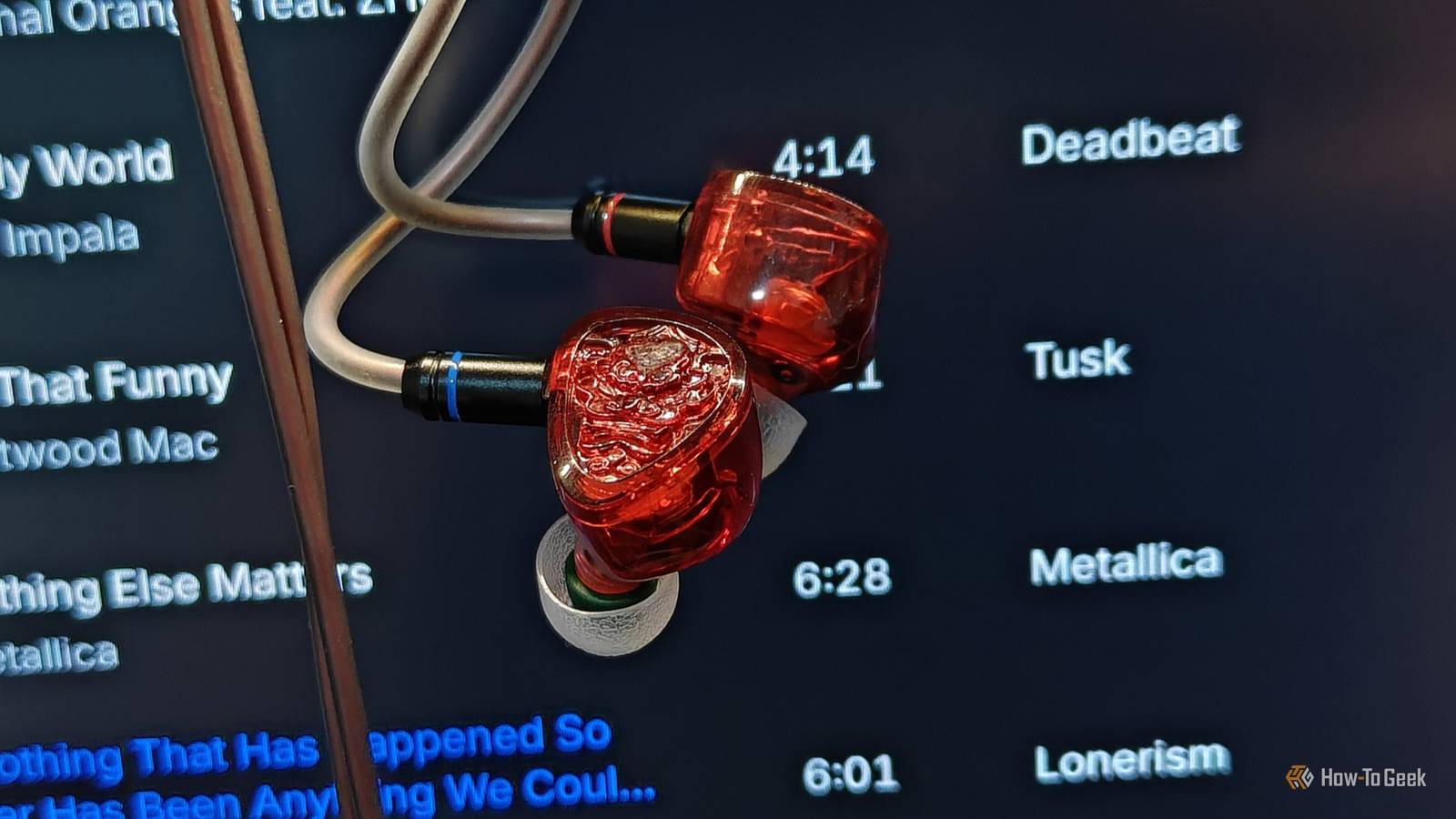
Published Nov 18, 2026, 6:00 PM EST Ismar is a Senior Author at How-To Geek. He previously worked as a writer, editor, and general manager at a content agency before joining the team in 2023. He began his writing career in 2021 after completing a BA in English Language and Literature. Beyond How-To Geek, Ismar has contributed to Red Stag Fulfillment and Authority Hacker. He has also worked on various SEO projects to help clients improve their search visibility. Ismar has been around Windows PCs since the age of three, so friends and family naturally chose him as the resident tech support. His projects often involve tinkering, such as disassembling mechanical keyboards and gaming mice to mod his beloved gear. He also enjoys pushing hardware to the max through overclocking while staying on a reasonable budget. An avid gamer, Ismar has logged thousands of hours across various genres, including first-person shooters, RPGs, racing games, and roguelites. When he is not at his desk, he is probably exploring other people’s phones to discover their quirks and features or experimenting with the latest AI tools. In his free time, Ismar enjoys spending time with his wife, working out at the gym, playing guitar and bass, cooking gourmet meals, and traveling. Above all else, he’s a proud cat owner. I absolutely love listening to music and playing games on speakers and open-back headphones, so I've never given In-Ear Monitors (IEMs) a proper chance. Good IEMs can cost a small fortune, and I've always thought they were primarily designed for audio professionals rather than everyday consumers. However, cheap IEMs have practically taken over the sub-$30 wired audio market in recent years. After learning about the hype, I figured that they would be worth the cost to experiment, so I finally decided to order a pair. As soon as I tried them on, I was so glad I did. The sound quality of cheap IEMs now rivals headphones that cost several times as much An unbelievable bang for your buck Cheap IEMs used to be awful a decade ago. If you wanted good IEMs, your only option was to spend hundreds of dollars on a pair from an established brand like Shure or Sennheiser. But thanks to advances in design and low-cost manufacturing at scale, you can now grab a surprisingly good-sounding pair of IEMs for less than $20. The weirdest thing is that some of these sub-$30 IEMs are made by brands that also make high-end models that cost over $2,000. Just compare the retail prices of the Moondrop Solis II and Moondrop Chu III to see what I mean. As someone who had never owned IEMs and didn't know if I'd even like the experience, I decided to try one of those ultra-cheap IEMs in the $20 to $30 range. There are several models in this price segment that are highly praised by audiophiles on forums and YouTube, including the aforementioned Moondrop Chu, Tangzu Wan'er S.G., 7Hz x Crinacle Zero, Truthear Gate, and several models from KZ like the KZ Castor and KZ-ZST, many of which have received newer revisions and variants over time. Each model offers a slightly different sound signature, but broadly speaking, many of the newer models have a fairly well-balanced frequency response thanks to modern target-based tuning. After doing some research, I eventually decided to try the Tangzu Wan'er S.G. II, specifically the Red Lion edition. According to what I read online, they retain the vocal clarity of the vanilla Wan'er S.G. II but with an emphasis on bass, but the real reason I bought them was all the extra goodies that come in the bundle. TANGZU Wan'er S.G II Red Lion Colors Red Wired/Wireless Wired For less than $30, the TANGZU Wan'er S.G II Red Lion IEMs come with a surprisingly generous bundle of extras, including two sets of eartips, a silicone cable organizer, and a detachable cable. The standout freebies are the Tang Sancai wide-bore eartips, which can cost nearly as much as the entire package on their own, making these budget-friendly earphones an especially appealing entry point into the IEM hobby. The second I put them into my ears, I immediately understood why audiophiles love cheap IEMs. For the price of a dinner, I got a pair of IEMs that offer sound quality that's practically on par with my Sennheiser HD 599 over-ear headphones, a pair that retails for more than 5 times the price of the IEMs. A lot of the sound quality that IEMs can provide comes down to physics: IEMs provide a snug fit that creates a strong seal, allowing them to deliver a precise, detailed listening experience. It's more "in focus" and direct than the airy feel of open-back headphones. They're fairly comfortable, too. IEMs are very lightweight and let your ears breathe, though the sensation of having something in your ear canals can get tiring after a few hours, which is why I'm grateful that I can switch between my over-ears and IEMs whenever I feel like it. Why settle for one pair when they're this cheap? A few minutes after trying these Wan'er IEMs, I immediately went online and ordered another set, the 7Hz x Crinacle Zero:2 (which were $5 cheaper than the brand-new Zero:3). The Zero:2s were a collaboration with Crinacle, one of the most prominent IEM reviewers and content creators in the industry, so I just had to own them to see what the hype was all about. Just like with my first pair of IEMs, I was immediately blown away by their sound. They only came with a few basic eartips and a cable that's notably worse than that of the Wan'ers, but the sound is hard to beat. The Zero:2s offer a more neutral but still warm sound signature, with a lot of bass that sounds even more pleasing to my ears. Despite being the "bass edition," the Wan'ers actually emphasize the midrange (vocals, electric guitar) the most, which can make them sound almost harsh at high listening volumes with some genres. However, their soundstaging is still pretty solid, and I actually prefer them for some genres like jazz, rock, and pop. But for electronic music, heavy metal, and other "heavier" music, the Zero:2s give me a more energetic sound. At this point, it's worth noting that sound signatures are extremely personal; there's no one-size-fits-all solution. What works for me might not work for you, which is what makes these cheap IEMs so exciting. You can grab a random pair, experiment with the frequency response using an EQ to figure out what kind of sound you like the most, and then buy another cheap pair based on that. The sound is impressive, but the questionable build quality has me wondering about long-term durability A questionable first impression As much as I love how my cheap IEMs sound, it's not all roses and rainbows. Scaling down the price of what's supposed to be an expensive product while retaining good sound can come with different drawbacks. The resin shells that most of these cheaper IEMs use feel fairly cheap, and my Wan'er Red Lions take the cake here. Many people who bought these feel that the red resin shell and lion graphic look and feel cheap, and while I don't mind the look, they do feel like toys rather than serious audio gear (the Zero:2s don't have this problem, though). But the real disappointment came when I wanted to swap the included eartips on my Wan'ers. They were rather difficult to fit over the nozzle in the first place, something that's also mentioned in other product reviews. When I wanted to remove them, I probably pulled too hard and accidentally pulled the entire brass nozzle out of the shell. There was a tiny amount of glue residue inside the shell and on the nozzle, so I cleaned it up and applied a tiny amount of glue gel using a needle before reinserting the nozzle. It now sits firmly inside the IEM and won't come out in a century, which makes me question why the brand didn't just use a stronger adhesive in the first place. This could be indicative of broader quality control issues with cheap IEMs in general. Check the reviews of any of the IEMs I mentioned, and you'll likely encounter a few complaints about IEMs breaking while swapping cables or eartips, or stopping working after a few months. Now, there's no reason why these IEMs shouldn't be able to last a decade with proper care and by avoiding drops and excess moisture. It's also much easier to accept questionable build quality when they're so cheap, but it ultimately remains to be seen how long my IEMs are going to last. My impulse buy is quickly turning into an obsession, and I don't even regret it While you could just buy a cheap pair of IEMs and be done with it, collecting and exploring various aspects of IEMs is a hobby in and of itself. The IEMs themselves can have various sound signatures and driver technologies, but there are also different eartips, cables, and DACs and DAC dongles to explore. It can get very expensive very quickly, but with so much affordable gear on the market, it's hard to resist!
I bought $25 IEMs on a whim, and they rival my much pricier over-ear headphones
Full Article
Original Source
Read the full article at Howtogeek →KhanList aggregates and links to publicly available news content. We do not host full articles from third-party sources. Always verify important information with original sources.