
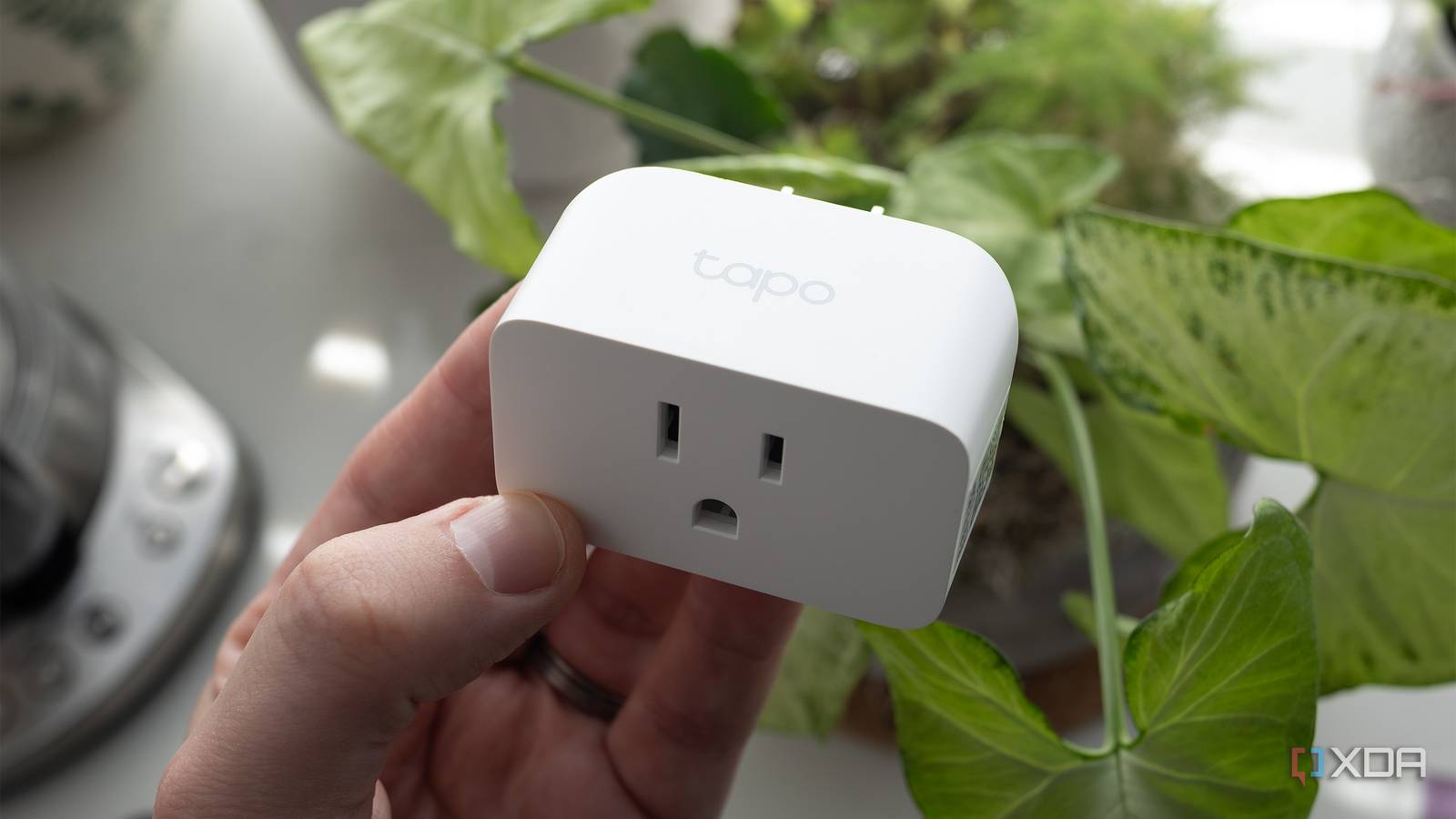
Published Sep 10, 2026, 8:00 AM EDT Jasmine is Software and PC Hardware Author at XDA with years of tech reporting experience ranging from AI chatbots right down to gaming hardware, she's covered just about everything. Whether it's breaking news about the latest AMD NPUs or creating video tutorials on social media platforms, Jasmine has contributed to the world of AI and tech in a variety of ways including interviewing the CEO of Razer, AMD's Director of Product Marketing and the VP of Lenovo. Passionate about gaming and PC technology, she has built countless computers, keyboards and other peripherals - knowing them inside and out. For many people, a smart home is, on the surface, a $1,200 washing machine that requires an account to download a rinse cycle, an $800 smart coffee maker with fragile touchscreens, and connected refrigerators running outdated Android skins on a tablet linked to the door. However, in an actual power user's home, the most reliable appliances are often 10 to 20 years old. Instead, they feature solid mechanical switches, heavy copper-wound induction motors, tactile rotary knobs, and zero firmware bugs. They never drop a 2.4 GHz Wi-Fi connection, and their circuit boards will outlast three generations of IoT startups. That doesn't mean you have to exclude them from your Home Assistant entity list. The devices executing the most critical daily automations aren't purpose-built smart appliances. They're a vintage analog array of products that you use, using dry contacts, current monitoring, IR blasters, and microcontrollers to give them automation superpowers without surrendering any local control. What smart home tech are you investing in? From plugs to relays, there is a range of products Wemo smart plug has come to its end of life support with Belkin.Wemo smart plug has come to its end of life support with Belkin. A range of foundational technologies can bridge the physical gap between your vintage hardware and Home Assistant. Implementing these lets you automate and use these older devices like any other smart device. Meanwhile, you're still getting the reliability of older technology. One of the first and most fundamental is high-precision power monitoring via CT clamps or smart plugs. Instead of relying on an appliance to tell you its state via an API, you can infer it mechanically by tracking real-time wattage, voltage, and amperage with energy-monitoring smart plugs. By setting up numerical state triggers based on power-draw curves, for example, you can distinguish an idle washing machine (drawing 1.2W) from one in the agitation phase (drawing 250W), or one with the electric heating element (pulling 1,800W). This lets you automate based on wattage draw. You can also make use of dry contact relays and optocouplers. These are suitable for momentary push buttons or low-voltage switch toggles that don't introduce any mains voltage into delicate control boards. This means you can tap directly into garage door button terminals, 24 VAC HVAC transformer lines, or intercom buzzers. Of course, if you want to, you can even design your own sensors using ESP Home, using a $4 ESP32 with optocouplers to read status LEDs directly from circuit boards. This will allow you to automate pretty much any electrical device in your home. There is a range of examples You can turn pretty much anything into a smart device If you're not sure where to start, here are some examples of dumb appliances you can turn into smart devices by implementing some of the above: sensors, smart plugs, or relays. The first is an old dumb washing machine. Smart washers cost a fortune, require cloud logins, and can send you annoying notifications via a vendor app. However, a single $10 Zigbee energy-monitoring plug lets you implement automation logic by monitoring power spikes. When power drops below 2.5 W for three consecutive minutes, it's ignoring pause intervals between spin cycles. You can trigger TTS announcements on smart speakers and send an actionable push notification to your phone stating that the washing cycle is complete and the clothes need to be moved to the dryer. For those who have an analog mechanical switch espresso machine, some of them can take up to 45 minutes to heat and saturate their portafilters, and leaving them on all day can waste hundreds of kilowatt-hours. By leaving the physical mechanical toggle switch permanently in the on position, you can control the wall socket with a heavy-duty 16 A smart relay. Home Assistant can check the morning alarm on your phone or your bed's mmWave sleep sensor, and 30 minutes before you wake up, the relay can kick in. By the time your feet hit the floor, the brass is fully preheated and ready to pull shots, with a 90-minute auto-shutoff safety timer to prevent dry boiler boil-off. For those who have a bathroom exhaust fan, sometimes leaving the fan running all day can waste conditioned indoor air, but forgetting to turn it on can cause moisture, condensation, and mildew. You can replace the dumb wall switch with an in-wall Zigbee relay and place an ultra-power Zigbee humidity sensor near the shower. Suddenly, you have an automation that can calculate the rate of change of humidity using a Home Assistant derivative sensor. When humidity spikes faster than 3% per minute, the fan engages automatically and shuts off only when the room returns to a baseline ambient humidity plus a 5% deadband. Be sure your devices are kept safe Don't override any safety mechanisms When you're implementing digital relays with analog appliances, there are a few engineering nuances you should be aware of in order to avoid destroying your hardware. Standard household smart plugs are often rated for 10 A or 15 A resistive loads like resistive space heaters. High-power electric motors like those in refrigerators, AC units, or sump pumps can create massive inrush current surges, often running at 3 to 5 times nominal current when starting up. This means you should use overspec 16 A relays with zero-crossing detection or dedicated snubber circuits to prevent arcing and voltage contacts on inductive loads. Refrigerators, dehumidifiers, and air conditioners must never be cycled on and off rapidly. Turning a compressor off and immediately back on again against high head pressure will stall and burn out the motor. This means you want to enforce strict minimum delay-off and delay-on limits, at least 3 to 5 minutes in Home Assistant automation conditions, to safeguard any refrigeration compressors you have. Alongside all of this, ensure you have multiple physical fail-safes and dead-man switches in your home. Never bypass mechanical thermal cutoffs or safety switches. Software should only request power, never override thermal, bimetallic fuses, or high-limit switches built into space heaters or water boilers. Not everything needs to be a smart device Keep hold of your ol' reliable The electronics industry tried to convince us that making an appliance smart required putting a Linux computer and an internet connection inside every toaster and washing machine. But the smartest appliance is the one built like an industrial tank, paired with an external brain that answers only to your local server. Stop looking at your dumb appliances as outdated relics waiting to be replaced. Instead, buy a simple pack of smart plugs with power monitoring and a wireless contact relay for your garage remote. Let Home Assistant bring your analog house into the future on your terms.
I automated my 20-year-old appliances with Home Assistant, and they're more reliable than anything new
Full Article
Original Source
Read the full article at Xda-developers →KhanList aggregates and links to publicly available news content. We do not host full articles from third-party sources. Always verify important information with original sources.