
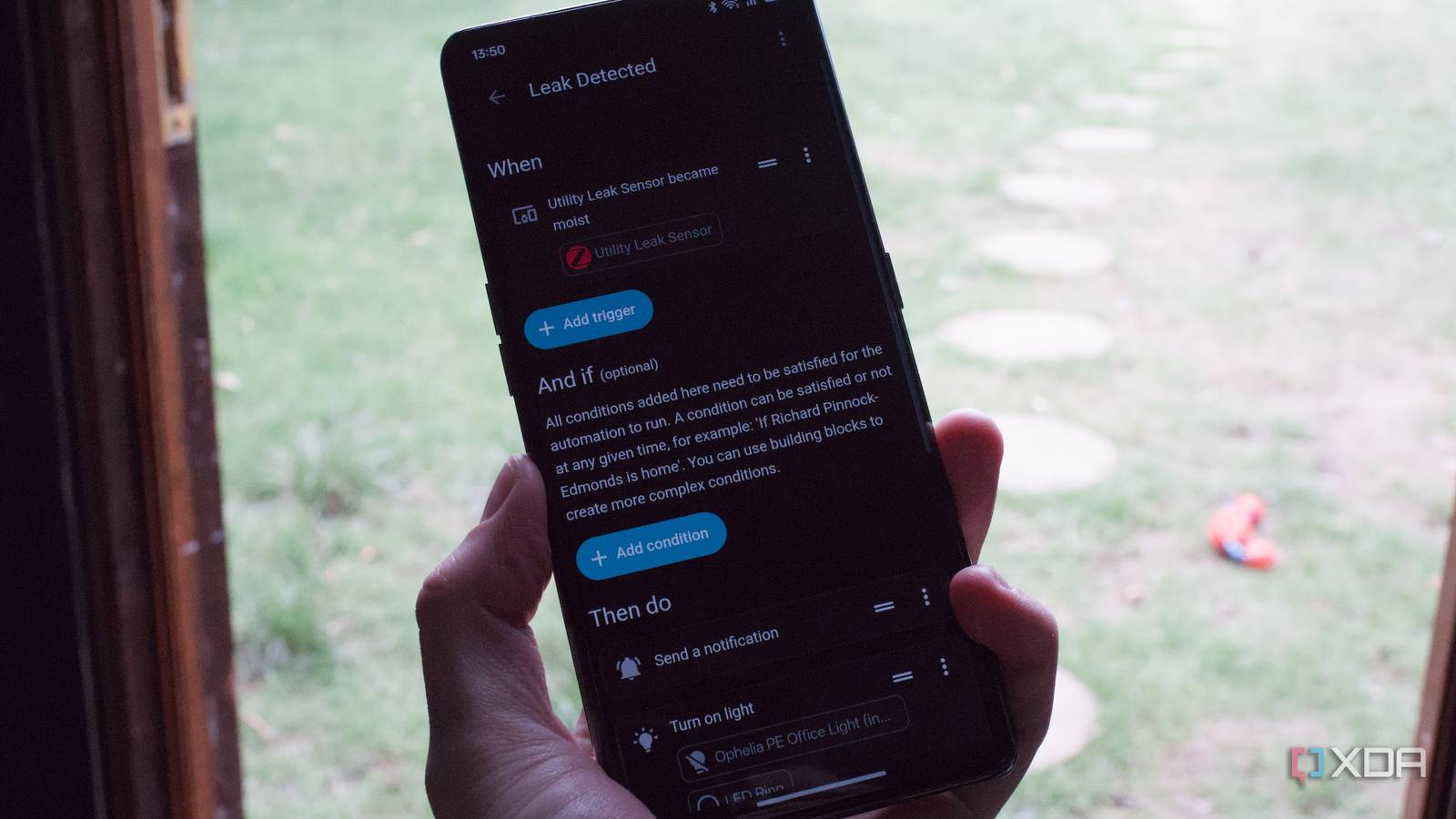
Published Sep 7, 2026, 2:30 PM EDT Richard is the PC Hardware Lead at XDA and has been covering the technology industry for almost two decades. He's been building PCs since young, and when not creating content, you can often find him inside a chassis somewhere. "Automate everything in your home" is what you may sometimes come across as advice from those who love the smart home. I understand this point of view, as it's incredibly rewarding and addictive to automate just about anything within the four walls you call home. It's actually what converted me from being someone who saw no value in making my home smart to relying on Home Assistant to power and track most things I require from owned devices. Would I do it again? Absolutely, but I'd go about the smart home differently. Instead of automating all your smart bulbs, moving on to locking everything down as soon as you set an alarm and close the front door, and configuring HVAC to kick in at set temperature and humidity thresholds, it's vital to question whether you're automating things that aren't actually an issue. The allure of the smart home Connecting everything you possibly can There's a good chance the first smart home tech you've played around with is either a smart assistant speaker like an Amazon Echo or some light bulbs from the likes of Philips. These are great entry points to the world of creating a smart home, but they're also among the worst because a smart assistant-based speaker encourages you to expand its horizons. The platforms from Amazon, Google, and others want to become the center of your home to upsell other products and services. It's a similar story to light bulbs. Once you've connected one to the network and can actively control it on the go, you'll feel almost obliged to add some more bulbs to the mix. That's perfectly reasonable if they were priced accordingly, but a pack of two Hue bulbs costs $50. That's an incredible amount of money to pay out for lighting, especially when existing non-smart bulbs continue to perform their duties just fine for now. It's certainly worth shopping around; IKEA does some good deals on smart lighting, but the point remains. Just because you can make something smart, it doesn't necessarily mean you should. We have two downstairs hallway lights and a single upstairs landing light. We could automate all three, so they toggle on when movement is detected and turn back off after 20 seconds or so. This sounds like a novel idea, but we have convenient access to multiple wall switches both upstairs and downstairs. This may eliminate the requirement to flip a switch each time we pass through the property, but we're introducing new points of failure. Firstly, all the lights need to remain on for the bulbs to continue functioning. Secondly, the sensors we'd need to have strategically positioned on the landing and hallway would all have batteries and may even drop off the Zigbee network for some reason, causing frustration rather than actually solving something. This is why I quickly migrated from thinking about cool new ways to automate everything in my life to what I would actually find useful. Toggling a single bulb isn't a problem, but needing to head back downstairs to turn a few off would be. These aren't always featured in product marketing Installing the necessary hardware and configuring a smart home doesn't come without challenges and hidden costs. Not only do you have to deal with using Wi-Fi versus Zigbee or Matter, but there's also the question of how all the sensors and other devices will be powered. By the time your smart home is nearing completion, and you struggle to find new ways to automate stuff, you'll likely end up with different manufacturers, countless routines, voice assistants, and a whole host of hardware. Building out the smart home with more complex automations isn't inherently problematic, so long as everything is well documented. So should some link in the chain break; it doesn't require a few hours to diagnose the problem. If a smart plug bridging together the hub and some other devices is disabled by mistake, that can risk bringing down portions of the network, rendering smart home devices inoperable. Smart bulbs won't respond to input, and sensors would cease to report readings. As aforementioned, lights need to remain fully powered for them to always be available for toggling. House guests and those visiting may forget or not know that this is the case, turning off lights manually, which renders them useless for the smart home and largely defeats the purpose of setting it all up. And that leads me to another serious problem with the smart home. It's something that will be designed by you in Home Assistant or some other platform, but it needs to work for everyone, both family members and guests. The smart home can become too smart That super-complex automation may seem utterly brilliant and handle a few steps to make something happen, but it could appear baffling to everyone else, especially if they don't see the wider network at play and what you've achieved or solved. Motion-based lighting is brilliant unless someone happens to stand still and your sensors don't detect heat profiles. Voice controls can be reliable when configured right, but they still require a wake-up word. It's why I've also switched to ensuring everything works as expected. Smart lighting should still continue to function like normal lighting. Most of the LED bulbs in our home aren't connected. They're dumb, and that's by design. We don't need our single-bulb living room light to be smart because it just doesn't need to be. The floor lamp can handle that job well since its physical switch is tucked under the sofa. That's where the smart home can make sense and solve a problem. Instead of reaching below the sofa to toggle it on or off, we can simply use a phone or speak a command. Ask yourself: What does this solve? If it doesn't need to be smart, leave it be Instead of wondering whether the automation can be achieved and if you can automate something, it's vital to consider what you're attempting to solve. Does the action need to happen frequently? Is it something that causes friction or feels irritating? Can it be reliably automated? What happens if the automation fails, and how easy is it to use for other people? High-value automations and those that are worth configuring should pass all these checks with flying colors. A notification to be sent through if a window or door remains open while the alarm is being set is a good automation to have. We have sensors on all downstairs windows, which ensure we won't go to sleep leaving an entry point for someone to invite themself into our home through the night or while away. Your home has to work for you, be it smart or not. Building a smart home shouldn't be about what you can add to the hub and automate. It should be about what can work best for your home needs.
I automated everything in my home, then I had to undo most of it
Full Article
Original Source
Read the full article at Xda-developers →KhanList aggregates and links to publicly available news content. We do not host full articles from third-party sources. Always verify important information with original sources.