
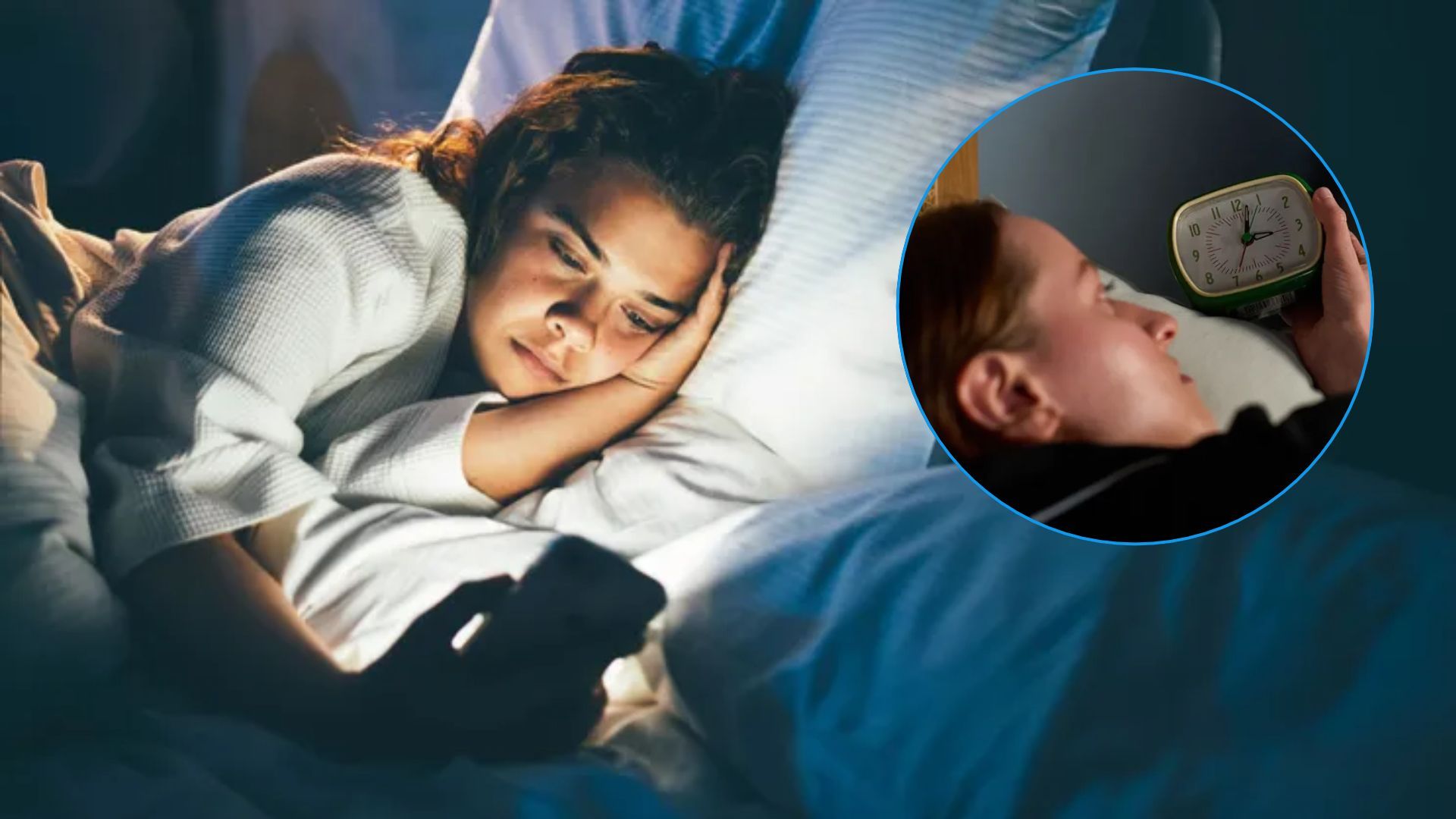
(Image credit: Getty Images / Future) Waking up at 3 a.m. is a recurring sleep problem I can’t seem to shake. Just when I think I’ve kicked the problem for good, I find myself wide awake in the middle of the night, unable to fall back to sleep again. Exhausted and frustrated, I sought the advice of Dr. Aric Prather, a world-renowned sleep expert and a professor of psychiatry and behavioral sciences at the University of California, San Francisco. He instantly identified a key new mistake I’m making in the lead up to bedtime and explained how it could be causing my new wave of middle insomnia (3 a.m. wake-ups).Here's what Dr. Prather, a published author, discovered, and why he recommends a 'two-hour digital buffer' at bedtime to reduce my chances of waking up at 3 a.m. and feeling exhausted the night day.My key mistakeThe quiet hours in the lead up to bedtime is usually an opportunity for me to catch up on unfinished work. Then I can climb into bed with one less thing to worry about.But according to Dr. Prather, a sleep expert at BetterSleep, that's my big mistake. And it could be a driver for why I'm waking up at 3 a.m. again. “Working outside of normal hours can be detrimental to sleep when it becomes a regular habit.”Research shows that working outside of work hours is associated with worse sleep quality.Also, those who work late experience a larger Cortisol Awake Response (CAR), which can lead to 3 a.m. wake ups. (Image credit: Getty Images)Evidence shows that engaging our brains in work-related activities — even if for a short time — can make it difficult for our brains to then switch off in order to fall into deep, restorative sleep. “The issue is the difficulty of mentally transitioning from work to rest. Evening emails, deadlines, and unfinished tasks can keep the brain alert, making it harder to detach psychologically from work before bed. “This can delay sleep, reduce sleep quality, and contribute to fatigue the following day,” says Dr. Prather.Even after you close your laptop, your mind may keep processing work-related concerns, making it harder to get restful sleepDr. Aric Prather, a professor of psychiatry and behavioral sciences at the University of California, San FranciscoSo, although you might only spend a few minutes responding to work queries, the difficulty is ensuring your brain has enough time to disengage from 'work mode' in order to prepare for sleep.“Even after you close your laptop, your mind may keep processing work-related concerns, making it harder to get restful sleep,” says Dr. Prather. “This can contribute to nighttime awakenings.Cortisol risingAnd there's science to support that thinking. A small month-long study of 58 employees found that checking emails outside of work hours was associated with worse sleep quality. The same study also highlighted that those who worked in the run up to bedtime had a larger Cortisol Awakening Response (CAR). CAR is a term to describe the natural rise in the hormone cortisol that begins around 3 a.m. and reaches its peak upon waking, helping you to feel alert. But instead of a natural and steady rise, a larger CAR can indicate a surge of cortisol at 3 a.m., waking you up from sleep. Could checking a few emails really cause that? (Image credit: Future)"A larger Cortisol Awakening Response may also indicate changes in the body's stress-response system, although it is not, by itself, a definitive measure of poor sleep," says Dr. Prather. "The best way to understand the connection is to track when you work, when you go to bed, and when you wake up over several weeks," advises the sleep expert. "If the 3 a.m. awakenings consistently follow evenings of work, that pattern is worth taking seriously."Get instant access to breaking news, the hottest reviews, great deals and helpful tips.The simple routine changeAfter tracking my own nighttime routine habits and my 3 a.m. wake ups, there's undoubtedly a clear correlation between the stints I work in the evening and the frequency of my nighttime awakenings. So, instead of working in the run up to bedtime, I've been implementing a 'two-hour digital buffer' to wind down for better sleep. Here Dr. Prather explains why it works: "Creating a digital buffer is a great strategy, and setting aside the final 60–120 minutes before bed for non-work activities can make a meaningful difference."Dr. Prather says that the goal is to give ourselves a meaningful window in which to transition from productivity to rest. (Image credit: Future)"During that time, I would try to engage in calming activities, such as reading, watching light television, taking a warm shower, stretching, and meditating."Basically, you are looking for activities that create a feeling of calm. The specific activities are less important," says Dr. Prather.It's early days, but swapping emails for analogue activities, such as reading in bed, is already lowering the frequency of the dreaded 3 a.m. wake ups.Other habits I'm using to stop waking up at 3 a.m.As we shift through sleep cycles, waking up at night is normal. It happens multiple times a night and we rarely remember it. However, waking up at night becomes an issue when we can't easily fall back to sleep. As someone on an ongoing journey to improve my sleep, I know there's rarely ever really one simple 'fix' to sleeping better.In addition to avoiding working late into the evening, these are the habits I try to stick to in order to reduce the frequency of my 3 a.m. wake ups:Sticking to a consistent sleep schedule: Your circadian rhythm functions best when you stick to a regular sleep routine, helping you fall asleep faster and wake up feeling refreshed.A comfortable sleep environment: After years of waking up at night due to an uncomfortable bed, I now sleep on the best mattress for my sleep style.Create dark and quiet sleep space: Ambient light and noise pollution can lead to nighttime disturbances. To combat those, I wear a blackout eye mask to bed and pop in my Ozlo 2 sleepbuds to drown out any sound. Follow Tom's Guide on Google News and add us as a preferred source to get our up-to-date news, analysis, and reviews in your feeds. Alternatively, you can read our content on the Tom's Guide app available now for iOS and Android. Subscribe to Tom's Guide on YouTube and follow us on TikTok. Finally, you can visit our dedicated Tom's Guide Savings Squad hub for expert help on getting the best products for less. Nicola is the Sleep Editor at Tom’s Guide. With a career in journalism spanning two decades, Nicola brings experience to the team and the knowledge of what makes a great article, whether that’s a how-to mattress cleaning feature, a deep dive into melatonin gummies, or an in-depth mattress review. As a sleep editor, few better understand how important a decent mattress is to the overall quality of our sleep, and precisely how our sleep impacts our physical and mental health. As well as tackling the vast topic of sleep, Nicola joins the raft of expert mattress specialists at Tom’s Guide, who test and compare a wide range of mattresses in order to guide readers towards the very best options on the market.
I asked a top sleep expert why I'm waking up at 3 a.m. again — he instantly spotted my new mistake and how to fix it
Full Article
Original Source
Read the full article at Tomsguide →KhanList aggregates and links to publicly available news content. We do not host full articles from third-party sources. Always verify important information with original sources.