
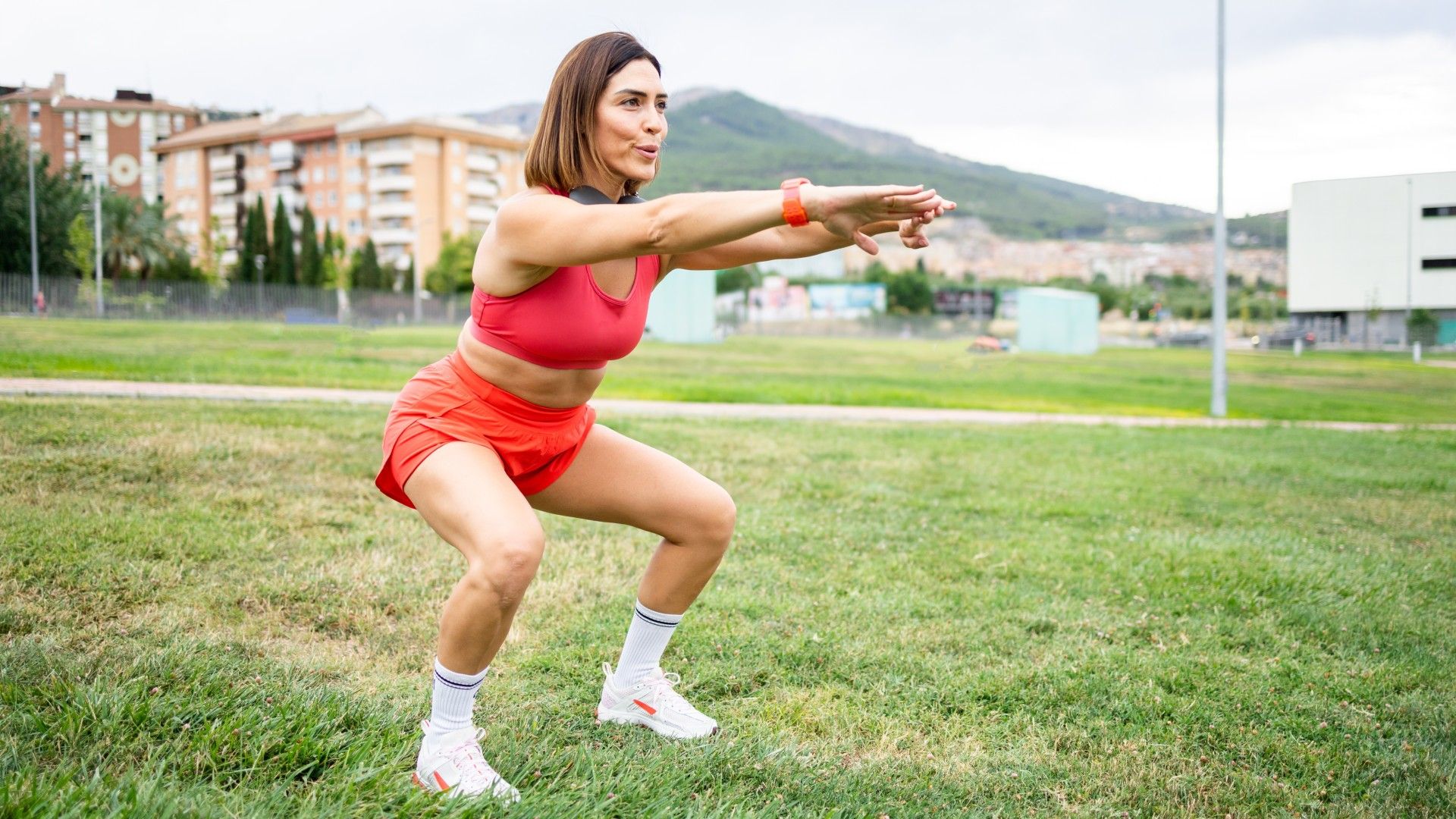
(Image credit: Shutterstock) "Longevity" is the word on everyone's lips lately, and we all seem dialed into the best ways to boost longevity as birthdays relentlessly come and go. Recently, I spoke with expert Leslie Kenny, co-founder of the prestigious Oxford Longevity Project, who shared three exercises she recommends for maintaining muscle as you age."One of the most important things we can do for healthy aging is preserve our muscle mass," Kenny says. "From our 30s onwards, we can gradually lose muscle, particularly if we’re sedentary. This becomes increasingly important in our 40s, when hormonal changes, particularly during perimenopause for women, can make maintaining muscle more challenging."The good news is that you don’t need an expensive gym membership or complicated equipment to start protecting your muscles. Three simple bodyweight exercises can make a real difference. We share them below.What are the three bodyweight exercises for longevity?If you experience pain at any time, stop and rest. If you're working with an injury or health condition, I recommend seeking advice before starting these exercises.1. Squats: For strong legs, metabolic health and maintaining independenceWhen we keep our largest muscle groups strong and active, we’re doing much more than protecting our mobility. We’re also supporting the body’s ability to regulate inflammation, which is particularly important as we age."My colleague at the Oxford Longevity Project, Sir Muir Gray, always says that the quickest route to a care home is when you can no longer sit down on the toilet and get up again unaided," says Kenny."It sounds rather blunt, but he makes an incredibly important point. The ability to sit down and stand up independently is one of the fundamental movements that allows us to remain independent as we age."Squats strengthen some of the biggest muscle groups in our bodies, particularly the quadriceps in our thighs and the gluteal muscles in our buttocks. But here’s something many people don’t realize: our muscles aren’t just there to move us around. They’re also endocrine organs, producing signaling molecules called myokines, some of which have powerful anti-inflammatory effects."Get instant access to breaking news, the hottest reviews, great deals and helpful tips.Contracting muscles during exercise means releasing myokines into the bloodstream that can help regulate inflammation, support metabolic health and communicate with other organs, including the brain.Tips:Start with 10–15 slow, controlled squats, keeping your feet approximately shoulder-width apart and your knees tracking in the same direction as your toes.If you’re a beginner, simply practice sitting down on a chair and standing up again without using your hands. It’s a surprisingly effective exercise.As you get stronger, slow the lowering phase to three or four seconds, or progress to more challenging variations. And remember, the goal isn’t just to be able to do squats in your 40s. It’s to still be able to get up from the toilet unaided in your 90s!2. Push-ups: For upper-body strength and bone healthPush-ups are also a weight-bearing exercise, placing mechanical stress through the arms and shoulders."Push-ups are wonderful because they work several muscle groups simultaneously, including the chest, shoulders, triceps and core," Kenny tells us. "Upper-body strength is particularly important for women, who generally have less upper-body muscle mass than men."Push-ups are also a weight-bearing exercise, placing mechanical stress through the arms and shoulders, which can help support bone health alongside a comprehensive resistance-training program. They also help us preserve the strength needed for everyday activities, from lifting shopping bags to pushing ourselves up from the floor."Tips:If a traditional floor push-up feels too difficult, start with your hands against a wall or sturdy kitchen counter.Keep your body in a straight line, engage your abdominal muscles and lower yourself slowly.Aim for 8–12 controlled repetitions, choosing a variation that makes the final few repetitions challenging without compromising your technique.As you become stronger, gradually lower the incline until you can perform push-ups on the floor.3. Reverse lunges: For balance, stability and preserving muscle as we ageReverse lunges strengthen the quadriceps, glutes and hamstrings while also challenging balance and coordination."Reverse lunges strengthen the quadriceps, glutes and hamstrings while also challenging balance and coordination," Kenny says. "I particularly like single-leg exercises because they help address differences in strength between our left and right sides."They also challenge the stabilizing muscles around the hips, knees and ankles, which are essential for walking, climbing stairs and reducing the risk of falls as we age. And because lunges recruit several large muscle groups, they provide another opportunity to stimulate muscle contractions and the release of beneficial myokines."Tips:Stand tall, step one foot backward and lower yourself slowly, bending both knees as far as is comfortable.Push through your front foot to return to standing.Start with 8–10 repetitions on each leg. If balance is difficult, hold onto a sturdy chair or kitchen counter.For an extra challenge, pause briefly at the bottom of each repetition or slow down the movement.Final tips from a longevity expert (Image credit: Shutterstock)"Muscle isn’t just about strength or looking toned. It’s metabolically active tissue that helps regulate blood glucose, supports insulin sensitivity, protects our joints and bones, and helps us remain independent as we get older," explains Kenny."The real secret to maintaining muscle mass isn’t doing hundreds of repetitions every day. It’s progressive overload — gradually increasing the challenge to your muscles, so they have a reason to stay strong. You can do this by increasing repetitions, slowing movements, progressing to more demanding variations, or eventually adding resistance.""I often remind people that muscle is our longevity currency. The strength we build and preserve in our 40s is an investment in how well we move, function and live in our 70s, 80s and beyond. After all, we don’t just want to live longer. We want to remain strong enough to enjoy those extra years!"Kenny says these three exercises "make an excellent short daily movement routine, but for meaningful muscle maintenance, I recommend performing challenging resistance-training sessions at least two or three times a week, allowing muscles sufficient time to recover. Ideally, a complete strength program should also include pulling movements to strengthen the back."Finally, consider your protein intake. While exercise stimulates muscle growth and maintenance, protein provides amino acids which are essential for repairing and rebuilding muscle tissue. "I often remind people that muscle is our longevity currency. The strength we build and preserve in our 40s is an investment in how well we move, function and live in our 70s, 80s and beyond. After all, we don’t just want to live longer. We want to remain strong enough to enjoy those extra years!"Follow Tom's Guide fitness on Instagram for more workouts, routines, tips, and tricks. Follow Tom's Guide on Google News and add us as a preferred source to get our up-to-date news, analysis, and reviews in your feeds. Alternatively, you can read our content on the Tom's Guide app available now for iOS and Android. Subscribe to Tom's Guide on YouTube and follow us on TikTok. More from Tom's GuideI teach people how to be more mobile: 3 low-impact back and shoulder moves that build stability and strength after 40According to a personal trainer, this exercise is 100 times more effective than crunches. I tried it and was humbledI teach people over 50 to be mobile: 3 low-impact moves that build more stability than a 30-minute walk Sam Hopes is a level 3 qualified trainer, a level 2 Reiki practitioner and fitness editor at Tom's Guide. She is also currently undertaking her Yoga For Athletes training course. Sam has written for various fitness brands and websites over the years and has experience across brands at Future, such as Live Science, Fit&Well, Coach, and T3. Having coached at fitness studios like F45 and Virgin Active and taken on both 1:1 and group, Sam now primarily teaches outdoor bootcamps, bodyweight, and kettlebells. She also coaches mobility and flexibility classes several times a week. Sam has completed two mixed doubles Hyrox competitions in London and the Netherlands and finished her first doubles attempt in 1:11.
I asked a longevity expert for 3 daily bodyweight exercises that maintain muscle mass in your 40s — here's what they chose
Full Article
Original Source
Read the full article at Tomsguide →KhanList aggregates and links to publicly available news content. We do not host full articles from third-party sources. Always verify important information with original sources.