
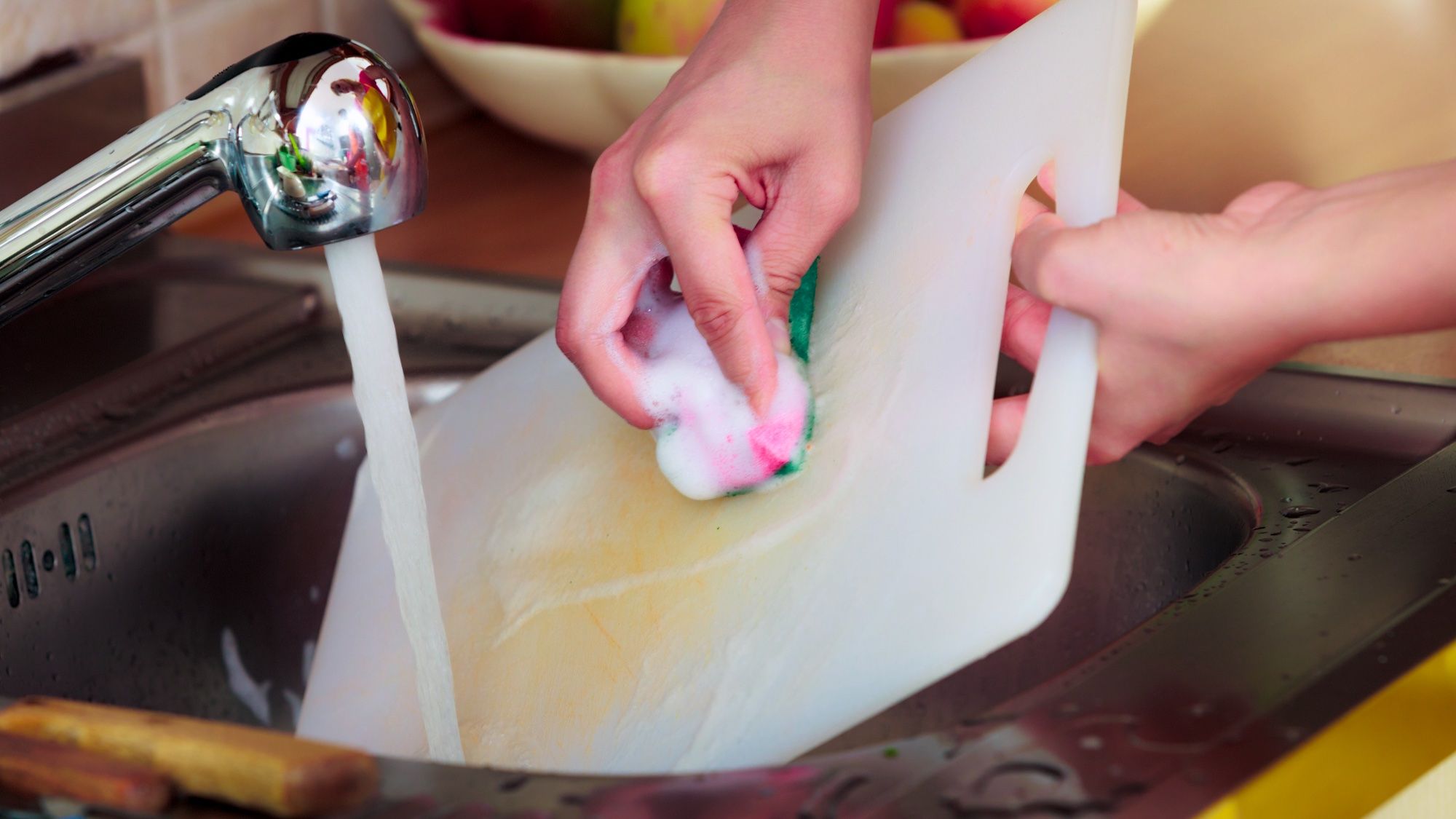
No matter how thoroughly you wash your kitchen cutting boards after dinner, certain foods seem to leave permanent marks behind.My wooden and plastic boards were covered in unsightly yellow turmeric blotches, deep tomato paste stains, and stubborn gray knife scuffs that standard dish soap couldn't touch.I was genuinely ready to toss two of my oldest wooden boards and treat myself to a replacement. But before giving up, I decided to try a low-cost restoration trick: using coarse salt as a natural abrasive.Instead of relying on harsh chemical cleaners or bleach, which can warp wood and leave behind toxic residues, coarse salt works alongside natural acids to lift embedded food pigments without scratching the surface.Why dish soap fails on stained cutting boards (Image credit: Shutterstock)Deeply pigmented organic compounds like lycopene found in tomatoes and carotenoids in carrots seep into these microscopic cuts.Standard liquid dish soap is formulated to strip surface grease, but it falls short on porous or scarred cutting surfaces. Over time, both wood and plastic boards develop thousands of micro-grooves created by knife blades.Deeply pigmented organic compounds like lycopene found in tomatoes and carotenoids in carrots seep into these microscopic cuts where sponge fibers cannot physically reach.Liquid soap works chemically by trapping surface oils, but it lacks the structural grit necessary to scour out trapped material from deep crevices.Get instant access to breaking news, the hottest reviews, great deals and helpful tips.It also strips away the protective mineral oils from wooden boards, drying them out and making them even more vulnerable to deep, permanent staining.How to remove stains from cutting boards To execute this hack, all you need is coarse sea salt or Kosher salt, and half a fresh lemon (or a damp microfiber cloth). Dust the board liberally with coarse salt Ensure your cutting board is completely dry. Sprinkle a generous, even layer of coarse salt across the entire stained area. Avoid fine table salt —you need the larger, jagged crystals of Kosher or sea salt for adequate scouring power.Next, cut a lemon in half and place the flat, juicy side directly onto the salted board. Squeeze gently to release the juice as you scrub the salt into the surface using firm, circular motions. The citric acid works to break down the organic stains while the salt acts as an abrasive pad. Let it sit for 5 minutes, then rinse Allow the salty paste to rest on the board for 5 minutes so the acid can penetrate deep knife grooves. Then simply rinse thoroughly with warm water, wipe dry with a clean towel, and let it air-dry completely standing vertically.If your kitchen boards are looking discolored or holding onto faint garlic and onion odors, give this simple pantry trick a try. (Image credit: Future)Follow Tom's Guide on Google News and add us as a preferred source to get our up-to-date news, analysis, and reviews in your feeds. Make sure to click the Follow button!More from Tom's GuideI restored my graying socks to brilliant white using one overlooked stepHow to clean old baking sheets to look brand new — without hours of scrubbingI brought my yellowed pillowcases back to bright white using a simple 2-ingredient soak
I almost threw my stained cutting boards away — then I tried this simple salt hack that totally restored them
Full Article
Original Source
Read the full article at Tomsguide →KhanList aggregates and links to publicly available news content. We do not host full articles from third-party sources. Always verify important information with original sources.