
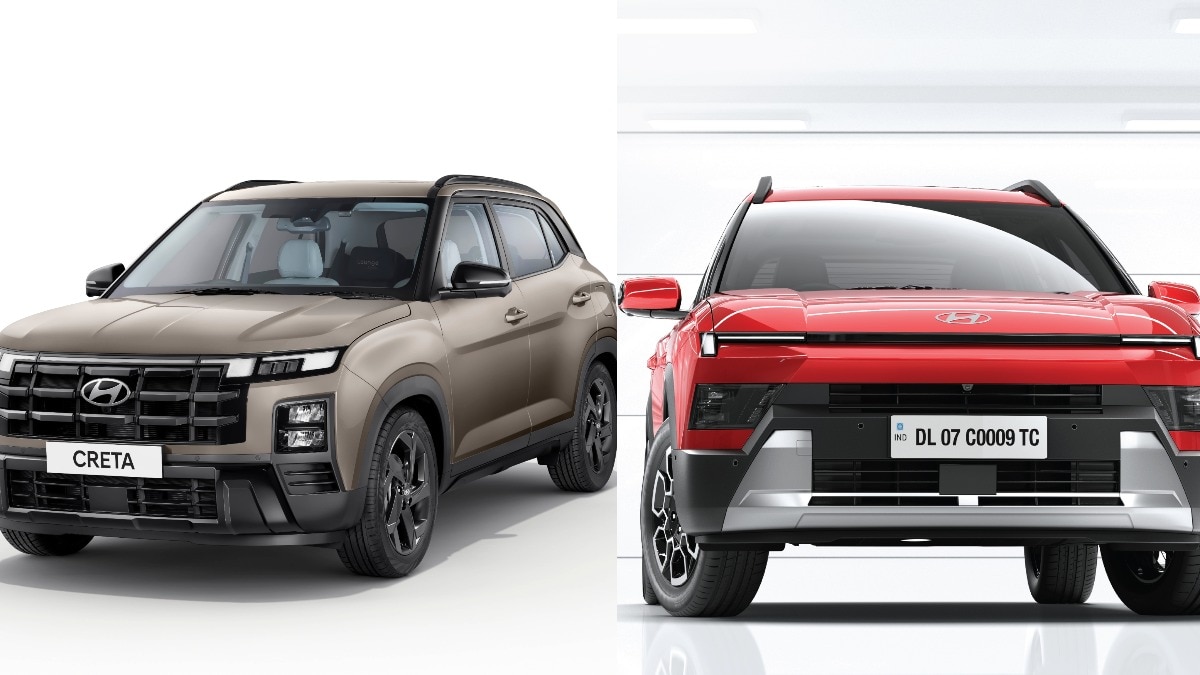
Hyundai has expanded its presence in the mid-size SUV market with the Bayon, priced between Rs 10 lakh and Rs 18 lakh (ex-showroom). It enters a segment where the Creta has already established itself as a bestseller, making the comparison between the two particularly interesting.Although both SUVs share a 1.5-litre naturally aspirated petrol engine and several comfort features, their approaches differ. The Bayon prioritises newer technology and practicality, while the Creta offers a broader powertrain portfolio and more equipment aimed at rear-seat passengers. Here is how the two stack up.Space and practicality: Bayon has the boot advantageDespite being the shorter SUV, the Bayon offers more luggage capacity than the Creta. Its 505-litre boot is 72 litres larger than the Creta's 433-litre compartment, which could make a difference for families carrying luggage on longer journeys.DimensionsHyundai BayonHyundai CretaLength4,245mm4,330mmWidth1,810mm1,790mmHeight1,605mm1,635mmWheelbase2,600mm2,610mmGround clearance205mm190mmBoot space505 litres433 litresFuel tank43 litres50 litresThe Creta is 85mm longer and 30mm taller, while its wheelbase is just 10mm longer. The Bayon, meanwhile, is 20mm wider and has 15mm more ground clearance. These measurements alone do not establish which SUV offers better cabin space, but the Bayon's larger boot is a clear practical advantage on paper. The Creta also gets a larger 50-litre fuel tank, against the Bayon's 43-litre unit.Engines and transmissions: Creta offers more choiceThe two SUVs share their naturally aspirated petrol engine, but the Creta has more options for buyers seeking stronger performance or a diesel powertrain.PowertrainHyundai BayonHyundai Creta1.5-litre naturally aspirated petrol115bhp, 144Nm115bhp, 144NmTransmission options6-speed manual, CVT6-speed manual, CVT1.5-litre turbo-petrolNot available160bhp, 253Nm, 7-speed DCT1.5-litre dieselNot available116bhp, 250Nm, 6-speed manual or 6-speed torque converter AT For buyers choosing the standard petrol engine, the Bayon claims a 0.9kpl fuel-efficiency advantage over the Creta in the CVT configuration. Its smaller dimensions and potentially lower weight could contribute to this difference, although real-world economy will depend on driving conditions. The claimed mileage for the Bayon's manual version has not yet been disclosed.The Creta's advantage becomes more apparent for buyers who want an automatic with a turbo-petrol engine or prefer diesel for their driving requirements. The Bayon is also expected to receive a CNG version in 2027, which would add another option for buyers focused on running costs.Cabin technology: Bayon brings the newer interface Hyundai Bayon interior The Bayon makes a strong first impression with its displays. It gets a 12.3-inch infotainment touchscreen and a 12.3-inch driver's display, both larger than the Creta's 10.25-inch units.It also introduces Hyundai's generative AI voice assistant, which supports functions such as navigation and destination searches, calls, SMS messages, climate control and sunroof operation. It can also provide real-time weather and sports updates. The Creta does not get this assistant.Both SUVs feature wireless Android Auto and Apple CarPlay, connected-car technology, over-the-air updates and onboard navigation. They also share a panoramic sunroof, leatherette upholstery, a leatherette-wrapped steering wheel, ambient lighting and an eight-speaker Bose audio system. Hyundai Creta interior Other common equipment includes push-button start/stop, Type-C charging ports at the front and rear, a rear centre armrest with cup holders and a front centre armrest. Both models also offer ventilated front seats.Comfort features: Creta makes a stronger case for rear passengersWhile the Bayon leads on display size and voice-assistant technology, the Creta offers a more extensive set of convenience features, particularly for occupants in the front passenger seat and the rear.The Bayon gets an eight-way powered driver's seat. The Creta adds a memory function to the driver's seat and an eight-way powered co-driver's seat. It also offers a powered boss mode, allowing the rear occupant to adjust the front passenger seat for additional legroom.The Creta further benefits from dual-zone automatic climate control, compared with the Bayon's single-zone system. Rear passengers get a wireless phone charger in the Creta, while the Bayon's wireless charger is limited to the front.Additional equipment exclusive to the Creta includes a rear sunshade, an air purifier and a cooled glove box. Both SUVs offer reclining rear seats with a 60:40 split, but these extra conveniences give the Creta an advantage for buyers who regularly travel with family or use the rear seat extensively.Safety and driver assistance: Bayon has the technology edgeBoth SUVs are equipped with six airbags, a 360-degree camera, an electronic parking brake, a tyre pressure monitoring system, hill-start assist, hill-descent control and disc brakes on all four wheels.The Bayon goes a step further with a Level 2+ advanced driver assistance systems (ADAS) package, compared with the Creta's Level 2 system. Its additional functions include map-based highway driving assist and cruise control.The Creta, however, gets front and rear dashcams, which are not available on the Bayon. Buyers should note that ADAS capability alone does not establish which vehicle is safer overall; crash-test performance and the effectiveness of individual safety systems also matter.Price comparison: How much cheaper is the Bayon?The Bayon's petrol-manual variants undercut comparable Creta versions by Rs 91,000 at the entry level and Rs 63,000 at the top end. For the petrol-CVT variants, the corresponding differences are Rs 65,000 and Rs 69,000.That makes the Bayon the less expensive option in these comparisons, while offering larger screens, a generative AI voice assistant, a bigger boot and a more advanced ADAS suite.However, the Creta's broader engine range and additional comfort features complicate the value equation. Buyers who want a turbo-petrol or diesel engine, a powered co-driver's seat, boss mode or rear sunshades may find the extra expenditure worthwhile. Discounts on the existing Creta could further narrow the price gap, depending on the variant and dealership offers available at the time of purchase.Hyundai Bayon vs Creta: VerdictThe Bayon is an appealing choice for buyers who prioritise cabin technology, driver-assistance features and luggage capacity. Its larger boot, bigger displays and claimed fuel-efficiency advantage with the petrol-CVT powertrain give it several practical selling points.The Creta remains the more versatile option. It offers a choice of petrol, turbo-petrol and diesel engines, along with a more comprehensive set of comfort features for both front and rear occupants. For buyers who value powertrain flexibility and convenience equipment over the newest technology, it continues to make a strong case.Ultimately, the Bayon brings a different set of strengths to Hyundai's midsize SUV portfolio, but it does not make the Creta redundant. The better purchase will depend on whether buyers value newer technology and luggage space more than the Creta's wider engine range and additional cabin comforts.Subscribe to Auto Today Magazine - Ends
Hyundai Bayon vs Creta: Should you opt for the newcomer over the segment leader?
Full Article
Original Source
Read the full article at Indiatoday →KhanList aggregates and links to publicly available news content. We do not host full articles from third-party sources. Always verify important information with original sources.