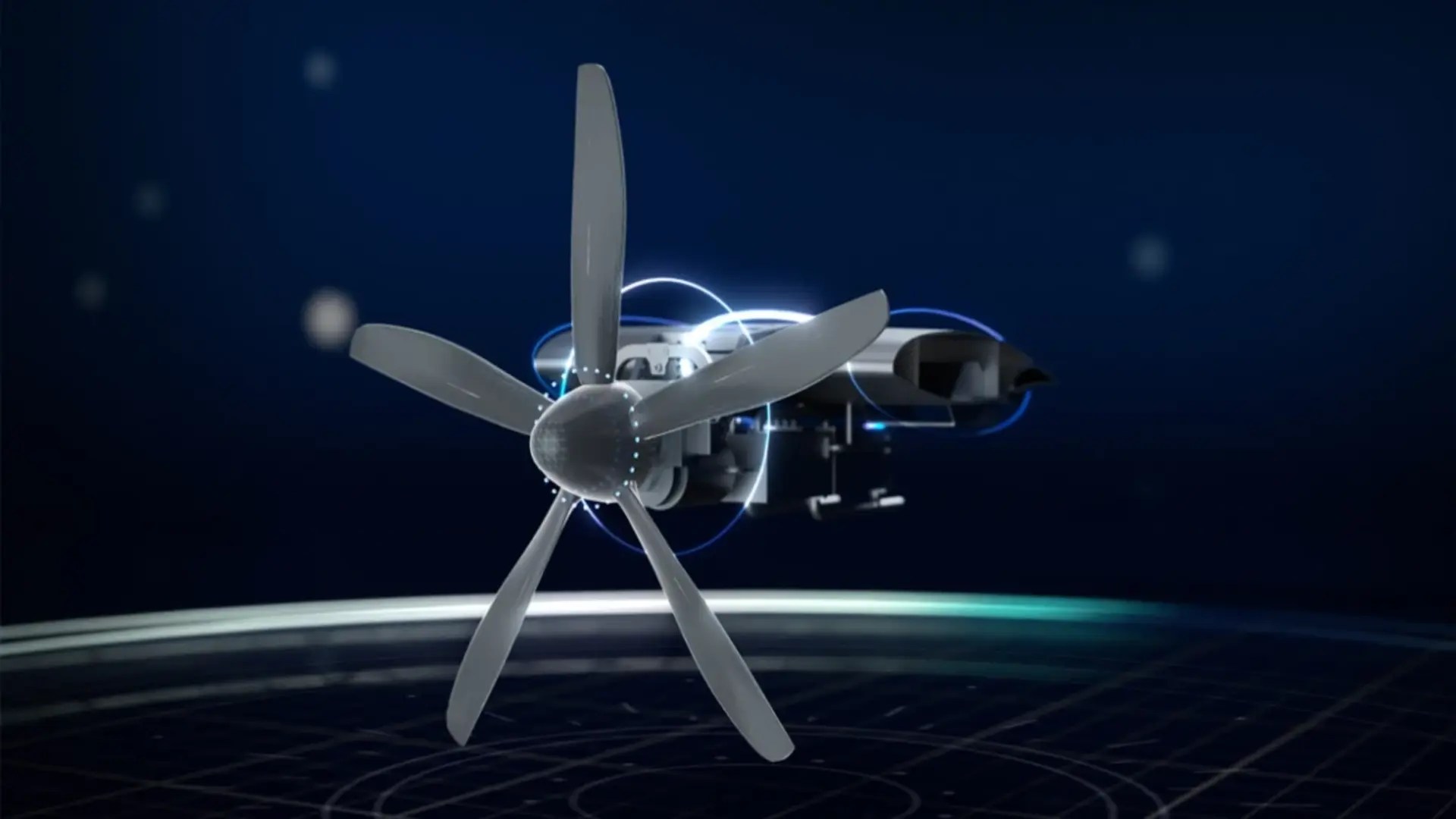
The greener future of aviation is here: MTU Aero Engines has announced that the company has made “significant progress” in developing Flying Fuel Cell (FFC). The company has successfully tested central hydrogen and air supply systems. The first integrated demonstrators are now entering the next stage of development, according to a news release. As per the MTU website, “The Flying Fuel Cell (FFC) is MTU Aero Engines’ fuel-cell propulsion concept. As in every fuel cell, a reaction between hydrogen and oxygen from the air produces water and releases electrical energy. A highly efficient electric motor then uses this energy to drive a propellor via a gearbox.” This propulsion system is designed for virtually emissions-free flight, producing no CO₂, no NOx, and no particulates, with water as its only emission. The technology builds on MTU’s earlier FFC development work, including the production of fuel cell stacks and the advancement of electric propulsion components. MTU validates supply systems and prepares integrated demonstrators MTU stated that the successful tests of the energy and supply systems mark an important developmental step for the FFC. After validating the liquid Hydrogen Fuel System, the company completed testing of the Fuel Cell Hydrogen System, which supplies gaseous hydrogen to the fuel cell. Air supply tests were also completed successfully, with key performance and regulation models validated at MTU’s Munich site, the press release continues. Now that the company has passed the supply system phase, the focus will shift to integrated testing of the FFC. MTU is now building its first close-to-production 350-kilowatt fuel cell stack, while developing a full-system demonstrator to test interactions between components, subsystems, and control functions. The goal is to evaluate the overall system’s performance under flight conditions and to gain more information for the development of future aircraft propulsion systems. Airbus partnership and HEROPS support hydrogen-powered flight goals As stated in the news release, “The European clean aviation research project HEROPS (Hydrogen-Electric Zero Emission Propulsion System) is making a significant contribution to help realize the FFC. Together with partners, MTU is developing technologies for a hydrogen-driven powertrain that could power regional airplanes starting in 2035.” “The centerpiece is a system scaled for 1.8 megawatts, which is being developed and simulated at MTU in Munich.” MTU has been working with the European Aviation Safety Agency (EASA) for five years now, developing the groundwork for certifying flying fuel cells. The partnership allows for the incorporation of regulatory requirements early on in the development process and supports future type certification. “Our ambitious goal is to pave the way for a newly developed, safe, reliable and economical propulsion system that will contribute to climate-neutral aviation,” said Dr. Stefan Weber, MTU’s SVP Engineering and Technology. Weber described the initiative as a “crucial milestone” toward the first hydrogen-powered propulsion system and as “true European technology leadership”. With successful supply system validation, upcoming demonstrator testing, industry partnerships, and ongoing certification work, MTU’s Flying Fuel Cell™ continues to advance as a hydrogen-electric propulsion concept aimed at supporting the future of cleaner regional aviation. Recommended ArticlesGet the latest in engineering, tech, space & science - delivered daily to your inbox.Originally from LA, Maria Mocerino has been published in Business Insider, The Irish Examiner, The Rogue Mag, Chacruna Institute for Psychedelic Plant Medicines, and now Interesting Engineering.
Hydrogen-powered aviation takes step forward as MTU validates fuel cell systems
Full Article
Original Source
Read the full article at Interestingengineering →KhanList aggregates and links to publicly available news content. We do not host full articles from third-party sources. Always verify important information with original sources.