
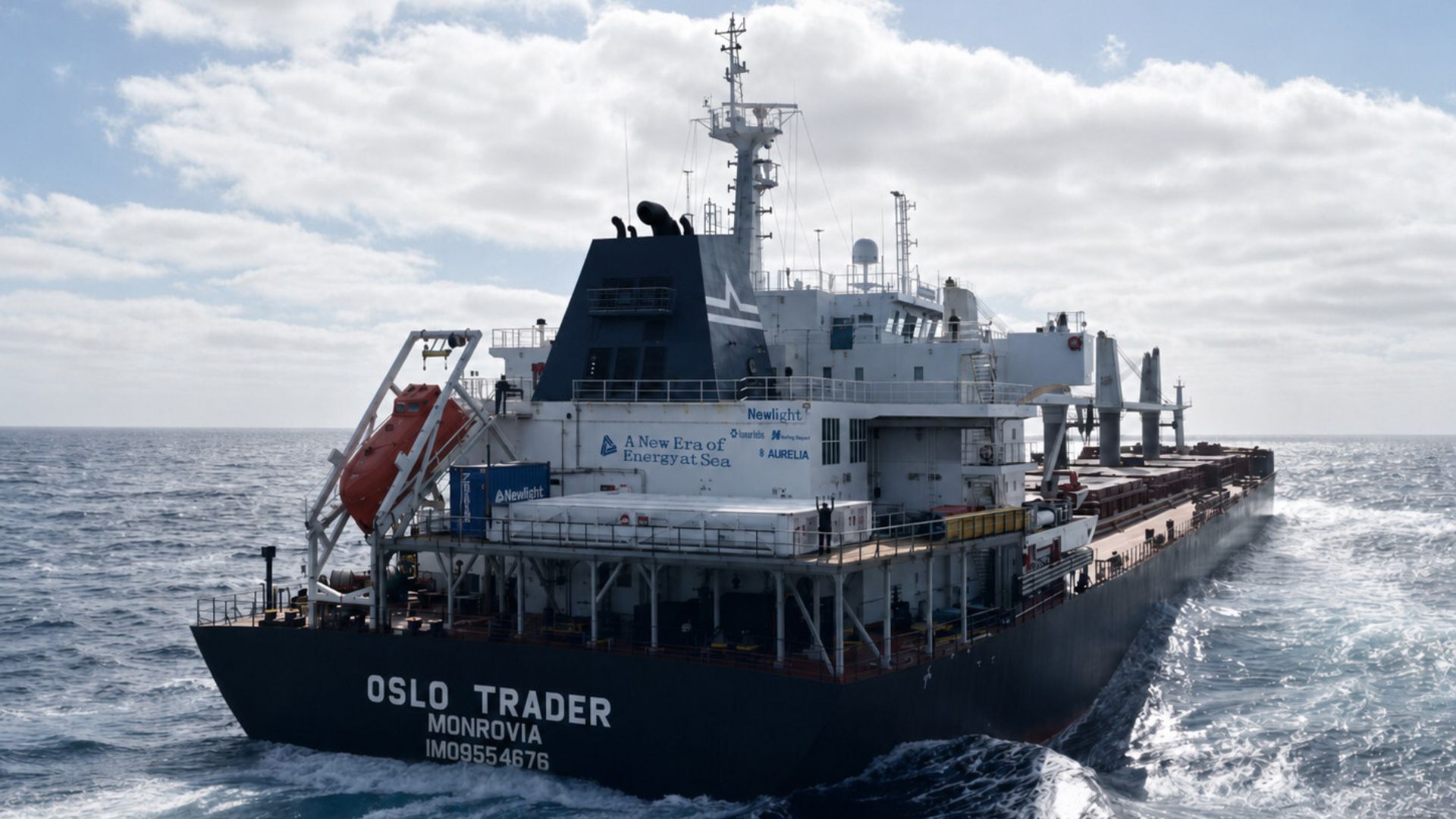
Newlight has completed an 8,500-nautical-mile commercial voyage using its hydrogen-hybrid system aboard a Lomar Shipping bulk carrier. The voyage produced a 24 percent reduction in fuel consumption, according to measurements released by the maritime energy company. The 199-meter vessel traveled from Singapore to Ghana with the retrofit system installed on its existing diesel engine. Newlight also reported a 28 percent reduction in CO₂ emissions and a 22 percent decrease in carbon monoxide emissions during the voyage. The results give the technology its first extended commercial test at sea. Newlight now says it has agreements covering 12 vessels across several shipping companies. Hydrogen joins existing engines Newlight designed the system as an add-on for conventional marine diesel engines. It introduces a controlled amount of hydrogen into the combustion process. A real-time controller adjusts hydrogen delivery as engine conditions change. It accounts for factors such as load and engine speed during operation. That control system aims to extract more useful energy from each combustion cycle. Operators can also continue using diesel when hydrogen supplies are unavailable. The approach could matter for shipowners facing expensive fleet upgrades. Replacing large commercial vessels with alternative-fuel ships can require years of planning and significant capital. Newlight says its retrofit can go onto an operating vessel within one to two weeks. The installation does not require a drydock, according to the company. Commercial potential The reported fuel savings could translate into substantial operating benefits for large vessels. Newlight projects annual savings of roughly $500,000 for similar ships. The company also estimates a technology payback period below 18 months. Those figures could make efficiency retrofits attractive as marine fuel costs and emissions requirements rise. The voyage involved a 57,038-DWT bulk carrier, giving the system a test under real commercial operating conditions. That distinction separates the deployment from shorter demonstrations or controlled engine tests. Newlight’s commercial pipeline now includes 12 vessels. Broader fleet deployments are planned for next year. The company also received regulatory approval for its system from RINA. The classification society named Newlight the winner of its Hydrogen Innovation Award. Shipowners seek lower emissions Shipping remains heavily dependent on liquid fuels, creating a difficult transition for operators with existing fleets. The industry moves more than 80 percent of global trade by volume. Fuel can also represent roughly half of a vessel’s operating expenses. That makes even modest efficiency gains financially significant across long voyages. Newlight’s results suggest hydrogen could serve as an efficiency tool without replacing an entire propulsion system. The technology keeps the existing diesel engine at the center of the vessel’s operation. That could offer shipowners another route toward lower fuel use and emissions. It also avoids waiting for alternative-fuel infrastructure to reach every major shipping route. The company now faces a larger test as deployments expand beyond a single vessel. Sustaining the reported performance across different ships, engines, routes and operating conditions will determine how far the retrofit can scale. Get the latest in engineering, tech, space & science - delivered daily to your inbox.Aamir is a seasoned tech journalist with experience at Exhibit Magazine, Republic World, and PR Newswire. With a deep love for all things tech and science, he has spent years decoding the latest innovations and exploring how they shape industries, lifestyles, and the future of humanity.
Hydrogen-hybrid ship cuts fuel use 24% over 8,500 nautical miles, saving $500K annually
Full Article
Original Source
Read the full article at Interestingengineering →KhanList aggregates and links to publicly available news content. We do not host full articles from third-party sources. Always verify important information with original sources.