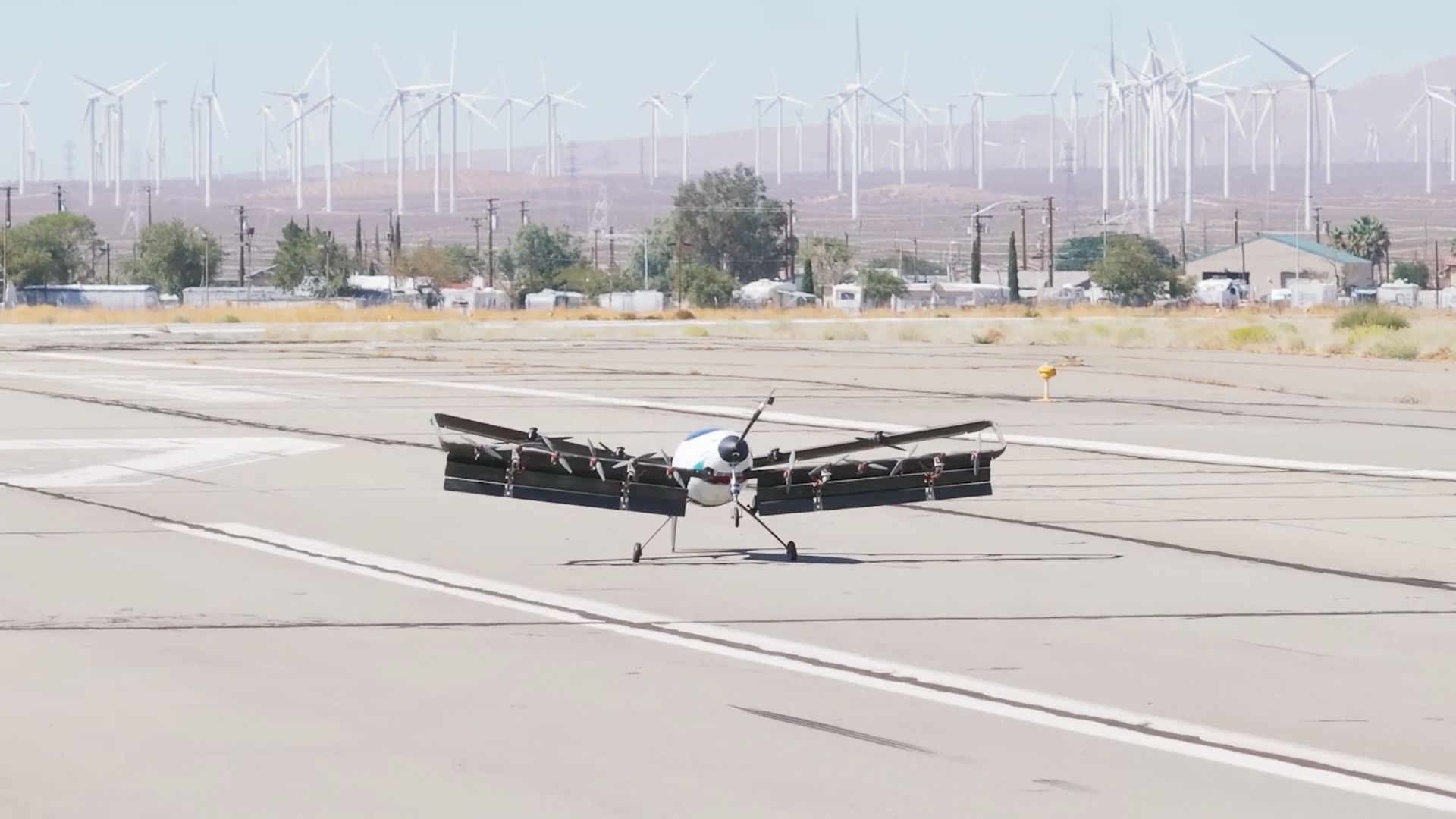
The program will integrate Odys' proprietary Hybrid Power System, currently available in outputs ranging from 20 kW to 4 MW, into ST Engineering's DrN-600.Odys Aviaiton/YouTube US-based Odys Aviation and Singapore-based ST Engineering have partnered to jointly develop a hybrid-electric propulsion system for the DrN-600 medium-lift cargo unmanned aircraft system (UAS). Under the agreement, Odys is expected to become the hybrid power development partner for the program, supporting the aircraft from prototype development through potential large-scale production. The collaboration will initially focus on validating the system’s technical and commercial feasibility before moving toward a definitive development agreement. “Hybrid-electric propulsion is one pathway to further strengthen the DrN-600’s flexibility, endurance and operational relevance,” said Teong Soo Soon, SVP & Head at ST Engineering’s Commercial Aerospace business, in a statement. Hybrid drone alliance The collaboration is aimed at extending DrN-600 UAS’s range and improving the efficiency of unmanned cargo operations. The partnership begins with a memorandum of understanding (MOU) under which the companies will validate the technical and commercial feasibility of integrating Odys’ hybrid-electric power system into the DrN-600. The work is expected to lead to a Master Development Agreement, with Odys serving as the hybrid architecture developer, prototype supplier, and production partner for the aircraft’s hybrid-electric power system (EHPS). As part of the program, Odys will evaluate the propulsion system architecture, optimize weight and volume, assess total cost of ownership, and develop a roadmap to support large-scale production. Once integrated, the hybrid-electric system is expected to extend the DrN-600‘s operational range beyond 186 miles (300 kilometers) while enhancing endurance and overall mission performance. The propulsion technology is based on Odys’ proprietary Hybrid Power System, which has been developed and flight-tested over the past five years. Available in power outputs ranging from 20 kW to more than 4 MW, the modular system is designed for aircraft, defense, and energy applications. According to the company, it offers longer range, multi-hour endurance, and lower operating costs than conventional propulsion systems for heavy-lift cargo drones. Beyond propulsion, the agreement also includes plans to explore integrating ST Engineering’s Ground Control Station technology with Odys’ unmanned aircraft platforms, potentially expanding the partnership to include mission systems and autonomous operations. Future logistics aircraft The DrN-600 is ST Engineering’s next-generation medium-lift cargo unmanned aircraft system (UAS) and forms part of the company’s DroNet solution, which is designed to enable autonomous cargo transportation over long distances. The platform aims to address key challenges that have limited the widespread adoption of commercial cargo drones, including mission autonomy, regulatory compliance, operational safety, and cost-effective large-scale deployment. Designed with a maximum take-off weight of under 1322 pounds (600 kilograms), the DrN-600 can carry payloads of up to 220 pounds (100 kilograms) in a spacious cargo compartment compatible with a variety of standard pallet sizes. This allows the aircraft to transport medical supplies, industrial equipment, humanitarian aid, and other essential cargo to remote or hard-to-reach locations where conventional transport may be impractical. The aircraft has been engineered to maximize payload capacity and flight performance while remaining within global regulatory weight limits, simplifying future certification and commercial operations. Its design also builds on ST Engineering’s operational experience gained since 2018 through the deployment of smaller unmanned aircraft systems. Certification of the DrN-600 is targeted for completion by 2028. In parallel with the certification process, ST Engineering plans to conduct operational prototype trials with prospective customers to validate the aircraft’s performance in real-world missions, gather user feedback, and further refine the platform before commercial deployment.Recommended ArticlesGet the latest in engineering, tech, space & science - delivered daily to your inbox.Jijo is an automotive and business journalist based in India. Armed with a BA in History (Honors) from St. Stephen's College, Delhi University, and a PG diploma in Journalism from the Indian Institute of Mass Communication, Delhi, he has worked for news agencies, national newspapers, and automotive magazines. In his spare time, he likes to go off-roading, engage in political discourse, travel, and teach languages.
Hybrid-electric propulsion could boost cargo drone range beyond 186 miles
Full Article
Original Source
Read the full article at Interestingengineering →KhanList aggregates and links to publicly available news content. We do not host full articles from third-party sources. Always verify important information with original sources.