
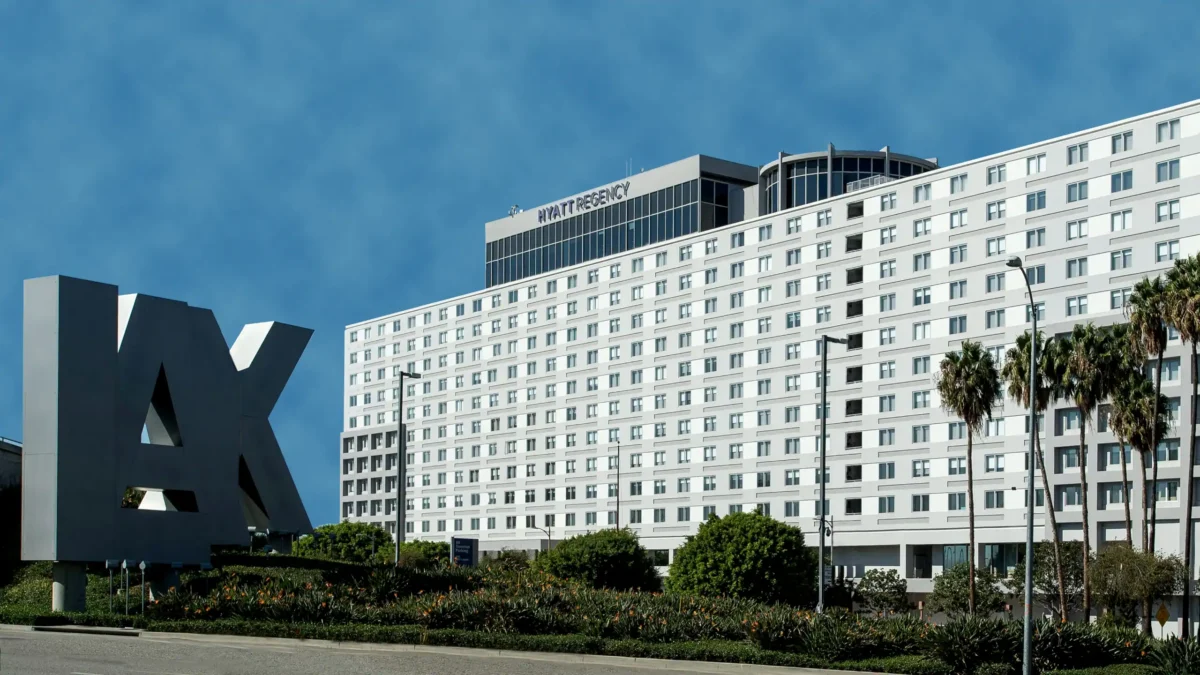
Hyatt Regency LAX won’t let you stay more than 21 consecutive days. Booking separate reservations won’t get around it. The hotel even counts back-to-back stays. They seem to be worried about a guest becoming a tenant under the law. A customer who wants to keep paying can become someone the hotel needs to turn away. The published policy says: The hotel does not accept reservations that result in a guest staying more than 21 consecutive days, whether through one reservation or multiple back-to-back reservations. Meanwhile, its frequently asked questions advertises “Extended Stay Regency Suites” and tells guests to contact the property about extended stays or special arrangements. Apparently there’s extended, and then there’s too extended. Why A Hotel Might Want You Gone Before A Month I’d put 90% odds at avoiding residential tenancy exposure being the main explanation for this policy. Once someone qualifies as a tenant, ending their stay can require notices and a court eviction instead of ordinary hotel checkout procedures. Depending on the jurisdiction and property, rent regulation and restrictions on the grounds for eviction can enter the picture, too. The hotel may have to spend money establishing that an exception applies before it can get its room back. In the city of Los Angeles, the rent stabilization ordinance brings hotel accommodations occupied as someone’s primary residence for more than 30 days into its definition of a rental unit. Building age and other exemptions matter, too, though. California also has a separate exclusion for qualifying hotels that retain access and control and offer a specified set of services, including housekeeping, mail and room services. The relevant Los Angeles threshold is 30 days. A 21 day limit looks like a conservative buffer, leaving room to deal with a delayed departure before getting close to it. Although a hotel might want to preserve rooms for shorter, more profitable bookings, or limit payment risk. Other Hotels Have Limits, Including Right Next To California In Vegas Hyatt Regency LAX isn’t alone. Here are published limits at some other properties: Hotel Published Stay Limit Hyatt Regency Valencia 28 days Hyatt Regency Westlake 28 days Best Western Los Angeles Worldport, Wilmington 28 days The LINE Los Angeles 29 days, contact the hotel for stays over 21 Wynn Las Vegas / Encore Terms state a 14 day maximum for all reservations Oasis at Gold Spike, Las Vegas 14 consecutive nights The LINE Austin 29 days, contact the hotel for stays over 21 The LINE Washington, D.C. 28 days, contact the hotel for stays over 21 The legal differences at play: Nevada has a 30 day trigger. Its residential landlord-tenant statute excludes hotel or motel occupancy of less than 30 consecutive days, unless the occupant clearly shows an intent to remain for a longer continuous period. Texas looks at the relationship between property and guest. As Texas Legal Aid explains, length of stay, payment arrangements, contract terms, housekeeping and control of the room all help distinguish a guest from a tenant. The state’s 30 day hotel tax exemption also applies. Florida gives the written agreement more weight. Its current definition treats hotel and motel occupancy as transient unless a written rental or lease agreement expressly says the unit is the guest’s sole residence. Transient hotel occupancy is excluded from the residential tenancy chapter. New York has more than one route to protection. State law includes a nontransient hotel resident in possession for at least 30 consecutive days within its tenant definition for eviction proceedings. But in a New York City hotel covered by rent stabilization, a guest can acquire permanent tenant status much sooner simply by requesting a qualifying lease. Sometimes A Stay Limit Doesn’t Solve The Problem A hotel can’t necessarily make tenancy law disappear by putting a checkout date in its terms. California prohibits a residential hotel from requiring an occupant to move, or check out and re-register, before 30 days when a purpose is keeping them legally transient. That rule applies to residential hotels, not automatically to every hotel. Los Angeles also counts forced room changes and checkouts intended to avoid its rent-stabilization rules. New York City’s rules for covered hotels go further. An occupant who’s never had a lease can request one at any point during occupancy. The request makes them a permanent tenant, and the owner must provide a lease of at least six months within 15 days. The rules also prohibit refusing to continue a tenancy solely to prevent permanent-tenant status. In that setting, a claim can arise after the first night. I understand preventing an apartment landlord from evading the law by calling the building a hotel. But making it difficult for an actual hotel and a willing customer to agree on a temporary stay has costs, too. Someone working on a project, waiting for a home repair, or staying near a hospital may want six weeks of housekeeping and a front desk. They don’t necessarily want an apartment lease. If accommodating that person creates a costly risk of being unable to recover the room, the hotel has an incentive to refuse the booking. The New Yorker Guest Tried To Take The Whole Building The Wyndham New Yorker case I’ve covered took these risks to their absurd extreme. Mickey Barreto booked one night in 2018 for $149 plus tax, requested a lease, and wouldn’t leave. After the hotel removed him, he went to housing court and obtained an order restoring possession of his room. And the hotel subsequently lost a contested eviction case and its appeal. To establish the exemption it claimed from rent stabilization, the property needed to prove that the room rented for more than $350 a month or $88 a week on May 31, 1968. In 2020, an appellate court upheld the eviction case’s dismissal because the hotel hadn’t supplied sufficient evidence. A 1966 hotel directory and a 1969 accountant’s report didn’t establish the necessary room rate on the statutory date. Imagine trying to get your hotel room back in 2020 and losing because you can’t adequately document what it cost in 1968. While the room dispute was going on, Barreto treated his possession order as a basis to claim the entire building. His theory was that the property hadn’t been subdivided, so rights to his room somehow gave him the hotel. He filed documents purporting to transfer ownership to himself and his nonprofit, Mickey Barreto Missions. According to Manhattan prosecutors, he demanded rent from a tenant, demanded control of the hotel’s bank accounts, told the real owner to leave, and approached Wyndham about transferring the franchise. He even went to its lenders to try to borrow against the property. The city recorded fraudulent documents. The courts protected possession of a room. A 2019 judgment declared the deed void and confirmed the real owner’s title. He nevertheless made further false filings in 2023. Tenancy law didn’t authorize stealing a skyscraper. But the hotel was already fighting over a one night guest’s right to remain when it had to start defending its title, its accounts and its dealings with tenants and lenders, too. Barreto was finally evicted in 2024. In February 2026, nearly eight years after checking in, he pleaded guilty to fraud. His sentence was six months already served and five years of probation. Topics on this page
Hyatt Regency LAX Caps Stays At 21 Days—The Legal Risk That Makes Hotels Turn Away Paying Guests
Full Article
Original Source
Read the full article at Viewfromthewing →KhanList aggregates and links to publicly available news content. We do not host full articles from third-party sources. Always verify important information with original sources.