
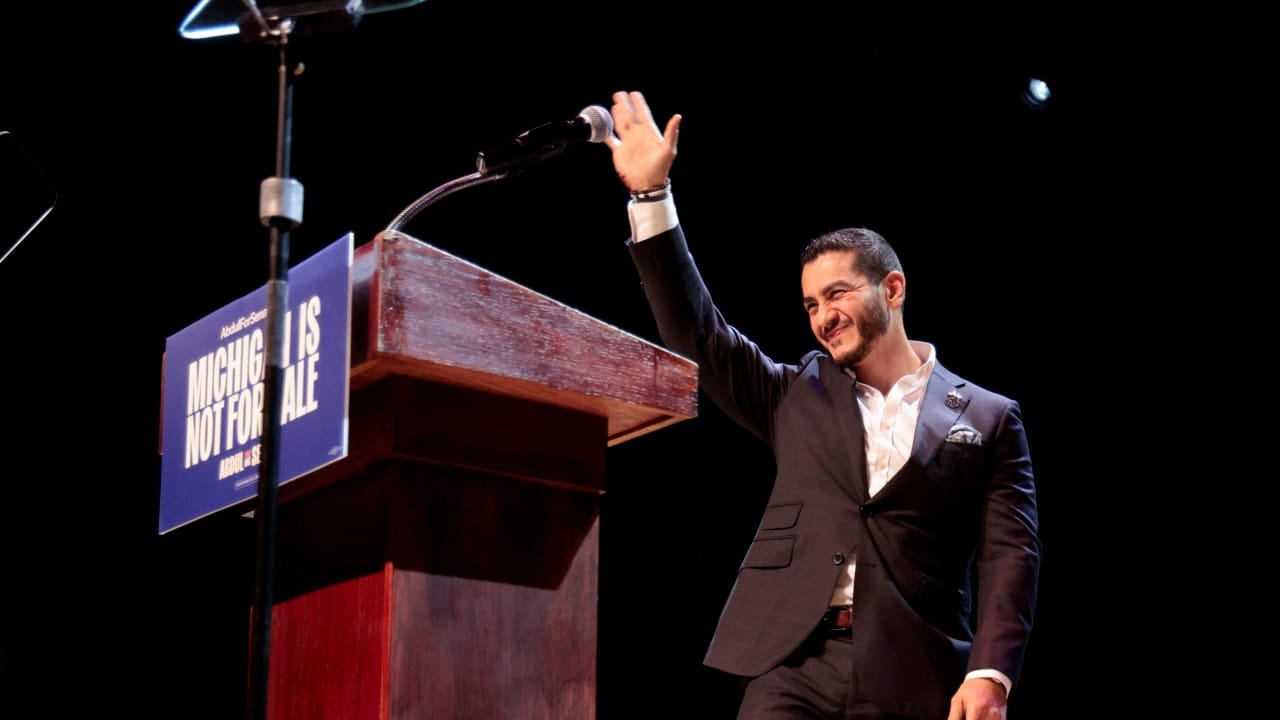
NOVEMBER 5, 2026 18:00“Hurt people hurt people.” It's a phrase often repeated when those who are wounded, disappointed, rejected, or humiliated respond by inflicting pain on others.Rather than finding a way to heal their own wounds, those with trauma and pain transfer their suffering onto others. This can become a vicious cycle: someone gets hurt, retaliates, and in turn creates another wounded person.In March of 2026, following a failed terror attack on a synagogue outside Detroit. Abdul El-Sayed, then running in the Senate primaries, condemned the attack but added that “hurt people hurt people” – a remark critics said excused the attacker.In a strange twist that shocked many observers, El-Sayed's former primary rival, Democrat Haley Stevens, endorsed his Republican opponent, Mike Rogers, in the final week of the race. After Stevens criticized El-Sayed, his campaign asked her to stay away from his events, including a Democratic unity service at a Detroit church.On November 1, two days before the election, she appeared at that church beside the Republican nominee, Rogers, and endorsed him.Democratic US Senate nominee Abdul El-Sayed addresses supporters during a campaign rally in Detroit, Michigan, US October 24, 2026. (credit: REBECCA COOK/REUTERS)There is an irony here. Stevens was hurt by El-Sayed's actions, and in response, she took an action that could hurt him politically by endorsing his opponent, Rogers. Once again, we see how hurt can lead people to hurt others.Whatever one’s political position, there is a larger human lesson here. When personal disappointment and hurt become the motivation for our actions, the consequences can extend far beyond the original disagreement.What goes around comes around. Hurt people hurt people. And the cycle continues.But is this inevitable? Are we destined to pass our pain on to the next person? Or is there another way? This week’s Torah portion, Chayei Sarah, offers a remarkable answer.The parsha begins with the death of Sarah, Abraham’s beloved wife and Isaac’s mother. Sarah had waited 90 years to experience the blessing of motherhood. She had prayed, struggled, and cried for the privilege of bringing Isaac into the world. Her entire life had been invested in her son. Now, suddenly, she was gone.For Isaac, this was an enormous loss. He had not only lost his mother; he had lost the person who had given him unconditional love and security. He had already experienced the trauma of the Akeidah, the binding on the altar, and now he was confronted with another devastating experience.One might have expected Isaac to become bitter, withdrawn, or emotionally broken. He had every reason to feel that life had dealt him an unfair hand.Yet the Torah tells us something extraordinary. When Rebecca enters his life, the Torah says: “Isaac brought her into the tent of Sarah, his mother, and Isaac was comforted after his mother’s death.” Isaac did not simply marry Rebecca. The words chosen were: "He brought her into the tent of his mother."The midrash, cited by Rashi, the luminous 11th-century Biblical commentator, explains that when Sarah died, three special blessings disappeared from her tent. The Shabbat candle remained lit from one Shabbat to the next, a blessing rested in her dough, and a cloud of Divine presence hovered over her tent. When Rebecca arrived, all three miracles returned.Isaac did not overcome his mother's loss by pretending she had never existed, by erasing her memory or replacing her love. Instead, he rebuilt the very environment of love, warmth, spirituality, and blessing that she had created.The three miracles returned because Rebecca continued the legacy of Sarah.Perhaps this is the Torah’s answer to the expression “Hurt people hurt people.”Isaac avoids the cycle of destructionIsaac was hurt, but he did not make others suffer because of his pain. He found a way to transform his loss into an opportunity to rebuild. Rather than allowing the darkness of his experience to define his future, he allowed the love he had received from his mother to become the foundation of his new life with Rebecca.Rather than beginning a cycle of destruction, we can follow Isaac's example and take the pain we have experienced and use it to become more compassionate. We can take the love we once received and pass it forward. We can choose to become the person who breaks the cycle rather than the person who perpetuates it.As El-Sayed steps into his role as a senator, this is a lesson that is important for him and our leaders to heed. Political disagreements, personal disappointments, and competing ambitions are inevitable. But leadership requires something greater than winning an argument or settling a personal score. It requires the ability to rise above our own wounds and recognize the responsibility we have toward others.Isaac teaches us that we cannot always control what happens to us, but we can decide what we do with that pain. We can pass it on to others, or we can transform it into something positive.That is the real message of our Torah portion: The answer to a world filled with hurt is not more hurt. It is to rebuild the love that has disappeared, restore the blessings that have been lost, and create an environment where the next generation can experience warmth, security, and hope.Hurt people may hurt people. But healed people can heal people. And the greatest legacy we can leave is not the pain we have experienced, but the love we choose to pass on.The writer leads Chabad Columbus at the Lori Schottenstein Chabad Center.Follow us on Google
Hurt people hurt people: Isaac teaches us how to break the cycle - opinion
Full Article
Original Source
Read the full article at Jpost →KhanList aggregates and links to publicly available news content. We do not host full articles from third-party sources. Always verify important information with original sources.