
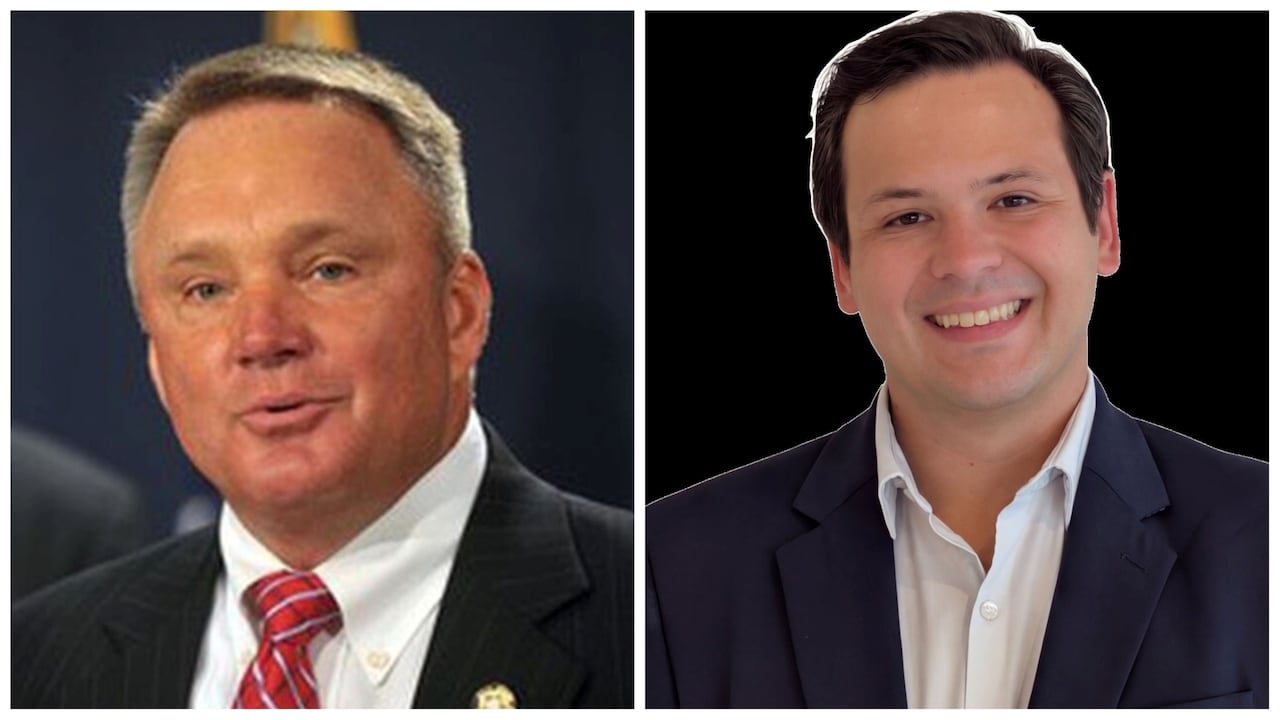
Republican State Rep. Rex Reynolds faces Democrat Forrest Satterfield in the District 21 race in the Nov. 3 general election.Reynolds was first elected in 2018 and serves as Ways and Means General Fund chairman. District 21 is entirely in Madison County and includes a part of Huntsville.Reynolds and Satterfield shared their views on various issues that may be addressed in the Alabama LegislatureCan you talk about your experience and how you would be an effective representative for District 21?Rex ReynoldsCommittee Chair Rep. Rex Reynolds, R-Madison County, speaks at the State House in Montgomery, Ala., during a public hearing on HB1, a bill that, pending Supreme Court approval, would allow the state to use an alternative congressional map and call a special election, Tuesday, May 5, 2026. (Will McLelland | AL.com) Will McLellandI have a long established background in public safety, police and fire administration, and served in an executive role under Mayor (Tommy) Battle, managing a structure of 2,400 employees with an over $300 million budget. It well positions me for the work I now do in Montgomery serving the citizens of HD 21 and the support I provide in my role as chairman of the Ways and Means General Fund. Forrest SatterfieldForrest Satterfield is the Democratic nominee in the District 21 state house race.Forrest Satterfield photoI was born and raised in Huntsville and earned my degree in Biomedical Engineering with a minor in Entrepreneurship from UAB. At 19, I started Satterfield Technologies, the first startup from UAB’s Innovation Lab, to create affordable, custom-fit knee braces. In March 2020, when personal protective equipment was hard to find, I launched OBEX Health to make custom-fit N95 masks for doctors at UAB, Vanderbilt, and people across Alabama. I worked 14-hour days for a year and a half before moving back to Huntsville to be closer to my family. After coming home, I joined gener8tor to build a company that audits medical bills for errors. Later, I did consulting work and then joined Leidos as a manufacturing data scientist. In my free time, I created cicada.guide, a free tool that explains state laws in plain language, shows how your representative voted, and lets people share their views with their representatives.I think a good representative should first identify the real problem before talking about solutions. That means staying in touch with the people I represent. I plan to give updates at least once every quarter, so everyone knows what I’m hearing and what I’m working on. Just as important, I want to keep an open line of communication all year, not just at update time. I’ll hold regular town halls, send occasional surveys, and offer open office hours so people can share concerns or ideas with me anytime.Leading a community is about more than just passing laws. It can also mean organizing people to solve problems that don’t need a new law. The work happens year-round, not just during the legislative session.I also won’t wait to take action. Too many good ideas get spread out over a career or stall because that’s how it’s always been done and I’ll work with anyone who wants to make positive change for this state. That’s how I’ll serve as your state representative.Looking ahead to the next legislative session, what issues do you believe the state should be focused on?Rex ReynoldsWe will continue to cut taxes, beginning with the elimination of the grocery tax. We have already reduced taxes by over $1.5 billion in the last four years.We will also continue to support our law enforcement and work with our chiefs and sheriffs to understand their needs. We will once again focus on areas where we can support our veterans. I will specifically continue my work on expanding mental health services, our MH Taskforce report will be public after Nov 1st.Finally, I will work with the incoming governor to ensure we have a solid budget to support the critical state services.Forrest SatterfieldThe state should focus on three main areas: increasing competition in healthcare, protecting new and existing homeowners, and making sure our infrastructure keeps up with growth.Right now, state law allows existing hospitals to challenge and often delay or block new competitors from opening. This law, called Certificate of Need, protects hospitals more than patients. I want to change that so new clinics and hospitals can compete for your business. More competition gives patients more choices and helps keep prices down. We also need to expand Medicaid. About 86,000 Alabamians make too much to qualify for Medicaid but not enough to get help buying insurance. If we expand Medicaid, the federal government will pay 90 percent of the cost. Alabamians already help pay for Medicaid expansion in other states through federal taxes. It’s time that money helped people here at home.Buying a new home is the biggest purchase most families make, but Alabama doesn’t require a minimum warranty. I want to set a 1-2-6 warranty standard: one year for workmanship and materials, two years for plumbing, electrical, and HVAC, and six years for major structural parts like the foundation. Builders should have real liability insurance to keep their licenses. Also, buyers shouldn’t be able to sign away protections at closing.The roads from north Madison County to jobs in Huntsville can’t keep up with growth. The state should widen our two-lane roads to handle more traffic and add wider shoulders so emergency vehicles can get through. We also need better public transportation, like new bus stations that offer rides from Chase, Meridianville, and Hazel Green to Redstone Arsenal or Research Park.Huntsville Mayor Tommy Battle and Madison County Commission Chairman Rex Vaughn are both of the opinion north Alabama, and more specifically Madison County, does not receive its share of road improvement funds. What are your thoughts on the issue? Rex Reynolds We continue to have this conversation. We have been blessed to increase the states infrastructure through the Rebuild Alabama Act, but we now need to refocus on our growth areas like Huntsville and Madison County, I suggest possible a formula for distribution to those areas with double digit growth within a three-year period. Forrest SatterfieldI agree with them. In 2023, Madison County got about $4.5 million from Rebuild Alabama, which is only about $11 per resident, even though one in twelve Alabamians lives here. The problem is the funding formula. Rebuild Alabama splits 45 percent of the counties’ share equally among all 67 counties and divides the rest by population, but it updates the population counts only every five years. That means Madison County’s road funding is based on old numbers, not the current population. Local taxpayers are already paying extra for state highways. Huntsville paid half the cost of its original Restore Our Roads projects with ALDOT, and the City of Madison paid the full $37 million for the I-565 interchange at Town Madison.In Montgomery, I’ll push to update the county road funding formula annually, instead of every five years. That way, Madison County’s share will match the number of people who actually live and drive here.Are there any Madison County and needs you feel are not addressed in Montgomery?Rex ReynoldsOur area has been a priority since being elected in 2018. We have brought millions back to the area for our schools, I pushed for and received more mental health beds in Madison County, and the first adolescent mental health wing here. We also have landed millions in funding for the downtown flood mitigation program which allows for the growth of our VBC. And finally, we have worked with Mayor Battle and the Commission to land key economic development projects in our area. Forrest SatterfieldHazel Green, Meridianville, and Moores Mill have no mayor or city council, so their voices in Montgomery only come through their state representative and state senator. These communities depend on the county for most local services, and the county can largely do only what Montgomery allows. Our volunteer fire departments are a good example. They rely largely on a 3-mill property tax, and the County Commission divides that money each year with no formula written into law.Incorporation is a potential solution and residents can decide that through a petition and a local vote. If Hazel Green or Meridianville want to explore it, I’ll help them understand what it would take, what it would cost, and what they’d gain.Gambling is always a topic in each legislative session. What are your thoughts on a lottery and casino gambling?Rex ReynoldsPolling shows that my district wants to vote on a Lottery, I will support that right to vote on it. Forrest SatterfieldI personally oppose a state lottery, but I’ll vote to let Alabamians decide whether we should have one. I also support a compact with the Poarch Band of Creek Indians, so Alabama gets a share of the casino gambling already happening here.Both are gambling, but with a lottery, the state sells and markets the tickets. Lower-income families spend a bigger share of what they earn on those tickets, and lottery money often replaces school funding that was already there. I don’t want our government in the business of selling hope to people who can least afford it.We already have a form of casino gambling in Alabama. The three Wind Creek casinos in Atmore, Wetumpka, and Montgomery run bingo-style machines under federal law and pay the state nothing from gaming. Federal law bars states from taxing tribal casinos, so a compact is the only way Alabama can get a share.A compact is a trade. The tribe would get the right to offer full casino games, with exclusive rights. In return, the state would get a share of the revenue and a say in how it’s regulated.I want the governor to negotiate the compact first, so voters know exactly what the deal is before they decide. Then put the negotiated compact up for a statewide vote.The use of Flock cameras has been a not topic of late. What do you feel about their use, and what if anything can the Legislature do about them?Rex ReynoldsI am working with some of my colleagues with law enforcement experience on potential legislation, mainly related to the storage of data, the security of that data, and penalties for those that abuse the use of the cameras. Forrest SatterfieldI support banning Flock cameras statewide.Flock cameras photograph every car that passes by, whether the driver is suspected of a crime or not, and store information about where and when the car traveled. With enough cameras, this creates a record of people’s daily movements.This also creates security risks. Databases that track people’s movements can be misused or breached, no matter what internal policies are in place.The data also leaves Alabama. Flock’s national network lets agencies search cameras in other states, and federal immigration agents have accessed it through local departments. More than 1,000 agencies, including the FBI, could search Morgan County’s seven cameras. This year, officers in Moody, Springville, and Decatur were fired, resigned, or investigated by the state for misusing Flock cameras.Police could track suspects and find stolen cars before these cameras existed. When they need someone’s location, they can get a warrant. They shouldn’t keep a record of every law-abiding driver’s movements throughout the state.The Legislature can take action next session, and I’ll vote to ban Flock cameras across the state.What are your thoughts on data centers in Alabama? What, if anything, should the Legislature do about them?Rex ReynoldsI’m working on some related legislation. If data centers come, they need to pay to do so. But I continue to believe it needs to be a local decision in each community. In many parts of Alabama they may benefit from taxes related to a billion-dollar construction project and taxes related to the operations of a facility. Forrest SatterfieldI support a 12-month pause or moratorium on all new data centers.We should use that year to put protections in place for people living near these proposed sites and ask hard questions about the business model behind these projects. We need clear standards, like whether the projects create enough long-term jobs, what the costs are for local families, and whether companies will pay for needed upgrades instead of leaving those costs to ratepayers. We also need real transparency about the deals being made.AI data centers are a big gamble. The four largest tech companies plan to spend over $700 billion on AI infrastructure this year, far more than AI products are earning right now. The chips inside these centers become outdated quickly and might need replacing before the investment pays off. If that bet goes bad, companies can leave, but Alabama families could end up paying for grid upgrades built for customers who are no longer here.Alabama is not a dumping ground. I’d rather ask these questions before a project lands in north Alabama than deal with the consequences after.
Huntsville state representative faces Democratic challenger: Where they stand
Full Article
Original Source
Read the full article at Al →KhanList aggregates and links to publicly available news content. We do not host full articles from third-party sources. Always verify important information with original sources.