
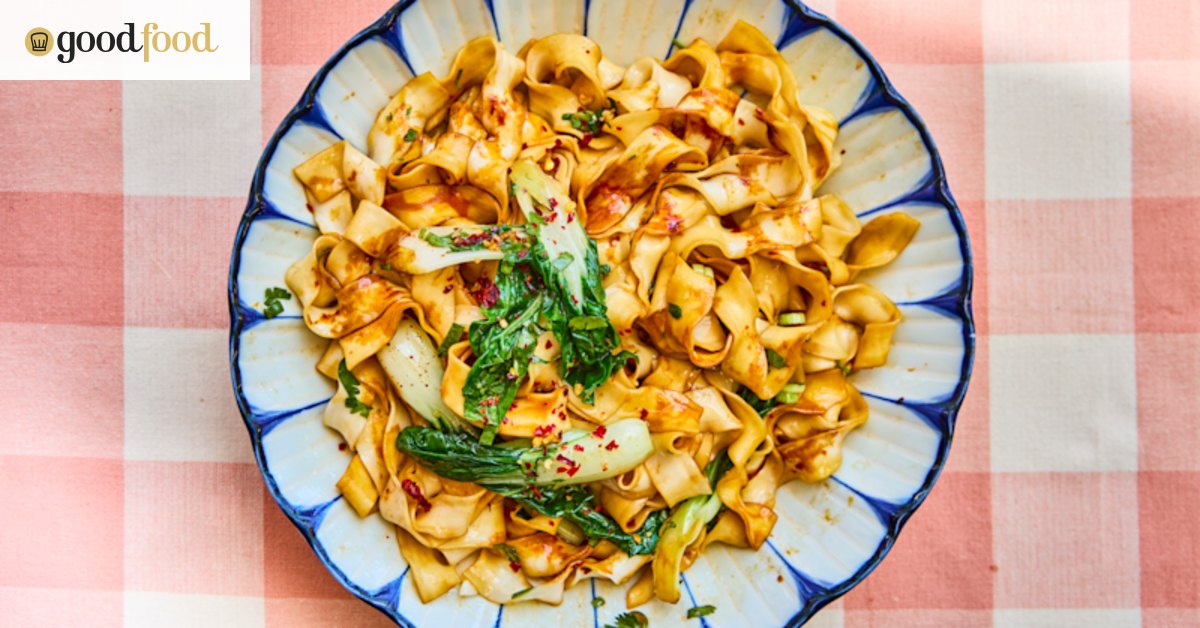
The hot oil releases the flavour of the sauces and aromatics in this dish from Adam Liaw’s new cookbook Asian Home Cooking.Ramen, butter chicken and pad thai may be some of our most beloved restaurant dishes across Australia, but when it comes to what people actually eat at home across Asia, you’re likely to find simpler, more wholesome dishes at the family dinner table.Instead, you might enjoy a nutritious bowl of pork and vegetable miso soup such as tonjiru in Japan, or a serve of salt-grilled fish called shioyaki. Families in northern India grow up with khichdi, a seasoned rice and lentil dish. Or in Thailand, rad na moo (rice noodles with pork gravy), a dish of Chinese origin similar to hor fun, is a popular comfort food.“The difficulty for those of us interested in cooking new cuisines is that home cooking is hard to come by,” Liaw says in his new cookbook, Asian Home Cooking.“In a restaurant, you simply order, eat and pay for a meal. To experience home cooking, you need to be invited to someone’s home. And even then, it is likely to be for a special event or dinner party, where the food is elevated beyond what might ordinarily be served.”Liaw’s new recipe collection goes far beyond takeaway favourites, showing the breadth and diversity of Asian cuisines and everyday meals that feed more than half the world’s population across the world’s largest continent.“My aim with this book is to share the kinds of dishes that ordinary home cooks throughout Asia prepare every day. By choosing to try these recipes, you can be sure you are making something that has been successfully executed by tens of thousands of home cooks before you.”The best recipes from Australia's leading chefs straight to your inbox.Sign upHere, Liaw shares two recipes from his new cookbook: a simple and speedy noodle dish, and a popular summer eggplant dish from Hangzhou.– Megan JohnstonUsing dried noodles is incredibly easy.David LoftusOiled noodles(油泼面)Western ChinaThis dish from Shaanxi in Northwestern China is a lifesaver for quick home cooking. Using dried noodles is incredibly easy, but this same dish can also be found in simple handmade noodle shops in Shaanxi under the name “biang biang” noodles, an onomatopoeic reference to the sound made when hand-pulled noodles slap against the bench during the stretching process. The hot oil releases the flavour of the sauces and aromatics for an absurdly simple dish that is ready in minutes.INGREDIENTS20g dried flat, wide wheat noodles (“hand-pulled” or “knife-cut” noodles work best)1 small green bok choy, quartered1 tsp soy sauce1 tsp dark soy sauce1 tsp Chinkiang black vinegar¼ tsp Chinese chilli powder1 garlic clove, minced1 tbsp finely sliced spring oniongood pinch of salt2 tbsp vegetable oil1 tbsp roughly chopped corianderMETHODBring a large pot of water to a simmer and add the noodles. Cook the noodles for about 6-7 minutes, or according to packet directions, until softened but still al dente. Drain well and add to a serving bowl. Boil the bok choy for just 30 seconds and add to the bowl.Put the remaining ingredients (except the oil and coriander) directly on top of the noodles in the order listed.Place the vegetable oil in a small saucepan and heat until smoking. Pour over the noodles, then add the coriander and mix well. Serve immediately. Serves 1Steaming the eggplant is a healthier and easier method for home cooking.David LoftusHangzhou eggplant with minced pork (肉末茄子)Eastern ChinaMany versions of this popular summer dish from Hangzhou suggest frying the eggplant (aubergine) in hot oil to preserve the bright purple hue of the skin, but steaming is a healthier and easier method for home cooking. If you prefer, cook your eggplants the old Hangzhou way by steaming them in your pot of rice as it cooks, and then tearing them into pieces by hand rather than cutting them into batons.INGREDIENTS2 small Chinese eggplants, cut into batons 2cm × 5cm 2 tbsp vegetable oil4 garlic cloves, roughly chopped1cm piece ginger, peeled and minced2 red chillies, sliced2 spring onions, cut into 1cm lengths100g minced pork1 tbsp soy sauce2 tsp dark soy sauce2 tsp Chinkiang black vinegar1 tsp sugar1 tsp potato starch mixed with 3 tbsp cold waterMETHODSteam the eggplant for about 6 minutes, or until tender.Heat a wok over medium heat and add the oil. Fry the garlic, ginger, chilli and the white part of the spring onion for a few seconds until fragrant, then add the pork and fry until lightly browned. Add the eggplant to the wok and toss to combine, then add the soy sauces against the side of the wok. Add the vinegar and sugar and toss to combine. Add the green parts of the spring onion and toss to combine. Drizzle in enough of the starch mixture to thicken the sauce in the wok and serve.Serves 4 This is an edited extract from Asian Home Cooking by Adam Liaw, published by Hardie Grant Books, RRP $65. Photography by David Loftus.Adam Liaw is a cookbook author and food writer, co-host of Good Food Kitchen and former MasterChef winner.From our partners
Hungry and in a hurry? Adam Liaw’s ‘absurdly simple’ noodles will save the day
Full Article
Original Source
Read the full article at Smh →KhanList aggregates and links to publicly available news content. We do not host full articles from third-party sources. Always verify important information with original sources.