
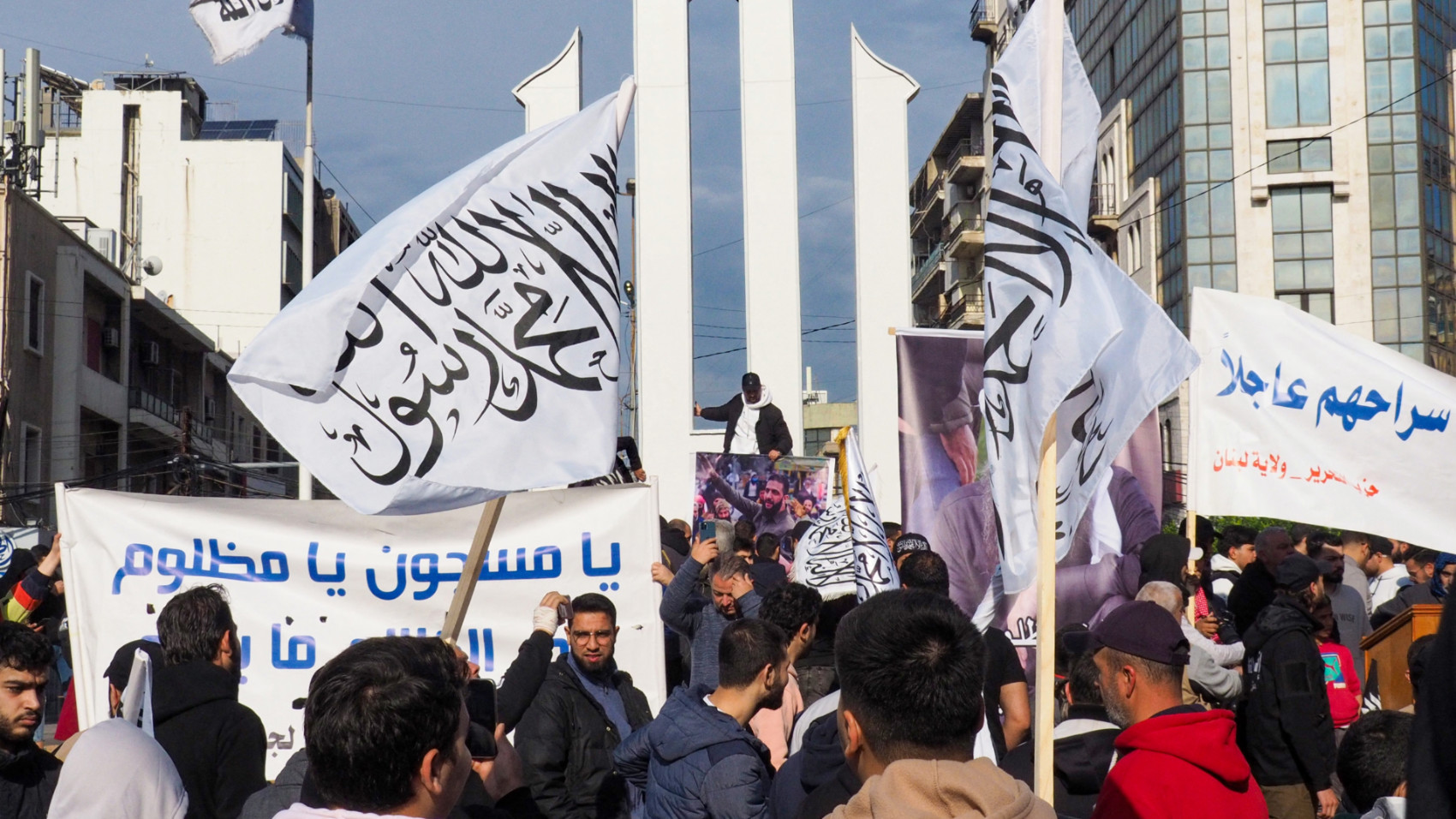
Over 600 prisoners were on hunger strike for 30 days in protest against the suspension of the law People wave flags during a protest calling for the release of detained Islamists held in Roumieh prison in the northern Lebanese port city of Tripoli on 5 January 2025 (Ibrahim Chalhoub/AFP) Published date: 13 October 2026 11:17 BST | Last update: 8 sec ago Prisoners in Lebanon announced that they were ending an open-ended hunger strike on Monday after a settlement was reached on a controversial general amnesty bill. The bill, which was passed by parliament in August, was suspended after a parliamentary bloc filed an appeal against it, citing fears it would allow the release of Islamist detainees accused of mounting attacks against Lebanese army soldiers and servicemen. Some of them have spent long years in prison without standing trial. The country’s constitutional council rejected the appeal, instead mandating amendments to some clauses and the removal of others. More than 600 prisoners had been on hunger strike for 30 days in protest against the suspension of the law, which would have benefitted thousands by reducing their prison terms. Around 72 of them were in critical condition and had to be hospitalised. According to the prisoners’ families committee, at least seven hunger strikers died from medical neglect or pre-existing illnesses. New MEE newsletter: Jerusalem Dispatch Sign up to get the latest insights and analysis on Israel-Palestine, alongside Turkey Unpacked and other MEE newsletters The law aims to reduce prison overcrowding, especially at Roumieh, Lebanon’s largest detention facility, which is operating at more than 300 percent of its official capacity, with more than 4,000 prisoners held in a space meant to accommodate around 1,000 people. The overcrowding has been exacerbated by lengthy trials and prisoners held for years without judicial proceedings. ‘People are destitute’: Lebanon’s spiralling prices fuel fears of social unrest Read More » But it has faced criticism and backlash from activists and politicians, who have accused lawmakers of using the issue of overcrowding as a “trojan horse” to essentially pass a blanket amnesty that could pardon financial and corruption crimes related to Lebanon’s 2019 economic collapse, as well as war crimes and crimes against humanity. “This law took the form of a self-amnesty, a blanket amnesty really, because it is unconditional, just like the general amnesty of the 90s,” said Lebanese lawyer and researcher Nizar Saghieh, referring to a general amnesty law passed in 1991, absolving the majority of the militia fighters and leaders that participated in the country’s 15-year civil war. While the constitutional council’s decision was hailed for introducing changes that safeguard against a blanket amnesty, it also added further restrictions around who could benefit from the bill, especially affecting prisoners with life sentences. Hamza*, a resident of Tripoli, said that although he was happy the bill would benefit his brother Omar*, who has been in prison for nearly 15 years, he was “very sad” for others who would no longer be included in the amnesty following the constitutional council’s amendments. “Our joy is incomplete, to be honest,” he said. Omar was arrested in 2011 on terrorism charges for his involvement in clashes between Alawites and Sunnis in Tripoli. He was 18 years old. *Names were changed to protect their identities. Middle East Eye delivers independent and unrivalled coverage and analysis of the Middle East, North Africa and beyond. To learn more about republishing this content and the associated fees, please fill out this form. More about MEE can be found here.
Hunger strike in Lebanese prisons ends after settlement over amnesty bill reached
Full Article
Original Source
Read the full article at Middleeasteye →KhanList aggregates and links to publicly available news content. We do not host full articles from third-party sources. Always verify important information with original sources.