
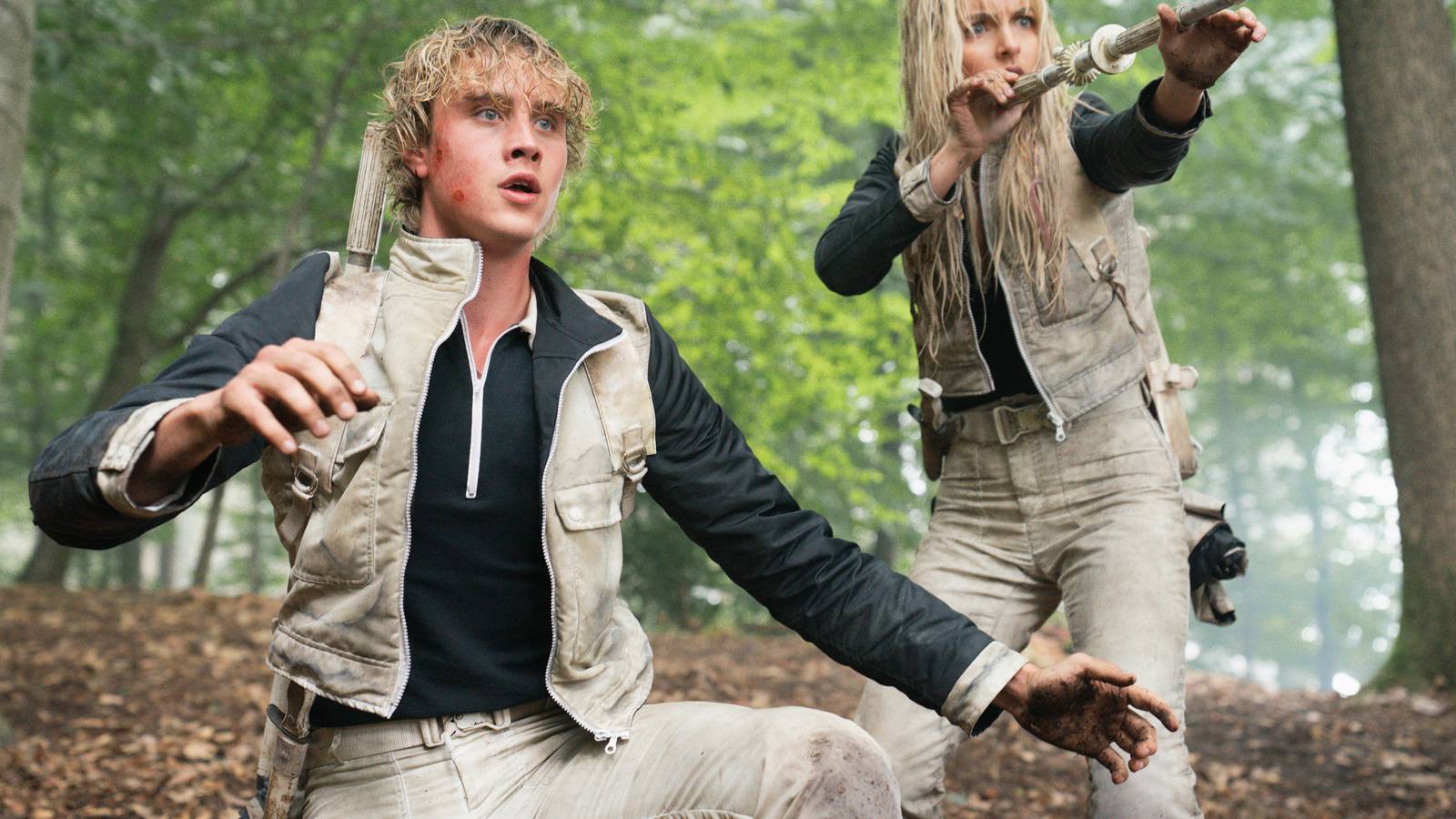
Published Nov 20, 2026, 10:00 AM EST Director Francis Lawrence and actor Kelvin Harrison Jr. break down the franchise's darkest chapter ‘Suzanne, what are you doing to me?’: How Sunrise on the Reaping turned the Hunger Games into horror Image: Lionsgate Francis Lawrence, the director of every single Hunger Games movie except the first one, likes to listen to music while working on set, with an earbud in one ear and the other left free to catch everything else that’s happening around him. While shooting the latest entry in the franchise, he added some surprising tracks to his playlist. “I found myself playing music that is a lot scarier,” Lawrence tells Polygon. That included the soundtrack from the modern horror classic, Midsommar. "Some of what I was listening to is actually some tracks from that movie.” It shows. The Hunger Games is back in theaters this weekend. It might be the franchise’s last entry — there are no more Suzanne Collins novels left to adapt, at least for now. Sunrise on the Reaping is a prequel centered on Katniss’ mentor, Haymitch (Joseph Zada), and it marks a return to form for the franchise, giving us the most Hunger Games arena-action since Catching Fire (long considered the franchise’s high point). It also gives the franchise an unexpected streak of horror. Sunrise on the Reaping traces Haymitch’s failed attempts to take down the Capitol and the ensuing brutal retaliation from the government, costing him most of his friends and family. It’s the franchise’s saddest story, with a palpable sense of dread that the young adult genre rarely depicts. Lawrence gleefully leans into these elements, while also embracing a late 1960s aesthetic that reflects the transition from the previous prequel, Ballad of the Songbirds, to the original Hunger Games movie. Again, he credits his personal playlist with leading the way. “I started thinking of that 'White Rabbit' song from the '60s, which brought me to that era,” he says. But Lawrence's influences and ambitions go far behind the music he listened to on set. Speaking to Polygon, the director and one of the film's stars explain how Sunrise on the Reaping became one of the most ambitious and unnerving Hunger Games movies ever made. Making horror that’s PG-13 Image: Lionsgate Lawrence can't say when exactly Sunrise on the Reaping became a horror movie, simply that he leaned into it. "I honestly can't tell you the moment when I felt this kind of pivot from the other films into that zone,” he says. "It just felt like it was coming out organically." The film’s arena helps. Depicted as a lush and peaceful green field (whenever kids aren’t killing each other), the setting for the games lulls tributes into relaxation, hoping to hide in the trees for as long as they can. When the river’s water turns out to be poisonous, and the squirrels and birds start killing kids off, the fairy tale horror takes over. "I think part of the horror aspect came from the contrast of feeling how beautiful everything is. How beautiful it all looks, but how scary and dangerous it all really is,” says Lawrence. Despite the gory source material, which includes a girl being crushed by an upturned chariot and multiple heads getting ripped off, Lawrence still had to tone everything down for a PG-13 audience. "In the book there's a scene of one character holding the head of a child. And I'm just thinking to myself, 'Suzanne, what are you doing to me? This is never gonna be in the movie,’” he says, laughing. “If this was my last movie, The Long Walk — that was rated R, we could do that kind of thing.” Lawrence ultimately decided that while they wouldn’t show gore onscreen, he could depict the gore emotionally, with the camera lingering on Haymitch’s face every time one of his friends died painfully in front of him, with him unable to do anything but watch. "It's never really, 'It's emotionally too much.' I want to push the emotion as much as possible as long as it feels authentic and honest,” he says. The cost of fighting back Photo: Murray Close/Lionsgate Haymitch isn’t the only character punished by the state in Sunrise on the Reaping. As a franchise, The Hunger Games is so effective because it consistently focuses on the Capitol as an authoritarian government that stifles everyone who voices a different opinion. One of these characters is Beetee (Kelvin Harrison Jr.), the victor of a previous edition of the Hunger Games who tried to take down the government’s communications system in protest. As punishment, his son is reaped (selected for a future Hunger Games tournament). For Harrison Jr., this served as the perfect entry point to the character. "It was really locking in on Beetee as a father,” he tells Polygon. “That's a really hard thing to navigate — knowing that you were so brilliant and you were able to survive this really unfortunate system and come out alive, but yet here you are being punished for being brilliant and not being able to save your own son." Harrison Jr. only has a few scenes in the movie, but he plays a key part in conveying the cruelty of the Capitol and cementing Haymitch’s position as a rebel. While he’s unable to save his son, he’s still fully committed to the rebel cause. “It's choosing and picking your battles,” he says. “It's almost surrendering to the situation while also still being in control of what you can control.” Harrison Jr. took over the role from Jeffrey Wright, who played Beetee in three of the franchise’s previous films. Image: Lionsgate "I'm a huge Jeffrey Wright fan. He's one of my favorite actors of all time,” Harrison Jr. says. The two know each other well, having worked on the movie Monster and an upcoming Jean-Michel Basquiat biopic. "I was actually on set with him a week before I came to shoot Hunger Games, working on a different project. I talked to him about it, and he shared his excitement for Beetee. It was so funny because he was doing it while he was on his laptop, doing some coding, so I was like, 'This is so Beetee of him,’” he said. With Beetee, Harrison Jr. adds another beloved franchise character to his roster. He notably voiced Scar in Mufasa: The Lion King. Surprisingly, he finds a strong connection between the mild-mannered coding genius of The Hunger Games and one of Disney’s most theatrical villains. "I kind of feel like they're one and the same. They're here to disrupt circumstances and systems that may not necessarily make sense,” he says. "I love a disruptor." The Hunger Games: Sunrise on the Reaping is in theaters now.
Hunger Games Director Reveals Why He Made the Darkest Movie in Franchise History
Full Article
Original Source
Read the full article at Polygon →KhanList aggregates and links to publicly available news content. We do not host full articles from third-party sources. Always verify important information with original sources.