
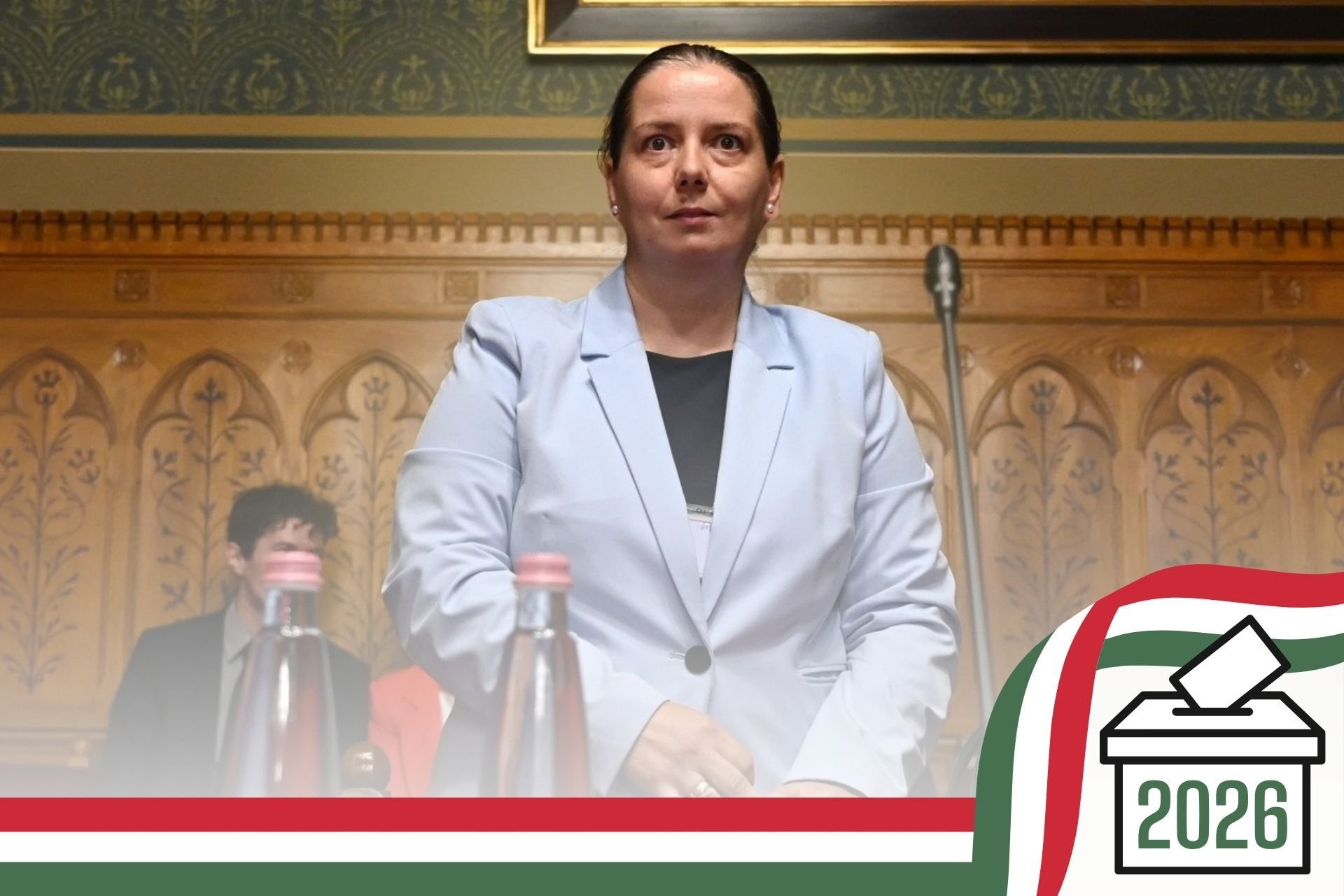
More than nine months ago, we launched our Hungary Votes series, providing weekly summaries of news from Hungary’s election campaign. The series continues as we report on developments following the historic election and the measures taken by the Tisza government. This week, we cover the following topics: why the election of the head of the Asset Recovery Office has caused political tensions; how Viktor Orbán’s peculiar system for siphoning off public money is collapsing; what happened to Hungary’s state budget; what Gáspár Orbán’s wish list was all about; disarray in the Fidesz orbit. New asset-recovery boss faces difficult time Anna Unger, who was elected president of the National Asset Recovery and Protection Office on Friday (28 August), may have been given the most difficult and complex task in the history of 21st- century Hungarian politics. She must build a 150-person agency from the ground up and somehow recover the money that disappeared amid the corruption of the past 16 years. Those from whom the assets are to be recovered immediately cast themselves as victims and branded the new institution a modern-day equivalent of Hungary’s communist-era State Protection Authority. But that is not the only reason Unger’s job will be difficult. Many regard her as unfit for such an important position — among them Ákos Hadházy, a former member of parliament and anti-corruption activist. Many others believe that Miklós Ligeti, legal director of Transparency International Hungary, would have been better suited to the task. As a lawyer, Ligeti primarily promised an asset-recovery process that would be legally unassailable and built around specific cases. Unger, who is not a lawyer, wanted to give the office a broader historical and political mission: to expose the operating patterns of the System of National Cooperation, or NER, and prevent the system from reproducing itself. Of the two competing visions for the office, the narrative-driven approach ultimately prevailed. Following her election, Unger sought to explain in several interviews exactly what she was planning and what her job would entail. She also stressed that she was by no means a newcomer to the field, having extensive research and organisational experience in party financing and corruption. Nevertheless, one remark she made during her hearing began to resonate particularly strongly in public debate. Unger said it was conceivable that not a single major case would result in a final court judgement during her term. Many interpreted this as a sign that she was giving up on accountability before her work had even begun. But that is not what she meant. The Slovak example shows how cumbersome the fight against corruption can become when politics weighs heavily on the justice system. Although there was a genuine breakthrough in the investigation of corruption cases after 2020 and courts delivered judgements in numerous cases, the overall picture is far from rosy six years later. The authorities failed to catch any genuinely big fish, while high-profile trials, including the Očistec trial, only began after years of delay. In the meantime, Slovak prime minister Robert Fico returned to power, and his government abolished the Special Prosecutor’s Office and disbanded the National Criminal Agency (NAKA). NAKA played a role in investigating corruption similar to the one the National Asset Recovery and Protection Office is expected to play in Hungarian publiclife. The Hungarian system is no better than the Slovak one. In fact, it bears the scars of 16 years of NER rule. On closer examination, Unger’s prediction therefore no longer seems so exaggerated. A similarly sobering assessment came from her former rival Ligeti, who estimates that only around ten percent of the assets siphoned off can realistically be recovered. More than one trillion forints recovered Asset recovery is also taking place on another front. At the end of August, the liquidation of 16 public-interest asset management foundations, known by the Hungarian acronym KEKVA, was completed. As a result, public assets worth 1,284 billion forints, or nearly €3.5bn, are returning to direct state control. The KEKVA system was created by Orbán and his allies and proved to be an exceptionally effective mechanism for siphoning off public funds. State assets and government decisions concerning them were removed from direct state control and placed in the hands of foundation boards – which were, naturally, filled with Fidesz loyalists. The board of the Mathias Corvinus Collegium Foundation, which held assets with a book value of nearly 575 billion forints, was chaired by Balázs Orbán, Viktor Orbán’s political director. The Future Generations’ Land Foundation was chaired by János Lázár, one of Orbán’s most powerful allies. The Blue Planet Climate Protection Foundation was headed by former president János Áder, while the Foundation for Hungarian Culture was chaired by Szilárd Demeter, Orbán’s Transylvanian-born cultural guru.
Hungary’s asset-recovery proves problematic, while Orban’s Facebook pages goes silent (Day 114 of the Tisza government)
Full Article
Original Source
Read the full article at Euobserver →KhanList aggregates and links to publicly available news content. We do not host full articles from third-party sources. Always verify important information with original sources.