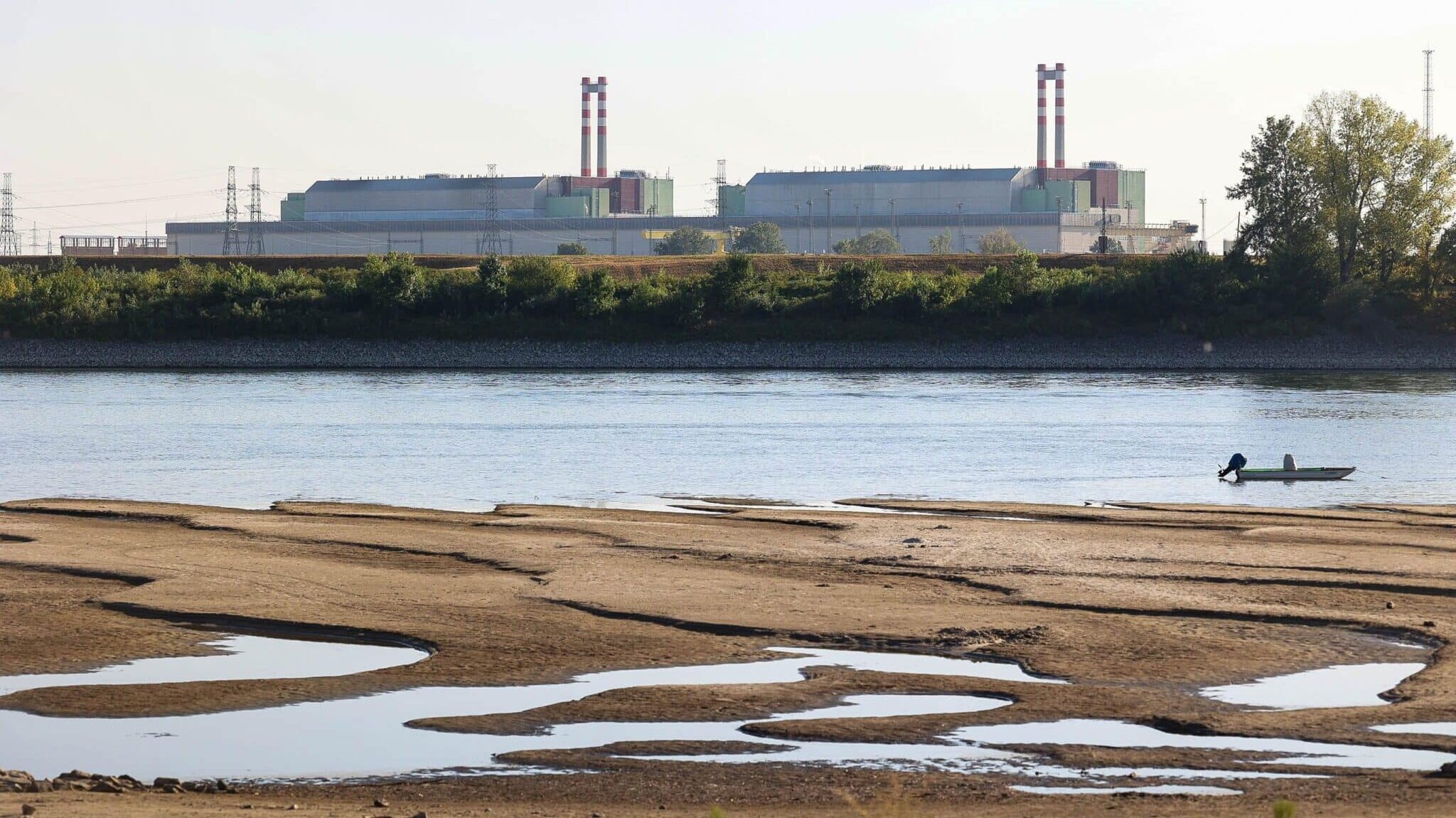
A view of the MVM Paks Nuclear Power Plant, which had to close its Reactor 3 due to extremely low water levels on the Danube River, in Paks, Hungary, 29 July 2026. EPA/DANIEL KISS Hungary managed to avoid a complete shutdown of its sole nuclear power plant on Tuesday morning as the low water levels in the Danube river caused by the drought began rising, the country’s prime minister, Peter Magyar, announced on X. “Around 1:30 a.m., we came within a couple of millimeters of a complete shutdown of the Paks Nuclear Power Plant, but then the water level stopped dropping, and by morning it had risen by 1.5 centimeters. The last turbine is currently operating safely. Onward to Paks!” Magyar posted. He added that, “We have just come through the most difficult and critical night so far”, though the situation at the Paks plant has been getting steadily worse since water levels in the Danube began dropping dangerously low last week amid the drought conditions afflicting much of the region. In Budapest, the national water authority measured the Danube’s water level at 23 centimetres on the morning of July 29, well below the previous all-time low of 33 centimetres set in 2018. The lack of cooling water meant the Paks operator was forced to gradually power down until the plant was operating at about 10 per cent of capacity with one remaining turbine. Hungary relies on Paks for about 42 per cent of its electricity supply. The problem for Paks is that it uses a direct, once-through (open-cycle) cooling system, which pumps water directly from the Danube to chill its condensers. The system is shared by another nuclear plant situated on the Danube, Romania’s Cernavoda. On Monday, the country’s navy carried out controlled explosions to successfully divert the flow of the river toward the plant, where one of the two reactors is currently shut down. By contrast, Slovenia’s Krsko Nuclear Power Plant (NEK), built using US Westinghouse technology, continues to operate at full capacity with the cooling tower system operating and respecting the restrictions associated with the Sava River, NEK announced on Monday. At times of low flows in the Sava and high temperatures, NEK uses a cooling tower system for additional cooling in the third cooling circuit to ensure compliance with environmental restrictions. However, due to the higher electricity consumption to operate the cooling towers and the decrease in the thermodynamic efficiency of the secondary circuit, the efficiency and output of the power plant are reduced and, consequently, the amount of electricity produced is also reduced, NEK explained. “NEK has informed the competent institutions that we are approaching circumstances in which, due to environmental restrictions related to the Sava River, it will be necessary to reduce the power of the reactor, and in the most unfavourable scenario, to gradually stop the power plant,” NEK said. Slovakia’s prime minister, Robert Fico, said the country’s two nuclear plants, sited on the Vah and Hron rivers, remain unaffected thanks to the similar cooling tower systems used at the Slovenian plant.
Hungary Narrowly Avoids Full Nuclear Shutdown; Slovenia Plant Still at Full Capacity
Full Article
Original Source
Read the full article at Balkaninsight →KhanList aggregates and links to publicly available news content. We do not host full articles from third-party sources. Always verify important information with original sources.