
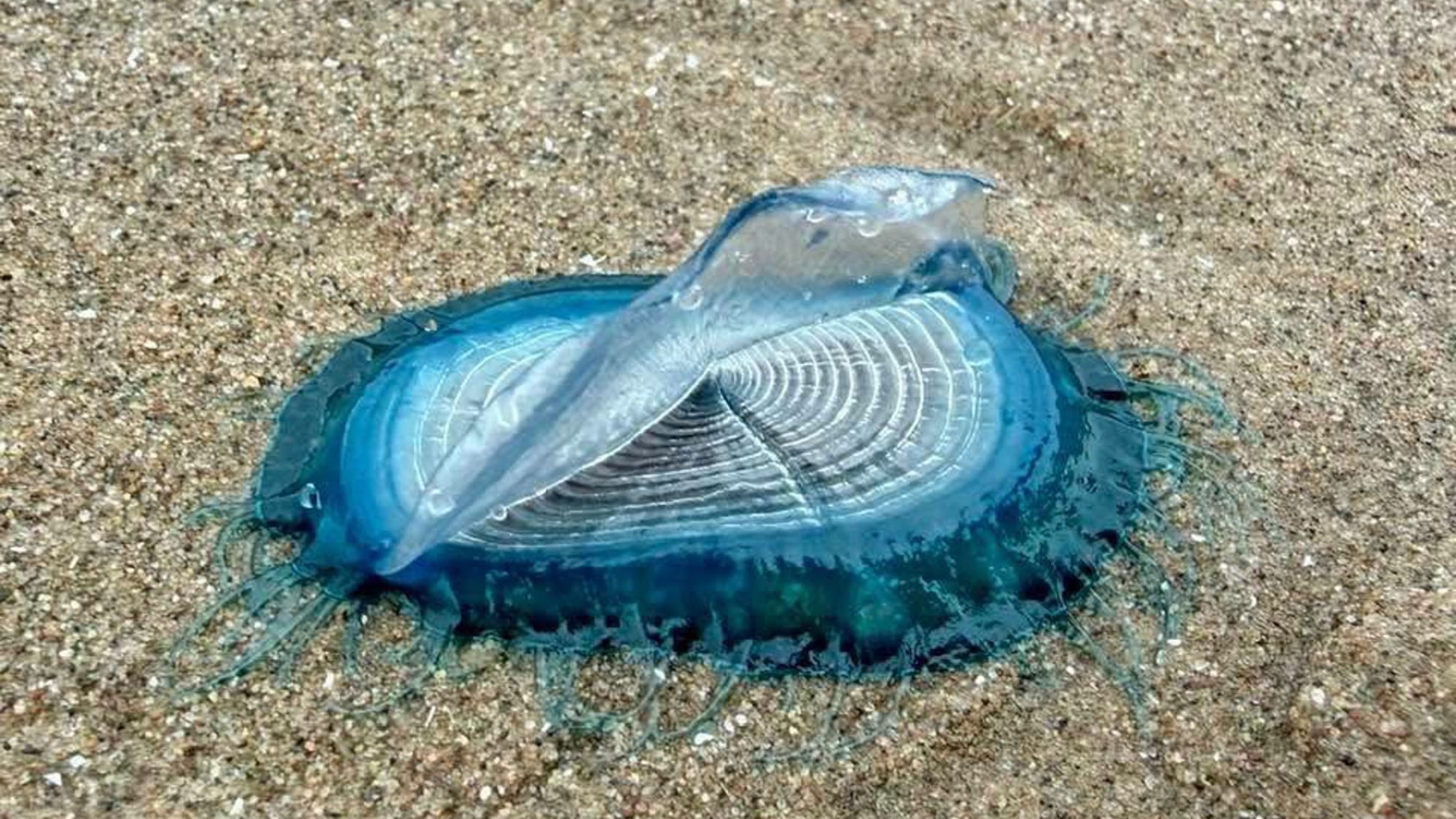
NewsUK News HUNDREDS of striking blue sea creatures have washed up on a popular UK beach which has left Brits baffled. These mysterious jellyfish-looking critters have bemused beachgoers at St Bees in Cumbria. The curious creatures recently washed up at St Bees beach in Cumbria Credit: Louise Nicholson/Cumbria Wildlif By-the-wind-sailors bear a resemblance to the related Portuguese man o’ war, but they’re much smaller and generally harmless to humans Credit: Louise Nicholson/Cumbria Wildlif Swathes of “By-the-wind-sailors” reportedly washed up along the Cumbrian coast. They are also known as Velella velella and are closely related to Portuguese man o’wars, but are much smaller and generally considered harmless to humans. Sign up for The Sun newsletter Thank you! However, people have still been advised to avoid touching them. Their name comes from a fin which looks like a small sail. It allows them to catch the wind and travel on warm ocean currents – it sits atop a blue disc. By-the-way-sailors also have short stinging tentacles used to prey on young fish while they travel. One local resident, Louise Nicholson, spotted them while visiting the beach. It’s believed the blue animals were brought in by warm waters from the Atlantic. Most read in The Sun She initially thought it was a peculiar type of seaweed and almost picked it up before stopping to take pictures. Louise said: “There were hundreds of them and there were lots of visitors to the area taking photos. “They are absolutely beautiful, only about five cm in size. It was a great find on a beautiful day.” Louise sent the pictures to the Cumbria Wildlife Trust who have shared the images along with information about by-the-wind-sailors. Cumbria Wildlife Trust explained: “They’re called by-the-wind-sailors and, as the romantic name suggests, they spend their lives drifting on the wind. “They’re also not true jellyfish, despite the very jellyfishy appearance. “The truth is much stranger – each sailor is a colony of polyps working as a single entity, with different kinds of polyps having different functions, like feeding, reproduction and defence.” They are usually spotted around the coasts of Britain and Ireland during autumn and winter time when storms occur. They can often wash up in their hundreds or thousands, dubbed by some as a “blue tide”. Very little is known about the colonial critters which can measure up to 10cm in length but tend to be smaller. Comment now
Hundreds of striking blue sea creatures wash up on popular UK beach – do you know what they are?
Full Article
Original Source
Read the full article at Thesun →KhanList aggregates and links to publicly available news content. We do not host full articles from third-party sources. Always verify important information with original sources.