
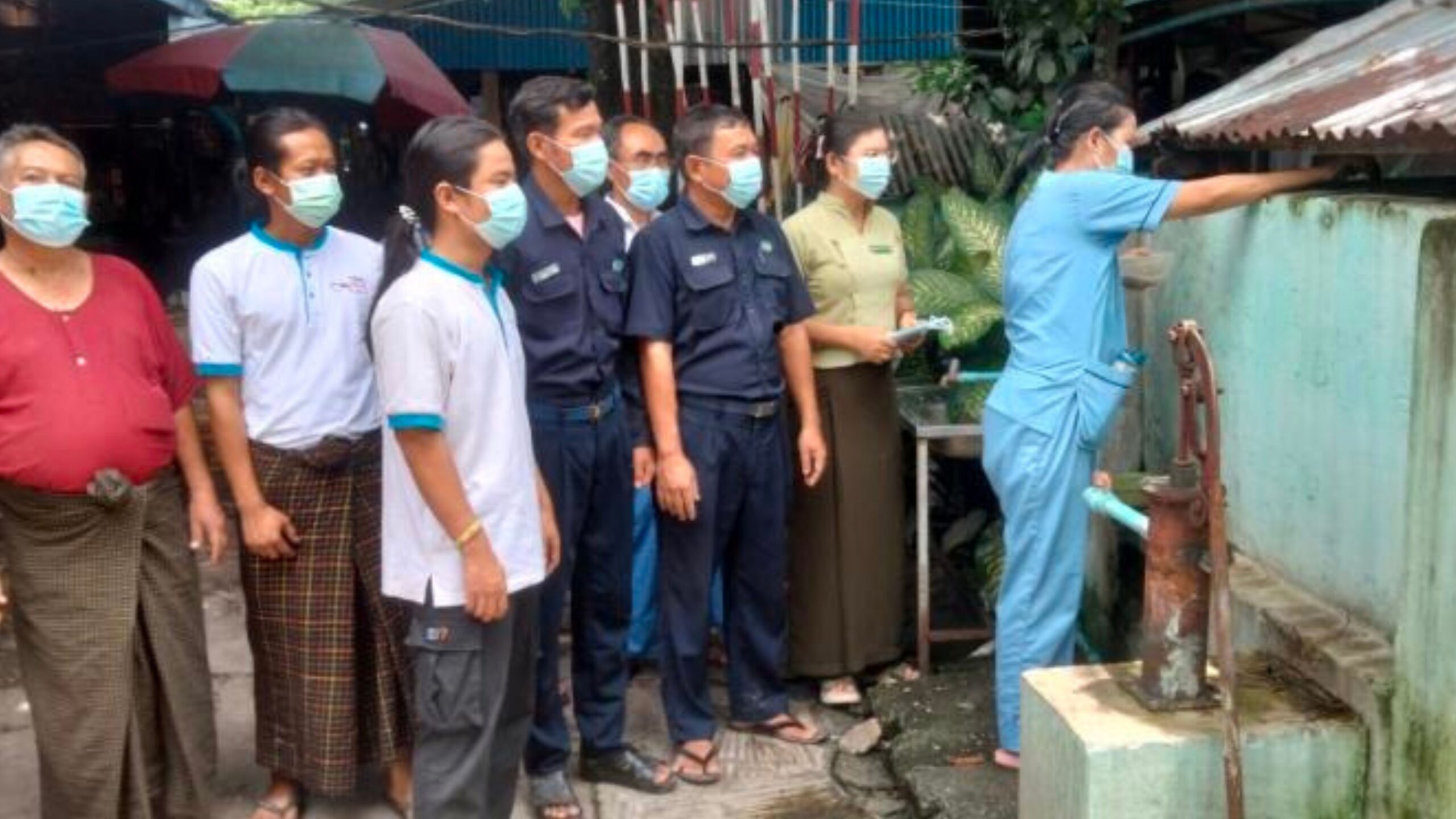
Health officers in Yangon add chlorine to water during a cholera outbreak in 2024 (Photo: supplied) A total of 500 people have been hospitalised for severe diarrhoea in Myanmar’s largest city, a junta official said on Monday, with nearly 150 testing positive for cholera. Myanmar’s infrastructure and health sector are creaking after more than five years of civil war in which more than 100,000 people are estimated to have been killed—and with the economy moribund. Since August 9, 500 people have been hospitalised for diarrhoea, the key symptom of cholera, said the junta’s regional social affairs minister, Bo Htay. His comments were the first official confirmation that cholera was involved, more than a week after the first hospital admissions. Rapid tests for cholera had shown 149 positive cases, he told the junta’s Yangon regional parliament, which includes the country’s largest city. Nine of them had been formally confirmed as vibrio cholerae cases by the National Health Laboratory, he added. Cholera is a severe diarrheal infection caused by consuming contaminated food or water, and can be fatal within hours if not treated. The World Health Organization describes it as “a global public health threat and indicates inequity and lack of social and economic development”. More than 100 new patients were admitted to hospital August 13, the minister said, but new cases had since declined. A 92-year-old patient died after being admitted to hospital with diarrhoea, but the regime-run Global New Light of Myanmar newspaper on Sunday cited officials as saying the man had succumbed to underlying heart and lung conditions. Health personnel were carrying out “epidemiological surveillance and outbreak-control measures in affected areas”, it quoted officials as saying. A decade of reporting at a cost In 2025, we marked the 10th anniversary of Myanmar Now. In Myanmar’s history, journalists are often the first targets during political repression. We founded this outlet during a brief window of stability, starting with a small team in a modest office in downtown Yangon. Our goal was simple: to report on injustices that had been silenced for decades. In many countries, justice is sought through courts and police. In Myanmar, these institutions have historically been instruments of oppression. From the start, we committed to reporting without discrimination—regardless of ethnicity, religion, or citizenship. We believe our work should be accurate, deeply sourced, and strong enough to serve as a historical record. We also believe journalism should be a force for positive change, and that our primary readers should be the people of Myanmar. That belief came at a cost. Members of our team and others associated with Myanmar Now have endured long legal battles, physical assaults, arrests, and torture. Despite these hardships, Myanmar Now continues to report the news—thanks to the resilience of our team, the courage of our sources, and the trust of our readers. Please subscribe to support a free press in Myanmar.
Hundreds hospitalised in Myanmar cholera outbreak
Full Article
Original Source
Read the full article at Myanmar-now →KhanList aggregates and links to publicly available news content. We do not host full articles from third-party sources. Always verify important information with original sources.