
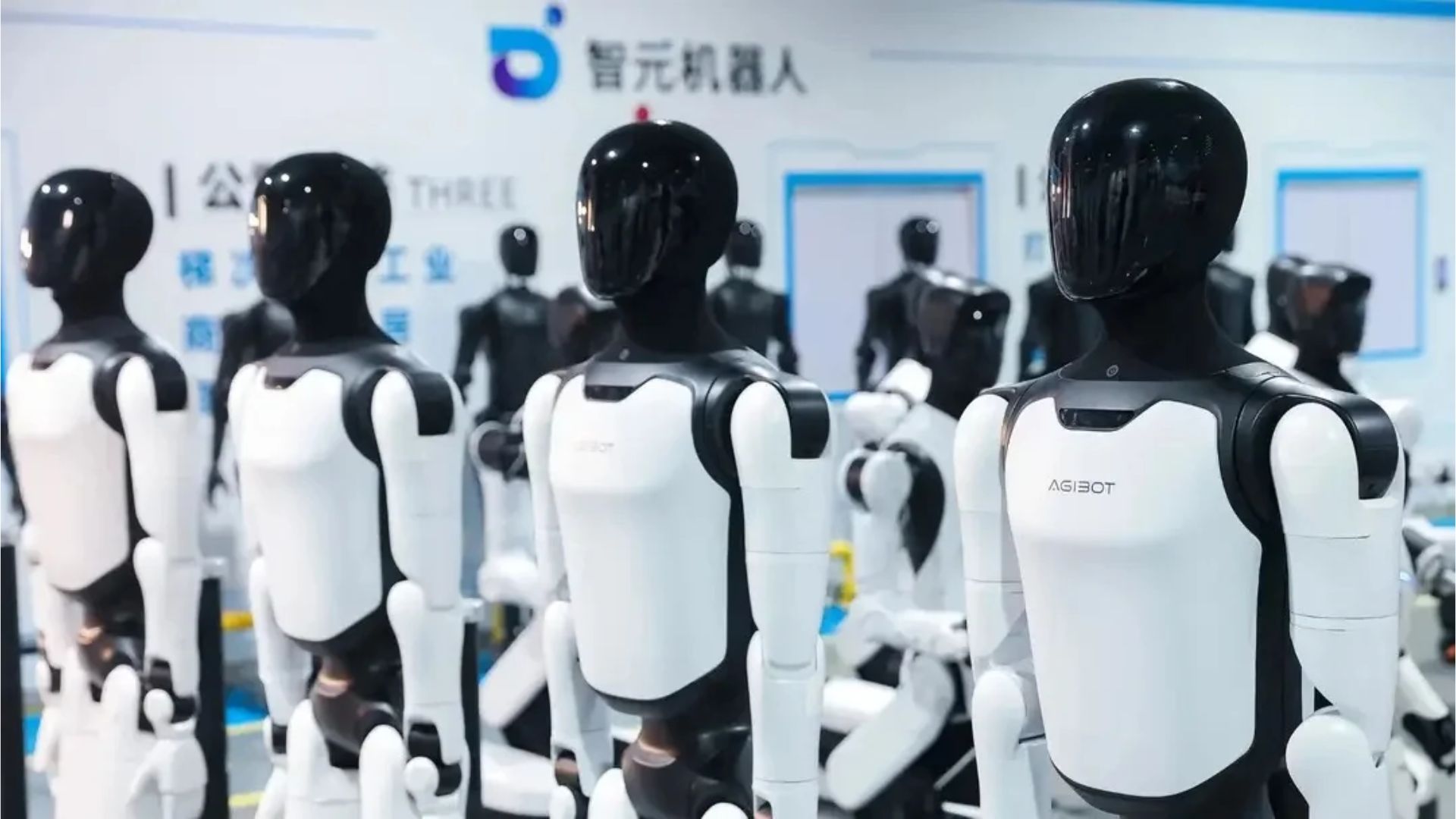
Chinese robotics company AGIBOT has unveiled GO-3 Preview, an embodied AI model designed to help robots continuously learn and improve their capabilities. The model uses a World Reasoning Action Model (WRAM) architecture to connect task reasoning, outcome prediction, and action generation. According to AGIBOT, GO-3 Preview has secured first place on three embodied AI benchmarks: RoboDojo, RoboTwin, and RoboColiseum. The company plans to open-source the full model by the end of 2026, allowing wider access to its technology. Enables robot learning GO-3 Preview is a model designed to help robots acquire new skills, adapt to unfamiliar tasks, and improve through real-world experience. The model uses a World Reasoning Action Model (WRAM) architecture that connects reasoning, prediction and physical action, allowing robots to interpret instructions, anticipate outcomes and translate decisions into movements. Launched on October 29, GO-3 Preview is designed to support continuous learning across three stages: pre-training, post-training and deployment. AgiBot says the model has secured first place on three embodied AI leaderboards: RoboDojo, RoboTwin and RoboColiseum. The company plans to release the complete model as open source by the end of 2026. The underlying approach combines two types of training data. First-person human videos provide examples of how people interact with objects and perform everyday activities, while robot trajectories connect visual observations with physical actions and their outcomes. By increasing the model’s learning capacity, AgiBot aims to turn these different sources of experience into transferable skills that robots can apply to tasks they have not encountered before. During pre-training, GO-3 Preview is designed to perform unfamiliar tasks in different environments, including homes, kitchens and multi-robot settings. AgiBot says the model can also handle dexterous manipulation without requiring additional fine-tuning for every new activity. A small number of demonstrations can teach the system complex, multi-step activities. One example involves preparing jianbing, a traditional Chinese savory crepe, which requires a robot to coordinate several delicate movements. The model can also assemble Lego pieces after fine-tuning, with an AI agent coordinating the individual steps. This approach is intended to reduce the amount of task-specific training required when deploying robots in new environments. Instead of building a separate model for every activity, the system can draw on previously acquired knowledge and adapt it to different situations. For post-training, AGIBOT developed Genie Evolver, a distributed training system that combines data from approximately 100 physical robots with physics simulations and world models. The system allows robots to practice tasks, evaluate their performance and improve through repeated attempts. GO-3 improves autonomy In one demonstration involving tabletop curling, a robot exceeded the average performance of tested humans after four hours of online practice. In another experiment, it successfully removed five consecutive blocks from a block tower without causing it to collapse. These demonstrations highlight how the training framework uses repeated interaction and feedback to improve physical manipulation skills. Combining real-world robot experience with simulation also provides additional opportunities to practice tasks without relying entirely on physical trials. GO-3 Preview also incorporates AGIBOT’s Genie Master agent framework, which connects decision-making, task execution and feedback. The system is designed to let robots identify mistakes during operation, adjust their behavior and retain useful experience for subsequent attempts. AGIBOT demonstrated this capability using a G2 robot deployed in a real convenience store. The robot identified the causes of its own failures, modified its approach and stored the resulting knowledge without requiring human demonstrations or additional manual tuning. Its success rate across the complete task workflow increased from 28.6 percent on the first day to a stable 85.7 percent after five days. On a separate task involving hanging small hooks, the company reported a 17.7-percentage-point improvement in single-task success compared with conventional supervised fine-tuning. Unlike training approaches that largely depend on preparing datasets and updating models before deployment, this framework allows robots to continue learning while performing actual jobs. The combination of large-scale pre-training, distributed post-training and feedback-driven learning after deployment forms the basis of GO-3 Preview. AgiBot’s planned open-source release could give researchers and developers access to the architecture and help expand its use in embodied AI applications.Get the latest in engineering, tech, space & science - delivered daily to your inbox.Jijo is an automotive and business journalist based in India. Armed with a BA in History (Honors) from St. Stephen's College, Delhi University, and a PG diploma in Journalism from the Indian Institute of Mass Communication, Delhi, he has worked for news agencies, national newspapers, and automotive magazines. In his spare time, he likes to go off-roading, engage in political discourse, travel, and teach languages.
Humanoid robot achieves 85% success rate in real-life trial with AGIBOT’s GO-3 model
Full Article
Original Source
Read the full article at Interestingengineering →KhanList aggregates and links to publicly available news content. We do not host full articles from third-party sources. Always verify important information with original sources.