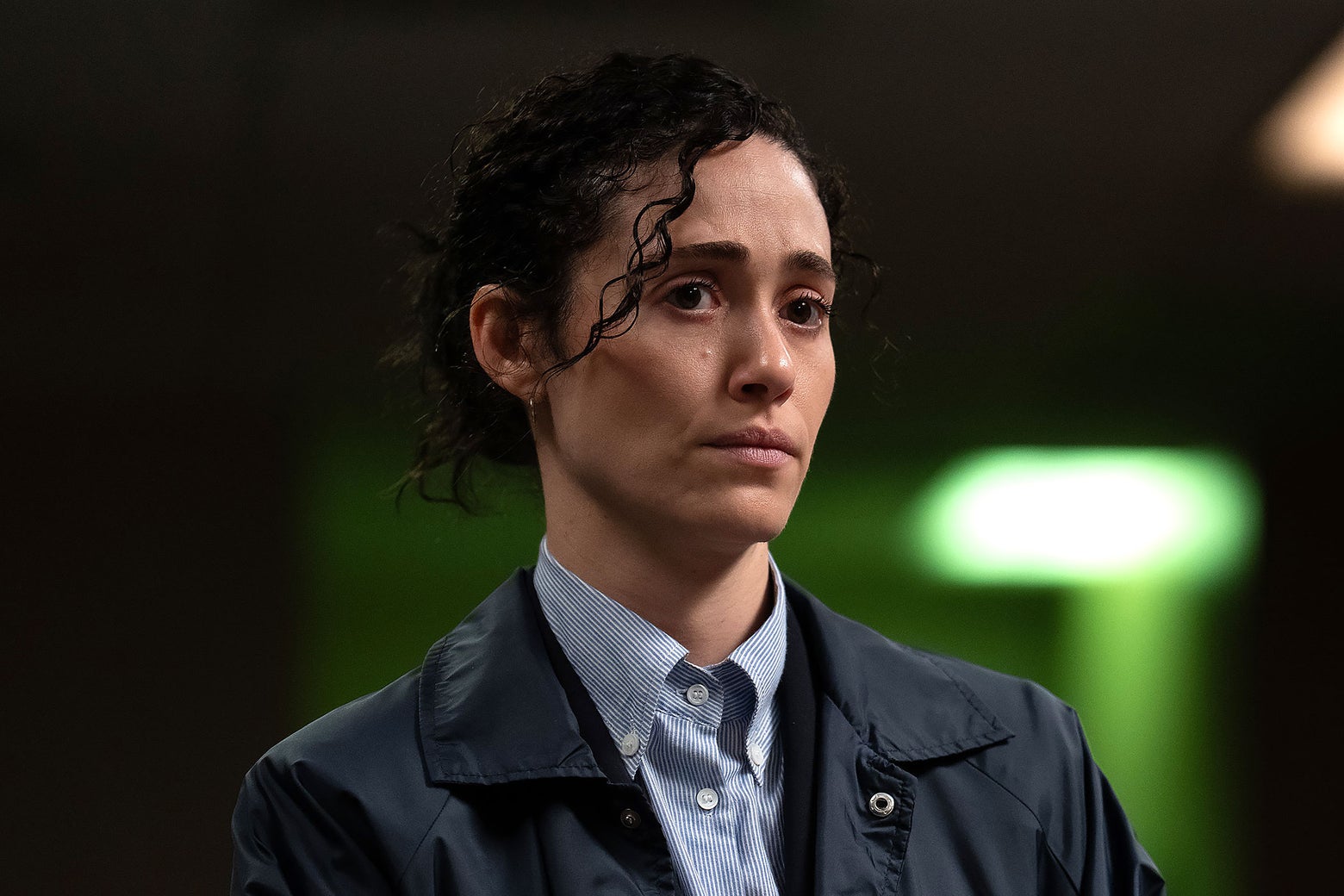
Television Furious Isn’t for the Faint of Heart Hulu’s adaptation of the 1987 movie Black Widow is dark, violent, and deeply compelling. By Enter your email to receive alerts for this author. Sign in or create an account to better manage your email preferences. Unsubscribe from email alerts Are you sure you want to unsubscribe from email alerts for Laura Miller? July 27, 202612:01 PM Hulu Sign up for the Slatest to get the most insightful analysis, criticism, and advice out there, delivered to your inbox daily. A limited-series adaptation of the rather trashy 1987 movie Black Widow starring Debra Winger and Theresa Russell (not to be confused with the 2021 superhero movie starring Scarlett Johansson) seems one of the unlikeliest projects in the world for Liz Meriwether, creator of the Fox sitcom New Girl. The original movie, part of an ’80s vogue for erotic thrillers borrowing stylistically from film noir, was directed by Bob Rafelson, who made Five Easy Pieces and a few other iconic works of the New Hollywood of the 1970s. That didn’t keep Black Widow from becoming a middling (albeit hit) specimen of light, semi-arty titillation, capitalizing on the then-transgressive suggestion that a female FBI agent (Winger) chasing a female serial killer might be tempted by the allure of the femme fatale (Russell). Meriwether’s new series for Hulu, Furious, is less a remake than a riposte to a movie that, while foregrounding two women, was highly conditioned by the male gaze. Instead of a sleekly chic seductress who marries, then murders, a series of rich husbands for their money, killer Catherine (Lola Petticrew) is a feral waif whose real name remains a mystery until halfway through the series’ run of eight episodes, the first three of which premiered today. Catherine weaves her way through the underbelly of Manhattan with occasional forays into the city’s upper crust, first appearing sitting on the stoop of a brownstone on Halloween night, wearing a creepy cat mask that makes her the polar opposite of a sexy kitty. While she coos over a trick-or-treater, her drooling victim, incapacitated by means that soon become clear, crawls along the hallway upstairs in a vain attempt to save himself. Catherine’s foil, probationary FBI agent Alice Black (Emmy Rossum), is a former homicide detective, a refugee from the NYPD. She sees similarities between two murders staged to look like overdoses, but can’t figure out what connects the men, a brutal pimp captured on a security camera roughing up a girl in a bodega, and the son of a dying billionaire. The viewer can easily guess what motivates Catherine, just as it’s pretty easy to figure out why Alice left the police and why her former colleagues treat her and Dan (Scoot McNairy), the partner who remains loyal to her, like traitors. I mean, it’s obvious, and the refusal of so many people to see it is one of the things that make the series’ two central characters so angry. Like Catherine, Alice wears a mask, composing her face into a stone wall when dealing with abusive bosses, dismissive colleagues, and the ambient misogyny of both the crimes she and her co-workers investigate and the people who often do the investigating. (Anyone pining for the British detective series Prime Suspect will find much to appreciate here.) Her first ally in the FBI is Nora (a magnificent Quincy Tyler Bernstine, who has perfected frowning into an art form), head of the sex crimes division to which Alice tried and failed to get assigned. Nora initially appears emerging from a locked room where detectives keep any child sexual abuse images they need to examine in the course of an investigation. “Do you hate yourself?” she asks Alice when she learns Alice requested the unit. “Don’t answer that.” Nora has a habit of taking the edge off the job by hitting the sauce, just as Alice processes her trauma by messing with men she picks up on Tinder. Still, Nora makes for a sort of mentor in the bleak world that Furious’s characters move through. “The ones who are really to blame never get caught,” she advises her protégé early on. This series, while compelling, isn’t for the faint of heart or the easily triggered, dealing as it does with sexual assault, domestic violence, and crimes redolent of Jeffrey Epstein—and that’s before you even get to the murders. One scene, in which Alice seeks comfort from a figure who cared for her during her rocky childhood, only to be breathtakingly betrayed, isn’t violent at all, at least not physically, yet it’s the one of the hardest moments to watch in the show. Furious has veins of tenderness, however. Catherine, it turns out, has found a genuine and revelatory intimacy in an aspect of her life she initially keeps separate from her killing spree. Alice and Dan are almost too close to be lovers—certainly Alice thinks so—and her ex accuses her of being in love with her partner, failing to recognize how the damage he himself has caused makes that feel impossible to her. McNairy is particularly touching as a regular guy trying to figure out the baroque intricacies of his best friend’s psyche. Meriwether’s dialogue for this pair is one of the highlights of Furious. When Alice notices the smell of bleach in the bathroom of a crime scene, Dan quips, “Nothing good ever happens in the bathroom. That’s the one thing in this world I know to be true.” These wisecracks and flashes of flinty humor leaven a moody series that’s primarily about trauma, which Nora characterizes as transformative, just not in the way it’s typically portrayed. In the first episode, “Gorgon,” Nora tells Alice about Medusa, punished by Athena for being raped by Poseidon by having her hair turned to snakes. “She’s a victim,” Nora says, “but that doesn’t make her a good person. It turns her into a monster,” a being that can turn men to stone with a glance—a power that elicits an enigmatic little smile from Alice. Of course, Catherine and Alice are two of a kind in some sense, and of course they must eventually meet. The scene cuts to Catherine working on her next mark, using her tininess and her child’s face to appear helpless and fragile, tricking her victim into thinking she’s his victim. “Women are supposed to be hit and raped,” Nora continues, “and go away and die quietly, not start murdering people.” In Petticrew’s mesmerizing performance, Catherine is as fluid as mercury, acting out a nonsensical character concocted of her victim’s fantasies, a girl who’s both innocent and corrupt, a doll who can be abused at will and yet also an enthusiastic participant in her own degradation. As soon as the guy turns his back, though, her mask drops, and she could, too, could kill with a look. Get the best of culture Get the best of movies, TV, books, music, and more. Crime TV Thrillers Hulu
Hulu’s New Show Adapts a Trashy 1987 Thriller Into Something Darker—and Much Better
Full Article
Original Source
Read the full article at Slate →KhanList aggregates and links to publicly available news content. We do not host full articles from third-party sources. Always verify important information with original sources.