
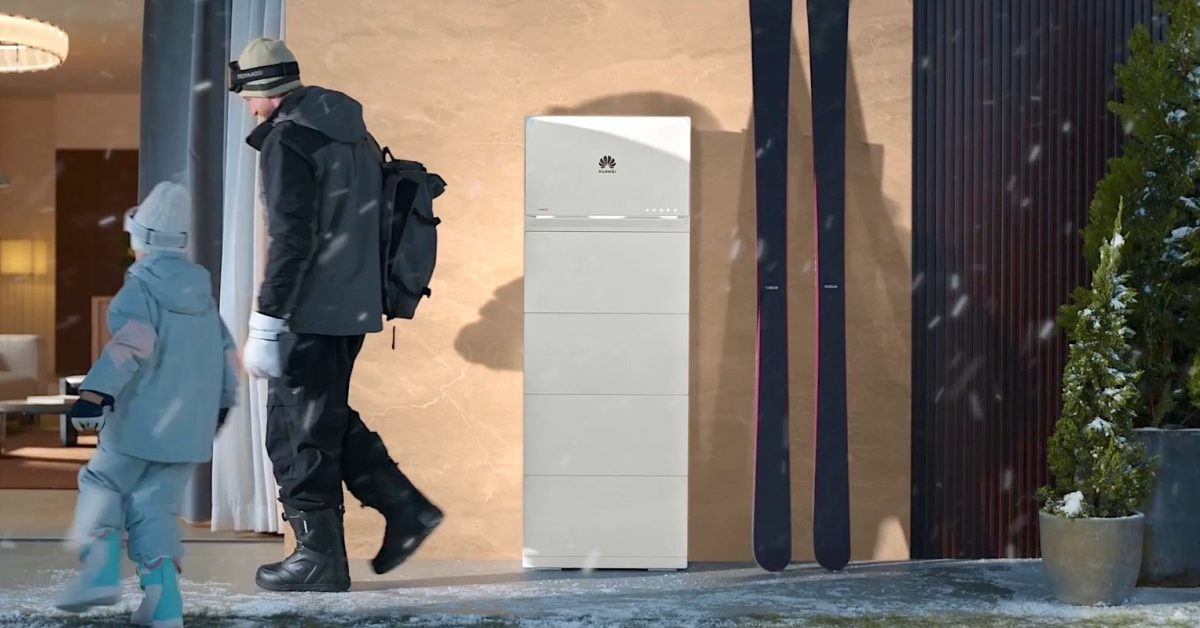
This high-tech Huawei home battery pack hopes to hold back Tesla’s latest Powerwall with silicon carbide technology, AI-powered energy management baked in, and enough modular storage to keep even large homes bright and warm when the rest of the block goes dark. Huawei believes its new Luterra S2 is more than just a home backup battery. The Chinese tech firm is calling it an “all-in-one residential energy system” that combines a hybrid inverter, modular battery storage, and AI-powered energy management in a single, simple, and stackable package that’s available in single-phase versions that put out between 3 and 10 kW and three-phase versions that can push up to 20 kW. The Luterra S2 is the first system of its kind to use Huawei’s proprietary full-silicon carbide (SiC) architecture, which promises improved efficiency, power density, and ease of use. It’s so easy, in fact, that Huawei claims it can be installed and commissioned in just minutes. “We are thrilled to introduce Huawei Luterra S2, our next-generation all-in-one residential energy system,” said Steve Zhang, President of Huawei Distributed PV & BESS Business. “By combining full-SiC architecture, AI-driven energy management, and industry-leading safety, Luterra S2 is designed to be smaller, lighter, quieter, safer, smarter and more powerful than ever before.” All about the all in one Steve Zhang, President of Huawei Distributed PV and BESS. Huawei’s basic Luterra S2 configuration starts with “just” 5 kWh of battery energy storage and 3 kW of output. That’s enough to keep essential household appliances, lighting, and electronics running during a power outage, but you’ll want to keep going if you’re preparing for more than a day or two without power. If that sounds like you, Luterra’s got you covered. The modular system can be expanded with modular 7 kWh LFP battery packs and can scaling up to a massive 336 kWh of total storage across interconnected systems, with inverter output peaking at an impressive 60 kW using three 20 kW units in parallel. Keeping all that power cool and quiet is a Huawei-developed passive cooling system that does without external fans, keeping operating noise levels below a claimed 29 dB (about the same as my Mac mini). It operates at ambient temperatures from –25° C to about 60° C, and features a sturdy IP66-rated enclosure (safe to hit with a high-pressure hose) with corrosion protection up to C5-M to keep it from rusting away. Alas, the Luterra S2 probably won’t be making its way to the US anytime soon – but fear not! If you’re shopping for a Tesla Powerwall alternative that won’t help fund the absolute worst people in politics, there are a number of great home battery systems on the market that can deliver backup power, store your solar energy, and keep your home running when the grid goes down. We’ve rounded up some of the best alternatives right here. YOU MIGHT ALSO LIKE: Not sold on Tesla Powerwall? There are great battery alternatives out there Tiny Titan: new residential battery system from EcoFlow starts small Survey Sunday: How much home battery backup do YOU need? If you’re considering going solar, it’s always a good idea to get quotes from a few installers. To make sure you find a trusted, reliable solar installer near you that offers competitive pricing, check out EnergySage, a free service that makes it easy for you to go solar. It has hundreds of pre-vetted solar installers competing for your business, ensuring you get high-quality solutions and save 20-30% compared to going it alone. Plus, it’s free to use, and you won’t get sales calls until you select an installer and share your phone number with them. Your personalized solar quotes are easy to compare online and you’ll get access to unbiased Energy Advisors to help you every step of the way. Get started here. FTC: We use income earning auto affiliate links. More.
Huawei set to challenge Tesla Powerwall with new, 20 kW home battery
Full Article
Original Source
Read the full article at Electrek →KhanList aggregates and links to publicly available news content. We do not host full articles from third-party sources. Always verify important information with original sources.