
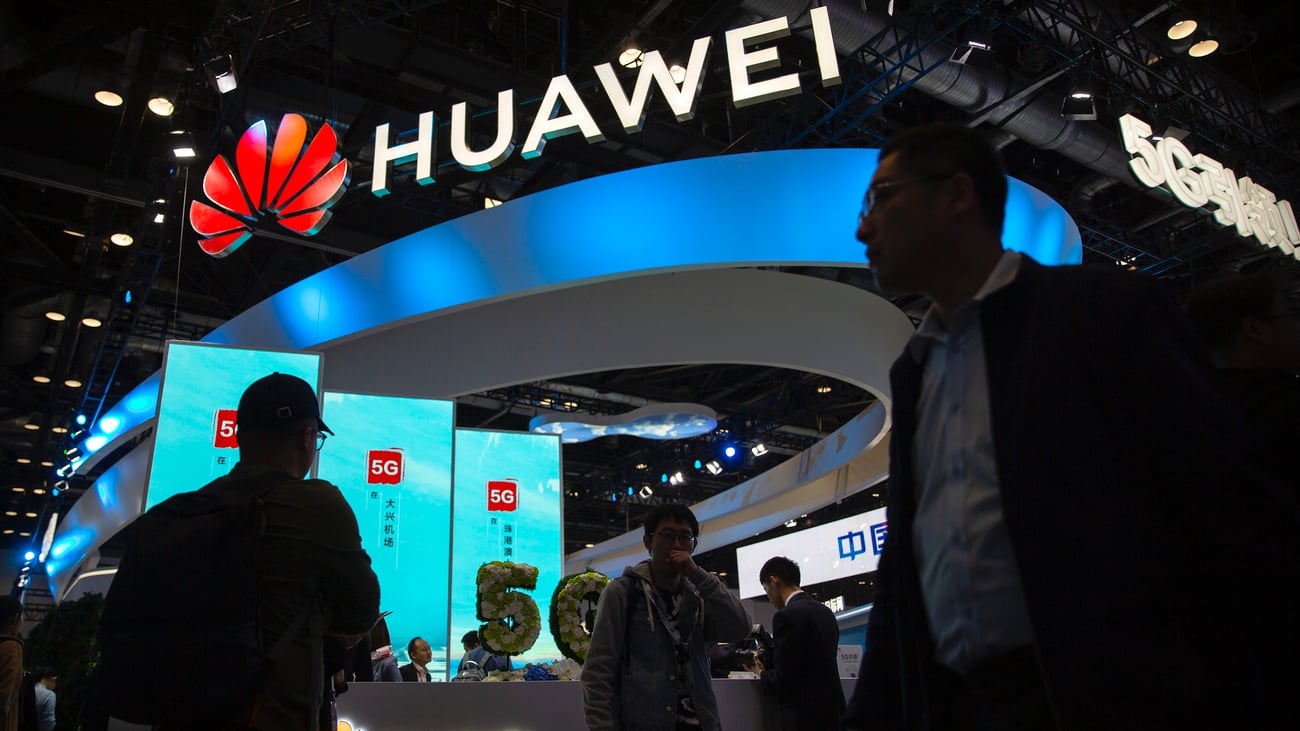
Huawei insists it had no reason to lie to obtain banking business. But the Chinese tech company's CFO admitted she did just that in a 2021 deferred prosecution agreement.BROOKLYN (CN) — One of the world’s largest telecommunications businesses is gearing up to defend itself from the U.S. government’s accusation that the China-based company, Huawei, stole technology from American companies and violated sanctions by lying to banks about its business dealings in Iran.After a day of jury selection, prosecutors and defense attorneys gave opening statements on Wednesday at a trial expected to last about three months in the Eastern District of New York.Department of Justice attorney Taylor Stout laid out the 12 counts in play, which include racketeering conspiracy, conspiracy to steal trade secrets, wire and bank fraud, conspiracy to defraud the U.S., International Emergency Economic Powers Act violations and conspiracies to launder money and obstruct justice.Stout said Huawei and three of its subsidiaries, all of which are on trial, encouraged employees to steal trade secrets from U.S. tech companies and kept secret the nature of its work in Iran in order to transmit profits through the U.S. bank system.Employees of Huawei falsely claimed another subsidiary called Skycom was not owned by Huawei, and that Huawei had only limited operations in Iran, but Skycom in fact helped Iran’s government spy on its own citizens, including during 2009 demonstrations in Tehran, the U.S. government says.“Huawei cultivated a culture of crime and corruption, and that crime was an important business strategy,” Stout told the jury Wednesday.For example, he said, among the trial evidence will be video footage of a Huawei employee who gained access to T-Mobile’s secure lab stealing technology the American company had developed — a robot that can simulate a human finger to use a touch screen device. The employee snapped off a key part of the robot and slipped it into his backpack.Huawei employees also stole internet router technology from another American tech conglomerate, Cisco, and used it in routers that Huawei then sold in the U.S.Stout told jurors they will hear from “people who caught Huawei’s employees red-handed trying to steal technology from American companies,” in addition to being presented with documents, photos, videos and financial records proving “a far-reaching criminal scheme committed over two decades, targeting American companies and abusing the American financial system.”Defense attorney Brian Heberlig said that’s a stretch. He pointed out yearslong gaps in the government’s narrative, which take place between 2000 and 2020, contradicting the idea that Huawei and its subsidiaries were engaged in a racketeering conspiracy.Rather, Heberlig painted Huawei as a hub of innovation fostered by its founder, Ren Zhengfei, who started the company in his apartment with the equivalent of $5,000 and a mission to delivery technology to homes and businesses.“Huawei’s success did not come from theft, racketeering or fraud. It came from the same hard work that guided Mr. Ren,” Heberlig said. “It’s about competition, not conspiracy. Innovation, not theft. Ordinary business dealings, not criminal conduct.”While Stout claims Huawei encouraged trade secret theft, and even paid an employee a bonus for ripping off technology from competitors, Heberlig says the company fired employees for improper behavior — for example, an employee who snapped a photo after-hours at a trade show was promptly let go.Heberlig, of the firm Steptoe LLP, said prosecutors had cherry-picked a handful of unrelated improprieties, some of which involved employees who had never met and worked thousands of miles apart.“There was no company-wide, 20-year-long conspiracy,” he said.The defense attorney also discredited the idea that Huawei employees lied to banks like HSBC, which he said earned millions each year by doing business with the tech giant. “Huawei had no reason to lie to obtain banking business,” Heberlig said.Yet Huawei CFO Meng Wanzhou, Ren’s daughter, admitted she did just that in a 2021 deferred prosecution agreement.Meng was arrested in 2018 in Vancouver, Canada, and remained in the country’s custody until her 2021 release, straining relations between the U.S., Canada and China. In her deal with U.S. prosecutors, the executive dubbed the “Princess of Huawei” by Chinese state media admitted to misleading a senior bank executive regarding Huawei’s business operations in Iran.In June, U.S. District Judge Ann Donnelly ruled, over defense attorneys’ objection, that Meng’s admission can be used against her company.Huawei does business in more than 170 countries and holds more than 165,000 active patents for telecommunications, cloud, AI and device technology.Subscribe to our free newslettersOur weekly newsletter Closing Arguments offers the latest about ongoing trials, major litigation and rulings in courthouses around the U.S. and the world, while the monthly Under the Lights dishes the legal dirt from Hollywood, sports, Big Tech and the arts.Additional Reads
Huawei rebuts criminal charges at trial over trade secrets, Iranian sanctions
Full Article
Original Source
Read the full article at Courthousenews →KhanList aggregates and links to publicly available news content. We do not host full articles from third-party sources. Always verify important information with original sources.