
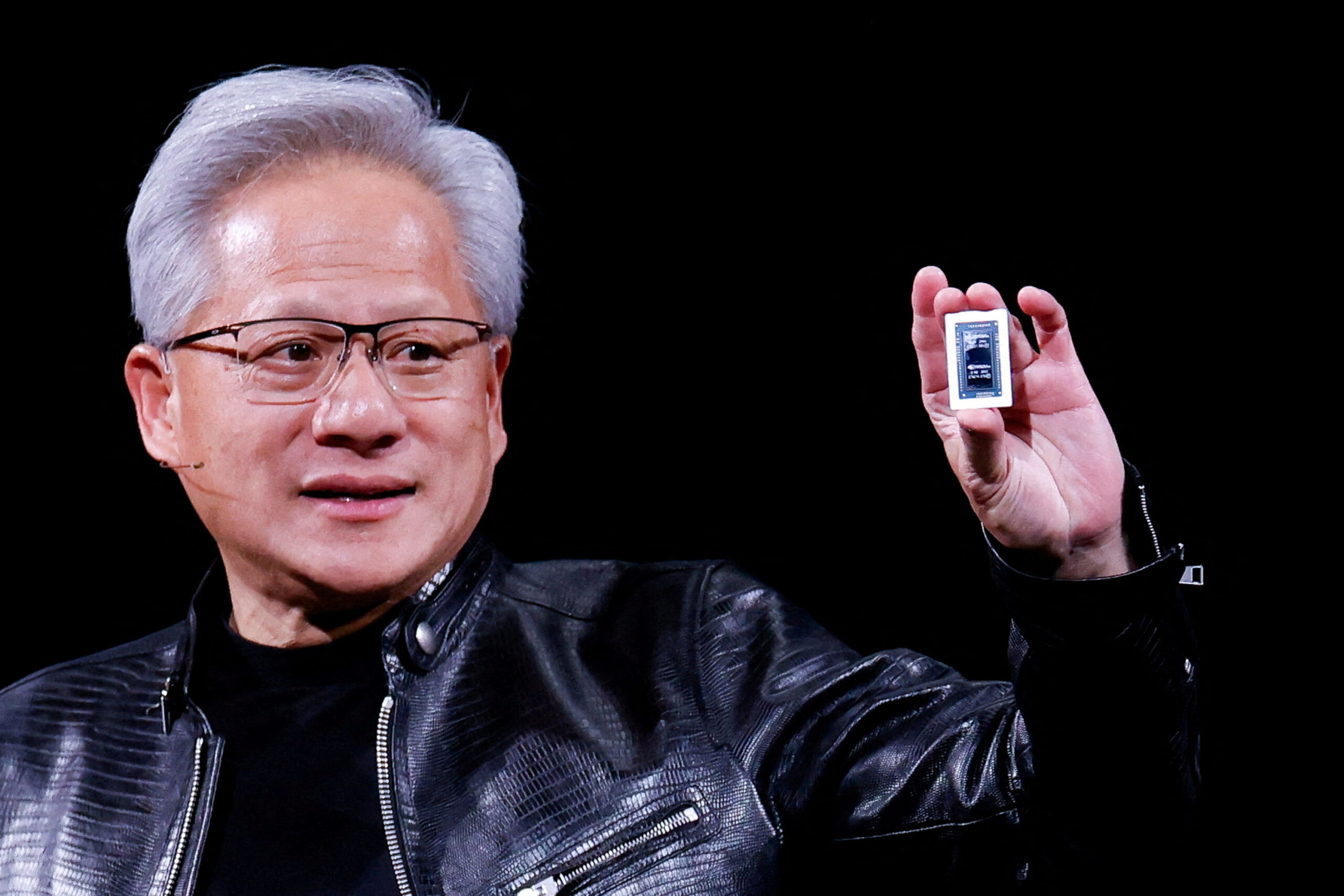
WASHINGTON—After weeks of reports about alleged spies, secret affairs, and suspected chip diversion that culminated in his resignation on November 12, Jensen Huang is back at the helm of Nvidia. The company’s board reinstated him as CEO and president yesterday, after US President Donald Trump called into a board meeting, personally urging board members to bring him back and assuring them that his return posed no national security risks. And while the markets reacted positively to Huang’s return, the concerns that prompted his departure have not gone away. Questions remain about the role Nvidia played in the suspected diversion of chips to China and, more broadly, about how Washington should curb Chinese access to advanced computing. But Huang’s return comes while Washington’s political momentum is already shifting toward tighter export controls. Huang was one of the most prominent voices calling for looser restrictions on high-end chip sales to China, arguing that these restrictions would push Beijing to develop domestic alternatives. The scandal, however, has prompted calls for a crackdown on chip exports to China. On the Hill, there is bipartisan support for more scrutiny and additional legislation, while parts of the Trump administration have called for stricter enforcement of existing controls. Huang’s reinstatement is unlikely to reverse that course. What remains unclear, however, is whether Congress or the administration will take the lead in charting a new course for export controls. The Trump administration’s response The Nvidia scandal generated a fair amount of discord within the administration. US officials reportedly suspected that Chinese intelligence had targeted Huang months before the story broke. On November 13, US Treasury Secretary Scott Bessent said that the Treasury Department and other agencies had pushed for months to add Megaspeed, a Singapore-based cloud computing company suspected of diverting Nvidia’s advanced chips to China, to the Commerce Department’s entity list, a trade blacklist of foreign companies, organizations, and individuals that US firms need a license to export. Commerce had delayed the decision. And earlier this week, Trump vouched for Huang, saying “he did nothing wrong”—a move that has drawn bipartisan criticism. Much scrutiny has fallen on Commerce Secretary Howard Lutnick. He reportedly stalled implementation of a crackdown on companies suspected of diverting chips to China that Trump had authorized both before and after the Nvidia scandal broke. The Commerce Department also reportedly halted its inquiry into Megaspeed in August 2025, after Nvidia’s general counsel contacted Commerce officials, and ultimately handed the investigation over to the Justice Department. Lutnick has since agreed to testify before Congress, and House Democrats have opened an investigation into whether his family’s holdings in Nvidia shaped his decisions. The administration’s most significant step so far is a new Commerce rule, published on November 16, on remote access to advanced chips. The new rule requires that companies acquire a license to transfer advanced chips to any data center outside the United States when the recipient facility is known to provide significant computing power to companies headquartered in China or other embargoed countries. It also includes license requirements to export advanced chips to Malaysia, Singapore, Thailand, Indonesia, and Brazil. The rule addresses an important loophole that Chinese companies have been using to access advanced US chips, but it has limits of its own. It works by regulating the physical chips rather than the provision of computing power itself, over which the Commerce Department’s Bureau of Industry and Security lacks explicit authority to control. Its effectiveness also rests on firms knowing and reporting who uses their computing power. To make the rule work in practice, Commerce would need to issue the kind of detailed guidance the Treasury Department provides banks and firms when it imposes sanctions, including red flags, due diligence expectations, and answers to frequently asked questions. Notably, the rule was written “by and at the direction of” the Treasury Department and the National Security Council, according to Commerce, a highly unusual qualification and a likely indication of continuing disagreement within the administration. Yesterday, after much internal pressure, Commerce also added Megaspeed and six affiliates to the entity list. In addition, the Justice Department is leading a criminal investigation into Megaspeed, and the Securities and Exchange Commission has opened its own investigation into Nvidia’s accounting practices. Taken together, these actions reveal a muddled approach to the problem. The administration has taken steps to strengthen export control enforcement, but at the same time, it is standing behind government officials who failed to prevent chip diversion, as well as the Nvidia executive at the center of the scandal. Its toughest measure came from Treasury and the National Security Council, rather than the department responsible for export controls. As long as disagreements within the administration delay enforcement and produce inconsistent licensing decisions, firms and allies will struggle to know where the lines are, and those seeking to divert chips will keep looking for gaps. Congress’s response By contrast, the scandal has generated broad bipartisan support in Congress for stronger controls, and several bills already in circulation target the gaps it exposed. The Chip Security Act would require location verification for advanced AI chips before export, turning voluntary tools such as Nvidia’s opt-in tracking into a common standard. The Remote Access Security Act would give the Bureau of Industry and Security explicit authority to regulate remote access to controlled chips, filling the gap the new Commerce rule leaves. The AI OVERWATCH Act would give Congress thirty days to review, and potentially block, licenses for advanced chip exports to adversaries such as China. And the MATCH Act would press allies to align their controls on chipmaking equipment with those of the United States. While these bills may have faced difficulty passing as stand-alone legislation, lawmakers are now seeking to include them in the fiscal year 2027 National Defense Authorization Act (NDAA), which is expected to pass before the end of the year but has no fixed deadline. The Senate’s version already puts forward the Chip Security Act, the AI OVERWATCH Act, and the MATCH Act for inclusion in the NDAA, and leaders in both parties have signaled support for keeping them in the final bill. This offers a more promising path to enactment and reduces the risk of a presidential veto. The NDAA has passed every year for more than six decades and vetoing it over export control provisions would be politically far more costly than blocking a single bill. It is more likely that the White House will play a role in shaping the final text in conference or retain flexibility in how rules are implemented. However, not every bill faces the same odds. The Chip Security Act passed the House Foreign Affairs Committee unanimously, making it the most likely to clear. The MATCH Act, in contrast, likely faces more resistance because it reaches beyond US companies. If allies such as the Netherlands and Japan do not align their controls on chipmaking equipment, the Act would effectively extend US restrictions to their firms. That risks significant diplomatic friction, which Congress may seek to avoid. The Dutch government has also already lobbied against curbs targeting the sales of ASML, the Dutch manufacturer of machines used to make advanced chips. This suggests that if the MATCH Act survives, it may be in a narrower form. Moving forward, Congress has the opportunity to play an important role in shaping US export controls. While the Commerce Department’s technical expertise in this space remains pivotal to a well-functioning export control regime, its decisions are only as durable as the priorities of the administration it serves. In recent years, rules have been drafted and withdrawn, licensing decisions have shifted with political priorities, and enforcement has stalled amid internal disputes. If Congress were to codify key controls, it would give firms and allies clearer and more durable rules that are harder to reverse or use as bargaining chips. Congress should also use the upcoming hearings with Lutnick and Huang to examine how licensing and enforcement decisions were made. The next few months will show which way the balance tips. Negotiations over the NDAA in December will decide whether the chip bills become law, and the hearings with Lutnick and Huang will test how far Congress is willing to press the administration. In January, a Democratic-controlled Congress takes over, with Senator Elizabeth Warren (D-MA) set to chair the Banking Committee, which would review chip export licenses if AI OVERWATCH passes. For Commerce, the test comes by mid-February, when the remote access rule’s grace period for existing data center operations ends. Whether it issues clear guidance and follows the Megaspeed listing with action against other suspected chip diverters will show whether enforcement is becoming a priority again.
Huang is back at Nvidia. But the fight over who controls chip exports is just beginning.
Full Article
Original Source
Read the full article at Atlanticcouncil →KhanList aggregates and links to publicly available news content. We do not host full articles from third-party sources. Always verify important information with original sources.